As an Amazon Associate, we earn from qualifying purchases. Some links may be affiliate links at no extra cost to you. Although our opinions are based on curated research, we haven't used these products. Articles generated with AI.

10 Best Equipotential Bonding Solutions for a Safer Electrical System

To create a safer electrical system, consider using equipotential bonding solutions like the Equipotential Bonding Resistance Meter DC Tester, which measures low resistances down to 0.0001Ω. For pool safety, installed Above Ground Pool Water Bonding Kits are crucial. Tools like the ETCR3700 Low Resistance Meter and the Milliohm Meter enable precise measurements, ensuring compliance with safety standards. Regular maintenance and understanding of grounding systems are important as well. Continue exploring these significant solutions for thorough safety insights.
Key Takeaways
- Implement earthed equipotential bonding to minimize potential differences and protect against electrical shocks effectively.
- Utilize above ground pool water bonding kits for safe electrical connections around pool areas, ensuring compliance with safety standards.
- Regularly measure bonding resistance using high-precision equipment, targeting resistance benchmarks below 25 ohms for optimal safety.
- Select corrosion-resistant materials for bonding systems to withstand environmental challenges and maintain effective conductivity.
- Stay updated on compliance with NEC and IEC guidelines to ensure installations meet safety requirements and enhance protection against electrical hazards.
Equipotential Bonding Resistance Meter DC Tester for Measuring Low-Value Resistances
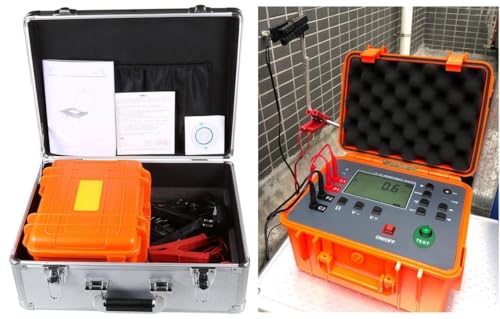
HFBTE Equipotential Bonding Resistance Meter DC Tester 30.00KΩ for Measuring The Contact Resistance...
- (1) {Function}--------Mainly used for Equipotential bonding resistance test between metal components, low-value resistance test, resistance test of connecting conductors...
- (2) {DC Resistance range}--------0.0001Ω~30.00KΩ; Resistance resolution 0.0001Ω; Accuracy ±1%rdg±5dgt
- (3) {test method}--------Four-wire method test
The Equipotential Bonding Resistance Meter DC Tester is an essential tool for electricians and technicians who need to confirm safe and effective electrical systems. Designed for measuring low-value resistances, it performs tests on switches, socket contacts, and welding points. You’ll appreciate its ability to measure resistance from 0.0001Ω to 30.00KΩ with an accuracy of ±1%. Using the four-wire method guarantees precision by minimizing errors caused by lead resistance. This meter also stores up to 500 data sets, and with a USB interface, transferring results is a breeze. Trust this device for reliable bonding resistance measurements, confirming system safety and efficiency.
Best For: Electricians and technicians who require precise measurement of low-value resistances in electrical systems.
Pros:
- High accuracy of ±1% ensures reliable measurements.
- Four-wire testing method minimizes lead resistance errors.
- Capable of storing up to 500 data sets for easy record-keeping.
Cons:
- Limited to low-value resistance measurements, not suitable for higher resistances.
- Requires a minimum test current of ≥1A, which may limit its application in some scenarios.
- The device may need calibration over time to maintain accuracy.
An Illustrated Explanation of Earthed Equipotential Bonding
An Illustrated Explanation of Earthed Equipotential Bonding
- Used Book in Good Condition
For electrical contractors and safety professionals, understanding earthed equipotential bonding is essential to guaranteeing compliance and enhancing safety in installations. This system minimizes potential differences, protecting both people and equipment from electrical shocks. Using simplified illustrations, you can grasp how bonding operates in practical contexts, revealing its critical components like earth rods, conductors, and connections to metal structures. Compliance with established safety standards reinforces the effectiveness of these systems. For example, a well-designed earthing system allows fault currents to safely disperse, reducing risks considerably. Familiarizing yourself with these elements guarantees a reliable and secure electrical installation.
Best For: Electrical contractors and safety professionals looking to enhance compliance and ensure safety in electrical installations.
Pros:
- Enhances Electrical Safety: Minimizes potential differences, protecting individuals and equipment from electrical shocks.
- Simplified Learning: Utilizes illustrations that clarify complex concepts, making it easier to understand bonding systems.
- Supports Compliance: Adhering to safety standards ensures proper installation and maintenance of earthing systems, reducing risks.
Cons:
- Initial Investment: Setting up effective earthing systems may require significant upfront costs for materials and labor.
- Maintenance Requirements: Regular inspections and maintenance are necessary to ensure ongoing effectiveness of bonding systems.
- Complex Regulations: Navigating compliance with various electrical safety standards can be challenging and time-consuming.
Equipotential Bonding Resistance Meter 30.00KΩ
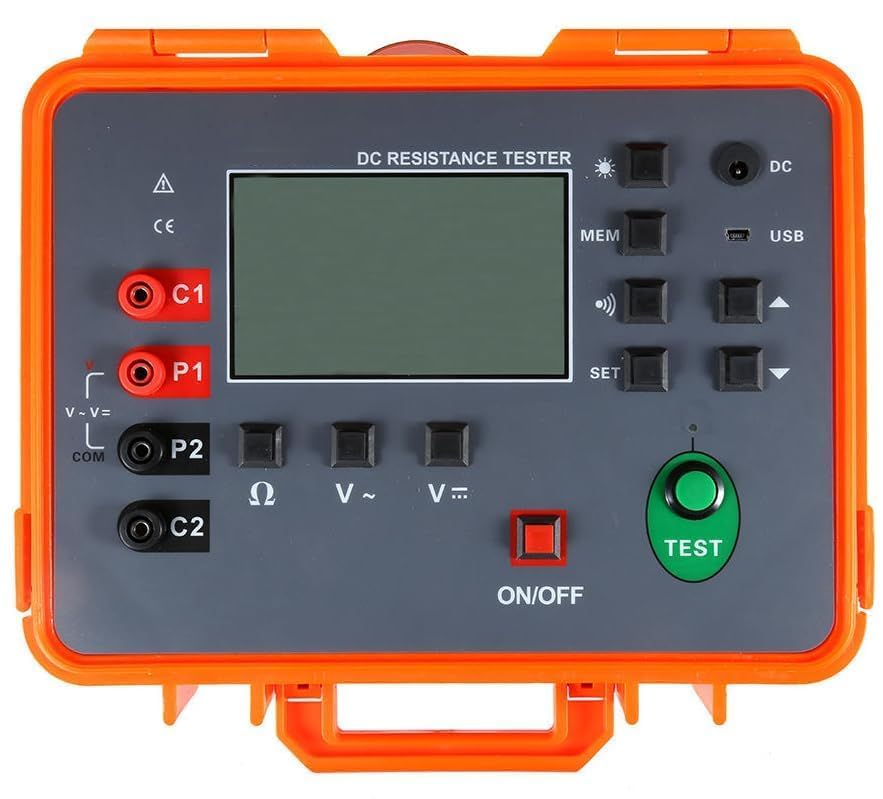
HFBTE Equipotential Bonding Resistance Meter 30.00KΩ for Measuring Resistance of The Connection...
- (1) {Function}--------Mainly used for Equipotential bonding resistance test between metal components, low-value resistance test, resistance test of connecting conductors...
- (2) {DC Resistance range}--------0.0001Ω~30.00KΩ; Resistance resolution 0.0001Ω; Accuracy ±1%rdg±5dgt
- (3) {test method}--------Four-wire method test
Equipotential Bonding Resistance Meter 30.00KΩ stands out as an ideal tool for electrical professionals tasked with ensuring safe connections between electrical equipment and earth ground. This device measures resistance from 0.0001Ω to 30.00KΩ, making it versatile for various applications. You can use it for testing the resistance of connection conductors and contact resistance. Its four-wire method enhances accuracy, achieving a resolution of 0.0001Ω. Additionally, it stores up to 500 data groups and offers a USB interface for easy data transfer. With an accuracy of ±1%, you’ll feel confident in your measurement reliability and system safety.
Best For: Electrical professionals seeking a reliable tool for measuring bonding resistance between electrical equipment and earth ground.
Pros:
- Accurate measurements with a resolution of 0.0001Ω and an accuracy of ±1%.
- Capable of storing up to 500 data groups, facilitating record-keeping and analysis.
- Includes a USB interface for convenient data transfer to compatible devices.
Cons:
- The measurement range might be too limited for certain high-resistance applications.
- Requires a minimum test current of ≥1A, which may not be suitable for all scenarios.
- Slightly complex due to the four-wire method, potentially requiring additional training for new users.
Above Ground Pool Water Bonding Kits

uueeGo Above Ground Pool Bonding Kits, Pool Water Bonding Kits for Skimmers Above Ground, in Direct...
- CONTACT WITH POOL WATER EFFECTIVELY:Swimming pool water bonding kits which mounted at the bottom of the skimmer wall are always connected with the pool water in direct to...
- EASY TO INSTALL: The pool skimmer bonding kits are placed on the side wall of the skimmer on the lower section where the basket is held.
- JUST FOR ABOVE GROUND POOLS. Pool water bonding kits are used for above ground pools only.
When maintaining above ground pools, ensuring safety and water bonding is essential, especially for installations in direct contact with water. Above ground pool bonding kits offer reliable solutions for connecting electrical components, like skimmers, to prevent electrical shock. These kits are easy to install; simply mount the bonding plate at the bottom of the skimmer wall. The durable stainless steel bonding plate and high-strength copper bonding lug guarantee longevity, resisting corrosion. Each kit includes essential components like washers and a drill bit for quick setup. Should you have questions, immediate customer support is available for assistance and practical solutions.
Best For: Individuals looking for a safe and reliable bonding solution for above ground pool skimmers in direct contact with water.
Pros:
- Easy installation process, allowing for quick setup of bonding components.
- Constructed from durable materials like stainless steel and high-strength copper, ensuring longevity and resistance to corrosion.
- Includes all necessary components for installation, reducing the need for additional purchases.
Cons:
- Limited to above ground pools, not suitable for in-ground installations.
- May require basic tools and some DIY knowledge for proper installation.
- Customer support availability may vary by response time, which could delay assistance.
Equipotential Bonding Resistance Tester

VTSYIQI Equipotential Bonding Resistance Tester Equipotential Property Connection Resistance...
- Equipotential bonding resistance test {Function}--------Mainly used to measure the wire resistance of cables, the contact resistance of switches, connectors, relays, the...
- Low resistance meters dc resistance testers Low resistance meters dc resistance testers {Resistance Range}--------0.001mΩ~300.0KΩ
- Multi functional DC low resistance tester Metal riveted transformer coil ohmmeterr {USB Data upload function}--------YES!!!
The Equipotential Bonding Resistance Tester is an essential tool for electricians and technicians working with electrical systems that require precise resistance measurements. It measures wire resistance in cables and contact resistance in switches, connectors, and relays. This tester effectively checks metal riveting resistance and connection resistance between components, offering a resistance range from 0.001mΩ to 300.0KΩ, with a resolution of 1µΩ and accuracy of ±0.1%. Its portable design and four-wire testing method make it ideal for transformer motor windings or DC resistance applications. Additionally, it features USB data upload capabilities, storing up to 500 groups of data for ease of use.
Best For: Electricians and technicians requiring accurate resistance measurements in electrical systems.
Pros:
- Can measure low-value resistance with high precision (1µΩ resolution).
- Portable design allows for easy handling in various testing environments.
- USB data upload function enhances data management and storage capabilities.
Cons:
- Limited to DC resistance measurements, not suitable for AC applications.
- May require periodic calibration to maintain accuracy over time.
- Battery life may be limited during extensive testing sessions.
Introduction to Electrical Installation Work
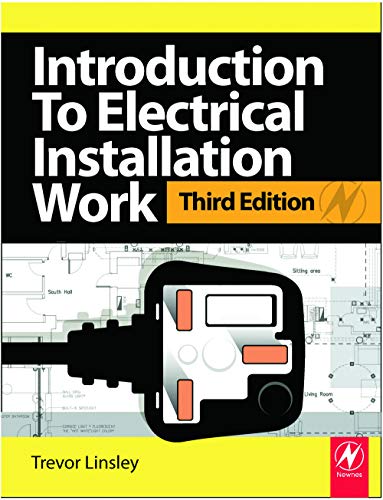

In your journey into electrical installation work, having a solid foundation is essential. This guide presents vital concepts and practical skills, designed for beginners. You won’t find complex math or theories here; instead, the information is straightforward and user-friendly. Each chapter includes revision questions to track your progress, while online resources like animations and videos help reinforce your learning. The content aligns with the IEE Wiring Regulations and relevant diplomas in Electrotechnical Technology, ensuring you’re prepared for industry standards. Consider additional resources like “Basic Electrical Installation Work” for further exploration in the field.
Best For: Individuals starting a career in electrical installation or related trades seeking foundational knowledge and practical skills.
Pros:
- User-friendly layout that aids in easy comprehension of essential concepts.
- Alignment with industry standards such as the IEE Wiring Regulations ensures relevant and applicable learning.
- Supplementary resources like online animations and videos enhance understanding and reinforce concepts.
Cons:
- Limited advanced content, as the focus is on beginners and foundational knowledge.
- May require additional resources for in-depth study beyond the basics provided in the guide.
- Revision questions may not cover all potential pitfalls or advanced scenarios in electrical installation work.
Equipotential Bonding Resistance Meter with USB Interface
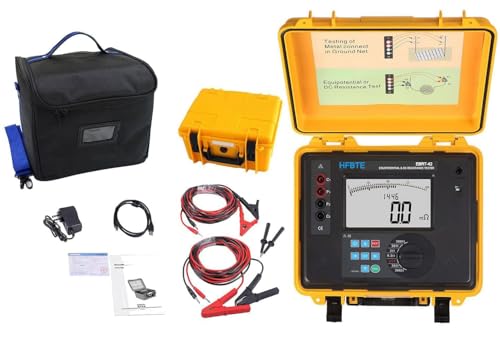
HFBTE Equipotential Bonding Resistance Meter DC Low Resistance Tester Meter with Precision Four-Wire...
- (1) Intelligent Equipotential Bonding Resistance Tester, also namedDC Low Resistance Tester, DC Resistance Tester, Ohm Meter, Milliohmmeter and so on), It is accurate and...
- (2) It is a special meter for measuring the equipotential bonding quality between metal constructions in buildings(Lightning belt, floor beam,structure, protection, floor...
- (3) Also can measure all kinds of connection conductor resistance between the electrical equipment and grounding electrode, also can measure the contact resistance of...
Equipotential bonding resistance meters with a USB interface are ideal for professionals working in construction quality inspection, electrical maintenance, and lightning protection. These intelligent devices utilize a precise 4-wire method to measure low resistance, ranging from 0.0001Ω to 30.00kΩ. With a test current of at least 4A, they effectively assess the quality of equipotential bonding in metal constructions and evaluate connection conductor resistance. Their waterproof and durable design guarantees reliability outdoors. Storing up to 400 data groups, they provide extensive monitoring capabilities, enhancing efficiency for tasks in various settings like power departments, ship engine factories, and supervision companies.
Best For: The Equipotential Bonding Resistance Meter with USB interface is best for professionals in construction quality inspection, electrical maintenance, and lightning protection.
Pros:
- Highly accurate measurements due to the precision 4-wire method.
- Durable, waterproof design suitable for outdoor use with an IP65 rating.
- Extensive data storage capability allows for efficient monitoring and reporting.
Cons:
- The initial cost may be high for smaller companies or independent professionals.
- Requires training to operate effectively, limiting immediate usability for some users.
- The need for a USB interface may limit compatibility with certain devices without proper adapters.
Milliohm Meter DC Low Resistance Tester
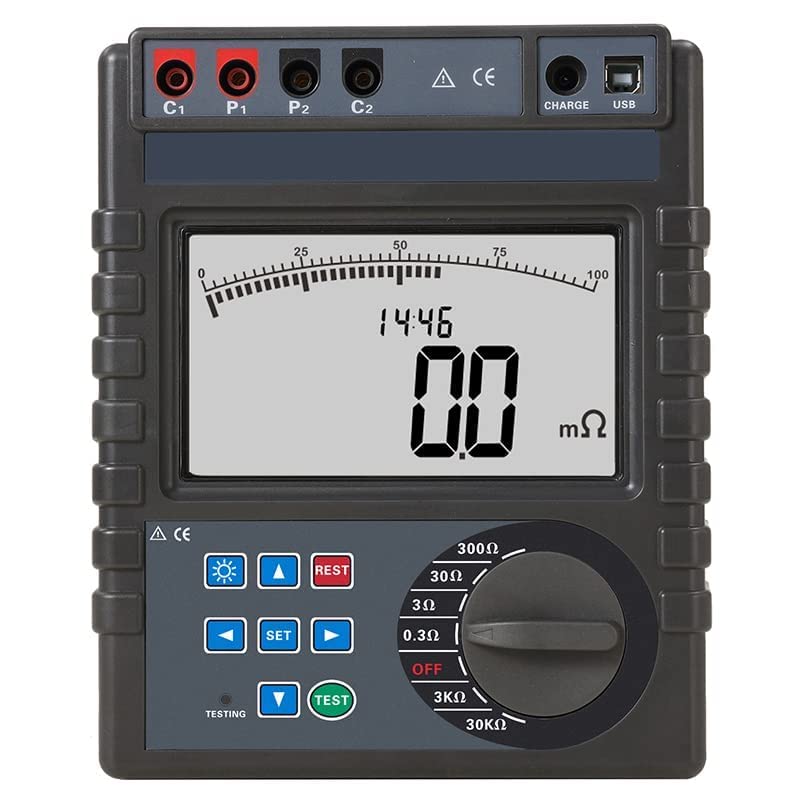
YFYIQI Milliohmmeter DC Low Resistance Tester Meter Equipotential Bonding Resistance Tester Gauge...
- Range:1mΩ~30.0kΩ
- Adopt precise 4-wire method to measure, measurement more accurate. Micro ohmmeter function
- Supper large LCD display, bar diagram indication, clear at a glance.
For professionals in electrical maintenance and installation, the Milliohm Meter DC Low Resistance Tester provides an essential tool for ensuring reliability in equipotential bonding systems. It measures resistance from 1 mΩ to 30.0 kΩ, utilizing a precise 4-wire method for enhanced accuracy. With a test current of at least 2A, you can accurately assess low resistances. The tester features a large LCD display, making results easy to read. Additionally, it stores up to 400 data groups, which can be uploaded to a computer for saving or printing. Alarm functions and overflow indications help you maintain proper measurement practices.
Best For: Professionals in electrical maintenance and installation who require reliable low resistance measurements for equipotential bonding systems.
Pros:
- High accuracy with a precise 4-wire measurement method.
- Large data storage capacity of 400 groups, allowing for extensive record-keeping and analysis.
- User-friendly features including alarm functions and a clear LCD display for easy reading.
Cons:
- Limited measuring range may not be sufficient for some high-resistance applications.
- Requires a minimum test current of 2A, which might not be suitable for very sensitive components.
- Potentially bulky design may make it less portable for some users.
ETCR3700 4-Wire Intelligent Low Resistance Meter Tester
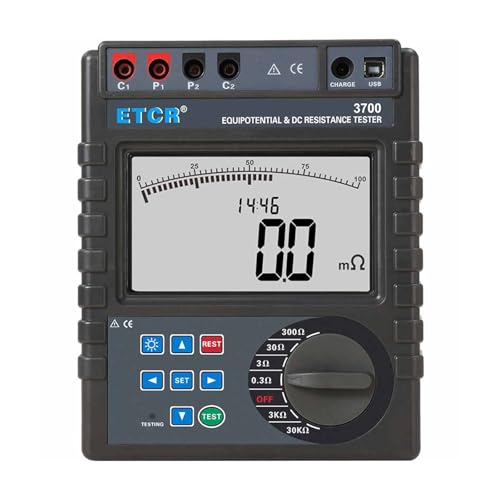
ETCR ETCR3700 4-Wire Intelligent Equipotential Bonding Reistance Meter Tester DC Low Resistance...
- Wide Application for Bonding Resistance – Designed to measure equipotential bonding resistance between metal components and grounding systems. Ideal for buildings...
- High Accuracy Four-Wire Testing – Utilizes precision four-wire measurement method to ensure accurate, stable, and repeatable resistance readings from 1mΩ to 30k...
- Powerful Alarm & Clock Functions – Features adjustable resistance alarm threshold and real-time clock, enhancing onsite inspection efficiency and safety monitoring.
When you need precise measurements of low resistance in various electrical systems, the ETCR3700 4-Wire Intelligent Low Resistance Meter Tester stands out as the ideal choice. This meter measures low resistance from 1mΩ to 30.0kΩ, utilizing a precision four-wire method to guarantee accurate readings. With a maximum test current of 2A, you can confidently assess equipotential bonding resistance in diverse settings, such as buildings and vehicles. Its robust design includes a large backlit LCD and internal memory for up to 400 stored measurements. Plus, its durability and portability make it perfect for fieldwork, guaranteeing you get the job done efficiently and safely.
Best For: Professionals and technicians who require accurate measurements of low resistance in electrical systems and bonding applications.
Pros:
- Accurate and stable measurements using a precision four-wire method.
- Large backlit LCD display with bar graph indication for easy reading in various lighting conditions.
- Durable design ideal for fieldwork, complete with a carrying case and long-lasting battery.
Cons:
- Maximum test current of 2A may be limiting for certain high resistance applications.
- Learning curve associated with using advanced features and software for data reporting.
- More expensive than basic resistance meters, which may not be justified for casual users.
Analysis of Grounding and Bonding Systems
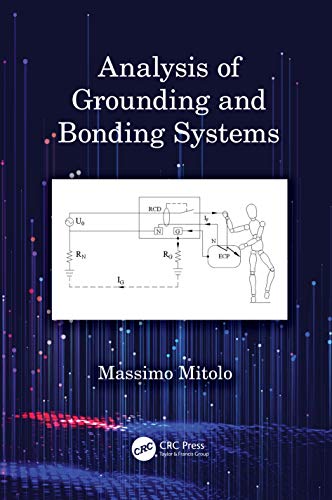
Understanding how grounding and bonding systems work is vital for electrical professionals and safety inspectors who aim to protect people and equipment from electric shock. First, grounding involves establishing a path for electricity to safely dissipate into the earth. Equipotential bonding connects conductive parts, like metal enclosures, reducing the risk of shock. Grounding systems can include simple ground rods or complex grids, varying with soil conditions. It’s important to calculate step and touch voltages for classifications like TT or TN systems. Complying with safety codes guarantees effective protection, especially in modern applications, such as electric vehicle charging infrastructure.
Best For: Electrical professionals and safety inspectors seeking to enhance safety and compliance in grounding and bonding systems.
Pros:
- Comprehensive Guidance: Offers detailed information on grounding principles, safety, and code compliance.
- Safety Enhancement: Provides strategies to reduce electric shock risks effectively.
- Illustrative Support: Includes diagrams and calculations that aid in understanding complex concepts.
Cons:
- Complexity: Some concepts may be intricate for beginners to grasp without prior knowledge.
- Specialized Knowledge Required: May require a background in electrical engineering for full comprehension.
- Limited Scope: Focuses primarily on grounding systems, potentially neglecting broader electrical safety topics.
Factors to Consider When Choosing Equipotential Bonding

When choosing equipotential bonding solutions, you need to take into account several key factors. First, think about resistance measurement accuracy, as it affects your system’s effectiveness. Next, evaluate test current requirements, connection and grounding options, compliance with standards, and environmental suitability to guarantee peak performance.
Resistance Measurement Accuracy
Accuracy in resistance measurement is essential for ensuring effective equipotential bonding in electrical systems. It’s typically defined by an accuracy percentage, like ±1% or ±0.1%, which directly impacts the reliability of your test results. You should also pay attention to the measuring device’s resolution, often specified in ohms, such as 0.0001Ω, as it influences your ability to detect small changes in resistance. Using a four-wire method further enhances accuracy by removing lead and contact resistance. Additionally, consider the test current, which ranges from ≥1A to ≥4A, because it stabilizes measurements. Finally, environmental factors like temperature can affect readings, so always choose ideal conditions for accurate results.
Test Current Requirements
Choosing the right test current is key to gauging equipotential bonding effectiveness in electrical systems. For accurate resistance measurements, the test current should typically be ≥1A, particularly when using a four-wire method. If you’re dealing with low-resistance applications, consider using higher test currents, like ≥2A or ≥4A, for more precise readings. Insufficient test current can result in unreliable results due to voltage drops across your measuring apparatus. Always select an appropriate test current based on the expected range of resistance. This helps guarantee you accurately assess the quality of your bonding connections. Environmental factors and different material types may require adjusting your test current to accommodate varying resistances, so be prepared to make those changes when necessary.
Connection and Grounding Options
Selecting the right connection and grounding options is essential for effective equipotential bonding in electrical systems. Focus on the types of conductors and connectors you’ll use; they should handle expected current loads and maintain low resistance. Next, verify your grounding options comply with local electrical codes, which outline minimum requirements for grounding electrode systems. Consider the materials of connectors as well; using non-corrosive options like stainless steel or copper prevents deterioration and promotes durability. Evaluate the installation environment, too—factors like moisture, chemical exposure, and temperature extremes can affect performance. Finally, calculate the resistance of bonding connections using the four-wire measurement method, verifying you get accurate readings that comply with safety standards.
Compliance With Standards
While guaranteeing compliance with electrical safety standards may seem intimidating, it’s a vital step in selecting equipotential bonding systems. You need to follow established standards like the National Electrical Code (NEC) and local regulations. Understanding guidelines set by the International Electrotechnical Commission (IEC) is essential for correct installation and maintenance. Your bonding system must meet specific resistance benchmarks, aiming for less than 25 ohms to minimize shock risks. Regularly update your knowledge, as standards frequently change, highlighting the need for continuous education. Documenting your compliance not only improves safety but also provides legal protection in the event of incidents. By adhering to these guidelines, you help guarantee a safer and more reliable electrical system.
Environmental Suitability
Complying with electrical safety standards is just the first step; understanding environmental suitability is equally important when it comes to equipotential bonding systems. When selecting a bonding system, evaluate humidity, temperature fluctuations, and exposure to corrosive substances. For outdoor settings, moisture near installations requires corrosion-resistant materials like galvanized steel or copper alloys to guarantee conductivity. Soil characteristics also play a role; different soil types can affect grounding effectiveness, so testing soil resistivity is essential. Additionally, consider climatic conditions. In areas prone to storms or heavy snowfall, choose durable solutions that can withstand these extremes. Conduct adequate tests, like the four-wire method, to verify your equipotential bonding installations perform well under specific environmental conditions.
Data Management Features
When you evaluate equipotential bonding solutions, effective data management features can streamline your testing process and enhance overall efficiency. Many resistance meters allow you to store hundreds of measurements, making retrieval and analysis easier. For example, some advanced models can hold up to 500 groups of data, ideal for rigorous testing where multiple readings are common. USB interfaces in certain devices enable you to upload and save data on your computer, facilitating report generation and printing. Additionally, software can assist in organizing your measurements, enabling better monitoring and management. Alarm functions and memory indications help guarantee you don’t overlook important readings during tests. Prioritizing these data management features can greatly improve your workflow and outcomes in electrical testing.
Durability and Portability
Effective data management features provide a solid foundation for evaluating equipotential bonding solutions, but durability and portability stand out as key factors in guaranteeing practical use on the job. Equipotential bonding equipment must withstand challenging environments, being rated at least IP65 for water and dust resistance. Look for designs with rugged construction, including anti-collision and anti-fall features, to guarantee reliability on construction sites. Portability is equally essential; lightweight and compact equipment allows for easy transport during inspections. Additionally, high-capacity rechargeable batteries help maintain operational time, reducing the need for frequent recharging. Together, these elements enhance usability, guaranteeing you can effectively use the equipment in diverse scenarios without extensive training or concerns about durability.
User-Friendly Design
Selecting equipotential bonding tools with a user-friendly design significantly enhances efficiency and accuracy during electrical assessments. Look for a clear, large display; it makes reading measurements effortless, even in low light. Intuitive button layouts and easy navigation guarantee that you can access functions quickly, saving time in the field. Features like alarms provide instant alerts about bonding resistance levels, enabling quick decisions when needed. Durable designs with rugged casings withstand various conditions, reducing damage risks during transport. Additionally, check for compatibility with data management tools, such as USB interfaces, which simplify data storage and reporting processes. Overall, selecting user-friendly tools leads to safer and more effective electrical assessments.
Frequently Asked Questions
How Often Should Equipotential Bonding Systems Be Inspected?
You should inspect equipotential bonding systems at least once a year. Regular checks help guarantee safety and compliance with electrical codes. Look for visible wear, corrosion, or loose connections, as these issues can lead to serious hazards. If your system is used in harsh environments, like near water or chemicals, consider inspecting it every six months. Keeping records of these inspections also helps you track maintenance and pinpoint any recurring problems.
What Materials Are Best for Equipotential Bonding Connections?
For equipotential bonding connections, copper and aluminum are the best materials due to their conductivity. Copper has high resistance to corrosion and is durable, making it suitable for most environments. Aluminum is lightweight and cost-effective, but you should use it with care due to its susceptibility to oxidation. Choose connectors that are rated for the specific current load, like those made to handle at least 100 amps, ensuring safety and reliability in your electrical system.
Can Equipotential Bonding Prevent Electrical Shock Hazards?
Yes, equipotential bonding can prevent electrical shock hazards. By connecting all conductive parts to the same electrical potential, you minimize the risk of shock. For instance, if you bond metal structures, like water pipes and electrical panels, the voltage difference reduces, which can decrease shock incidents. This is especially vital in places like kitchens or bathrooms, where wet conditions heighten risks. Always verify connections are secure and compliant with relevant regulations for safety.
Are There Regulations Governing Equipotential Bonding Installation?
Yes, there are regulations governing equipotential bonding installation. In many regions, standards like the National Electrical Code (NEC) in the U.S. specify how to properly bond electrical systems. This includes connecting metal parts and equipment to prevent potential differences that could cause electric shock. For example, Section 250.32 of the NEC outlines requirements for bonding in residential buildings. It’s essential to follow these regulations to guarantee safety and compliance in your installations.
How Does Equipotential Bonding Differ From Grounding?
Equipotential bonding and grounding serve different purposes. Equipotential bonding connects metal parts to maintain the same electrical potential, preventing shock hazards. For example, you might bond the metal parts of a pool to guarantee safety. Grounding, however, directs excess electricity to the earth, protecting against surges. An example is grounding a building’s electrical system to avoid damage during lightning strikes. Understanding these differences is essential for safe and effective electrical system management.


