
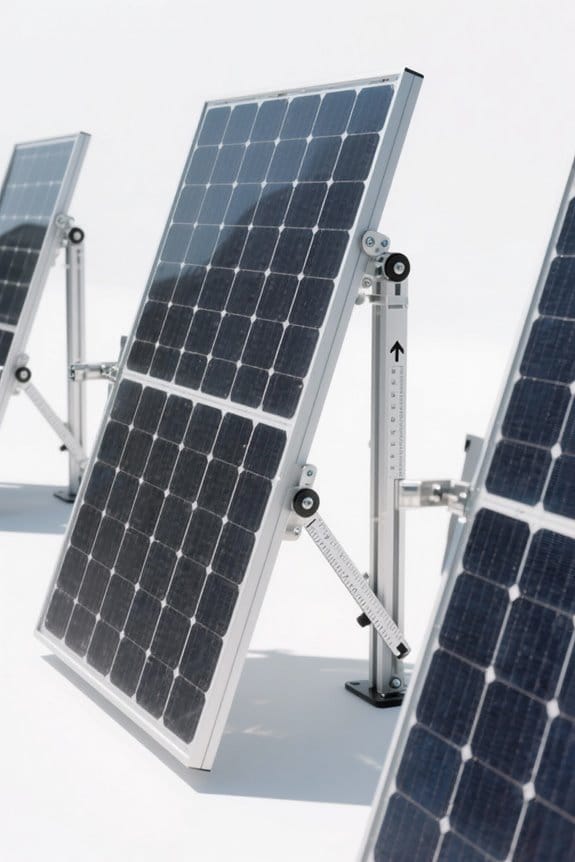

Orientation and tilt angle are vital for optimizing solar panel output. South-facing panels achieve the highest efficiency, while east and west orientations yield 75-85% of ideal performance. Tilt angles should align with geographic latitude, typically between 30° and 45°. Seasonal adjustments can increase energy capture by 5-10%, and improper tilting can lead to an 8-10% reduction in output. Proper site evaluations are key for minimizing shade impact. Understanding these concepts enhances solar energy production. Explore additional strategies for improvement.
Key Takeaways
- South-facing panels maximize energy production, while east and west orientations produce 75-85% of the ideal output based on user habits.
- Optimal tilt angles match geographic latitude, typically ranging from 30° to 45°, enhancing energy capture.
- Seasonal adjustments of tilt can boost energy capture by 5-10%, ensuring more efficient production year-round.
- Shading significantly reduces solar panel output; avoiding obstructions and optimizing placement is crucial for efficiency.
- Combining correct orientation, tilt, and advanced technologies like micro-inverters enhances overall solar energy performance and minimizes losses.
Understanding the Basics of Solar Panel Orientation and Tilt
When considering solar panel installation, understanding the basics of orientation and tilt is vital for maximizing energy output. Solar panel orientation refers to the direction panels face, with south-facing panels in the Northern Hemisphere receiving the most direct sunlight. This positioning maximizes energy production, yielding full capacity. East and west-facing panels, though effective, generate only 75-85% of this ideal output. The ideal tilt angle generally aligns with the local latitude, typically ranging from 30° to 45° for homeowners in the Midwest. Adjusting the tilt seasonally can further enhance solar energy capture by 5-10%, improving production across varying weather. Overall, precise placement is essential, as poor configurations can reduce energy production by up to 30%. In urban environments, solar panels promote greener living practices by reducing reliance on fossil fuels and lowering electricity costs.
The Importance of Tilt Angle in Solar Energy Production
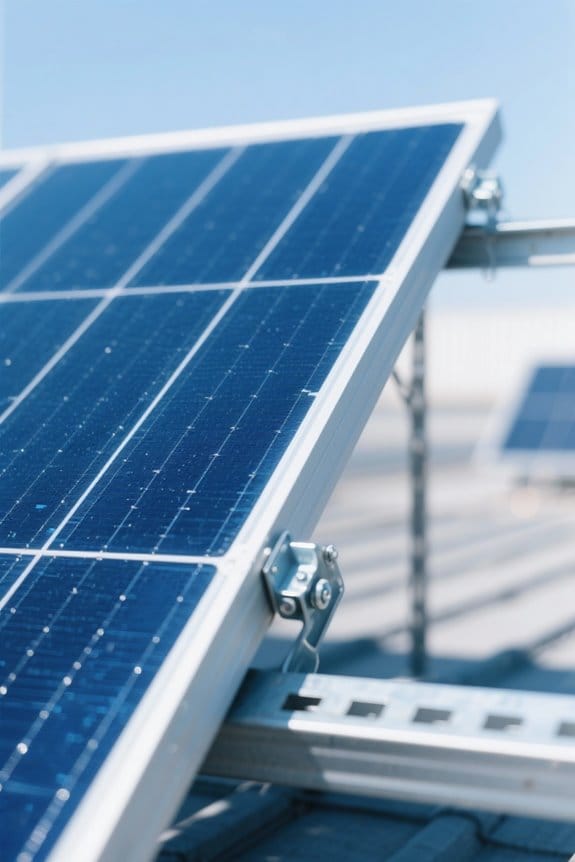
Determining the correct tilt angle for solar panels is vital for maximizing energy production. The ideal tilt typically matches the geographic latitude of the installation site, which is approximately 30 to 45 degrees for locations like Michigan. Adjusting the tilt seasonally can further enhance performance; modifying the angle by ±15 degrees in summer and winter can improve energy capture by 5-10%. It is important to avoid over-tilting, as exceeding the ideal angle can reduce energy output by 8-10%. Tools such as the PVWatts Calculator simplify this process, providing precise recommendations for tilt and orientation. Properly maximizing both aspects can potentially yield up to a 30% increase in energy production, making accurate tilt determination vital for efficient solar panel usage. Advanced technologies like ShadowFlux technology enhance power generation in shaded conditions, boosting efficiency by up to 25%.
How Geographic Latitude Influences Optimal Tilt
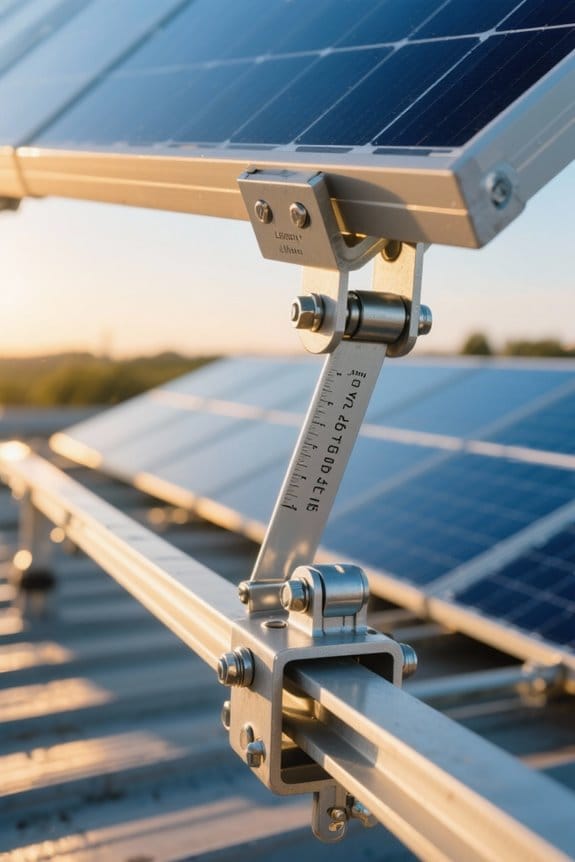
Geographic latitude plays an essential role in determining the ideal tilt angle for solar panels, directly influencing energy production efficiency. Typically, the preferred tilt angle is closely aligned with the installation site’s latitude, with necessary adjustments for seasonal variations. For instance, in Michigan, which has a latitude of 42-45°, the recommended tilt ranges from 30 to 45 degrees to maximize annual energy production. Adjusting the tilt angle seasonally can enhance performance; a tilt of latitude minus 15 degrees is suggested for summer, while a winter tilt of latitude plus 15 degrees is recommended. Neglecting these preferred settings may lead to 8-10% energy output reductions in northern areas, emphasizing the need for precise solar panel installation strategies based on local geographic latitude. Additionally, incorporating high-efficiency panels that withstand extreme weather conditions can further optimize energy output, ensuring that solar systems remain effective and durable over time.
Evaluating Roof Pitch and Its Impact on Solar Panel Efficiency
Understanding the impact of roof pitch on solar panel efficiency is essential for enhancing energy production. Roof pitch, typically ranging from 18° to 37° in U.S. homes, directly affects the tilt angle of solar panels, influencing energy generation efficiency. For example, the ideal tilt angle usually matches geographic latitude, providing maximum sunlight exposure. In the Midwest, including Michigan, the preferred tilt for solar panels falls between 30° and 45°, aligning well with common residential roof pitches. Lower-pitched roofs often require special mounting brackets to achieve these efficient solar panel angles. Additionally, adjusting the tilt angle for seasonal variations can enhance energy production by an additional 5-10%, demonstrating the importance of roof pitch in harnessing solar energy effectively. Using a lightweight material like aircraft-grade aluminum in snow rakes helps maintain solar panel efficiency by clearing snow without damaging the panels.
Seasonal Changes and Their Effect on Energy Output
As seasons change, the tilt angle of solar panels plays a vital role in maximizing energy output. In summer, a tilt of Latitude – 15° helps capture the more direct sunlight during longer days. This adjustment can enhance energy output considerably, while proper tilting may increase efficiency by 5-10%. Conversely, winter requires a tilt angle of Latitude + 15°, as the sun’s position is lower in the sky. This seasonal adjustment is essential to guarantee peak exposure. Regions with notable temperature variations, such as Michigan, often experience marked differences in solar production due to these tilt adjustments. Hence, understanding the impact of seasonal changes on tilt angles can lead to better performance of solar panels throughout the year. Many solar panels come with durability and protection features, such as IP68 waterproof ratings, which ensure they can withstand varying weather conditions throughout the year.
Optimal Panel Directions for Maximum Sun Exposure
To maximize solar energy production, the orientation of solar panels is essential for harnessing sunlight effectively. In the Northern Hemisphere, panels oriented true south achieve maximum solar output, especially during peak hours from 10 AM to 2 PM. South-facing installations can yield up to 100% of their best output. In contrast, east and west-facing panels typically produce around 75-85% efficiency, influenced by daily energy consumption patterns. Morning energy users may benefit from east-facing panels, while west-facing panels suit afternoon and evening consumption. North-facing panels are least effective, generating only 45-60% of the output. Adjusting the tilt of panels according to local latitude can further enhance energy capture, potentially increasing performance by 5-8% for best energy usage. Panels like bifacial solar panels capture sunlight on both sides, increasing efficiency by up to 30% and providing long-term energy savings.
The Benefits of South-Facing Solar Panels
South-facing solar panels offer considerable benefits for energy production, making them a preferred choice for many installations. Positioned towards true south, these panels capture maximum sunlight, especially during peak solar hours between 10 AM and 2 PM. Compared to east- or west-facing panels, south-facing panels can enhance energy output by 30%. This efficiency means they typically generate 75-85% more energy than north-facing installations, which only achieve 45-60% of peak production. This ideal orientation greatly boosts overall energy generation efficiency while providing a superior financial return on investment. The higher energy outputs lead to improved long-term savings on electricity costs, making south-facing panels an ideal choice for maximizing both energy production and financial benefits.
Analyzing Performance of East and West-Facing Panels
When evaluating the performance of east and west-facing solar panels, it becomes clear that both orientations can serve distinct roles in energy consumption. East-facing panels typically produce 75-85% of the output of ideal south-facing panels, which makes them beneficial for homes and businesses that use more energy in the morning. In contrast, west-facing panels also generate a similar 75-85% output, aligning more closely with afternoon and evening energy needs when demand is often higher. The performance of east- or west-facing panels can greatly affect energy utilization patterns, depending on specific consumption habits. In general, these orientations yield better financial returns than north-facing panels, which only generate 45-60% of ideal outputs, making them a more efficient choice for energy production. For optimal energy capture, it’s important to consider the proper positioning of solar panels, as this significantly influences charging efficiency and brightness.
Shading Effects and Site-Specific Evaluations
Shading can considerably reduce solar panel output, even when only a portion of the panel is affected. This reduction is due to energy losses that can occur throughout different times of the day and across seasons. To maximize energy production, site-specific evaluations are essential, allowing for detailed analysis of potential placement options that minimize shading. Ground-mounted systems often present better options than rooftop installations, as they can be positioned to avoid obstructions such as buildings or trees. Additionally, utilizing micro-inverters can help maintain production stability in shaded conditions, enhancing overall performance. Understanding these factors guarantees a more effective solar panel system tailored to unique locations. Installing a high-quality controller can enhance overall system efficiency and ensure that energy management is optimized, even in shaded conditions.
Tools for Calculating Ideal Tilt Angles
Determining the ideal tilt angle for solar panels is vital for maximizing energy production. The best angle typically aligns with the geographic latitude of the installation site. Tools like the PVWatts Calculator offer guidance by analyzing over 30 years of solar data to recommend precise tilt angles based on location and climate. For seasonal changes, it is advised to adjust the tilt to Latitude minus 15° in summer and Latitude plus 15° in winter. In the Midwest, homeowners often find success with tilt angles ranging between 30° and 45°. Accurate adjustments can enhance energy output by 5-10%. Understanding and utilizing these tools is essential for achieving the best performance from solar panels throughout the year. Proper connectors optimize energy transfer within solar installations, ensuring minimal energy loss and enhancing overall system productivity.
Strategies for Maximizing Solar Panel Efficiency Through Adjustment
Maximizing solar panel efficiency through adjustment involves strategic modifications to both the tilt and orientation of the panels. To enhance energy generation, homeowners should optimize Solar Panel Tilt by aligning it with their geographic latitude, such as 30 to 45 degrees for Michigan. Seasonal adjustments can further maximize sunlight exposure, improving performance by 5-10%. Panels should face true south in the Northern Hemisphere, as this orientation can increase energy production by up to 30% compared to east or west-facing setups. Additionally, employing tracking systems, which adjust the panels’ angle throughout the day, can remarkably improve output. Utilizing tools like the PVWatts Calculator can help determine the ideal angle for my solar installation based on extensive data.
Frequently Asked Questions
How Do Rotation and Tilt Each Affect the Amount of Solar Energy?
In the domain of solar energy, effective rotation and tilt are key to maximizing panel efficiency. Proper alignment enhances energy capture from solar radiation, achieving ideal positioning and greatly improving performance metrics throughout diverse conditions.
How Does the Tilt Angle Affect the Output of Solar Panels?
The tilt angle directly influences energy efficiency by determining ideal positioning for sunlight capture. Adhering to installation guidelines for seasonal variation can greatly enhance output, yielding better performance during both summer and winter months.
Does Orientation Matter for Solar Panels?
Orientation undeniably matters for solar panels, as ideal positioning is essential for maximizing solar panel efficiency. Installation guidelines vary based on geographic considerations, impacting energy output and determining the effectiveness of renewable energy systems.
What Is the 33% Rule in Solar Panels?
The 33% Rule highlights that ideal solar panel placement greatly enhances solar efficiency. Proper orientation maximizes energy production, ensuring system design utilizes maximum sunlight exposure, while east or west orientations yield remarkably reduced performance compared to south-facing installations.


