
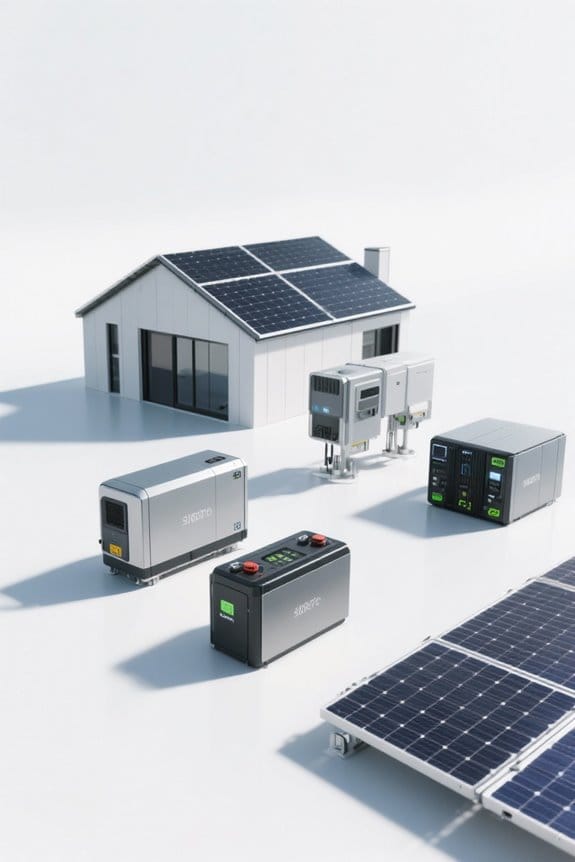

Home solar energy systems provide several environmental benefits. They can reduce carbon emissions by 3-4 metric tons annually per household, equivalent to planting over 100 trees. Solar panels also improve air quality by decreasing harmful pollutants. These systems require minimal water, conserving about 3,000 to 4,000 gallons per year. Technological advancements have increased solar panel efficiency and reduced energy payback time to 0.95 years. There are additional benefits to contemplate, leading to a deeper understanding of solar’s impact.
Key Takeaways
- Home solar systems reduce carbon emissions by 3-4 metric tons annually, improving urban air quality and mitigating respiratory illnesses.
- Solar energy uses minimal water, saving households 3,000 to 4,000 gallons annually compared to traditional power plants.
- Energy storage systems enhance solar efficiency by storing excess power, decreasing reliance on fossil fuels during outages.
- Recycling solar panels post-use ensures 95% of materials are recoverable, promoting sustainability and circular economy practices.
- Solar energy projects contribute to job creation and local economic growth while decreasing dependence on imported fossil fuels.
Overview of Solar Energy and Its Benefits
As communities seek sustainable energy solutions, solar energy emerges as a clean and renewable resource that offers significant environmental benefits. Solar energy generates clean electricity, drastically cutting down carbon emissions—typically eliminating about 3-4 metric tons annually for an average home. This reduction is akin to removing the carbon footprint of driving over 19,000 miles each year. Additionally, solar installations improve air quality by lowering pollutants such as particulate matter, nitrogen oxides, and sulfur dioxide. The energy payback period for solar panels is generally 2-4 years, a relatively short time considering their lifespan of around 25 years. With advanced technologies like ShadowFlux technology, solar panels maintain effective energy production even in shaded conditions, further enhancing their environmental and economic benefits. Overall, solar energy stands as a viable renewable energy source, promoting cleaner living and contributing to a healthier environment.
Environmental and Health Benefits
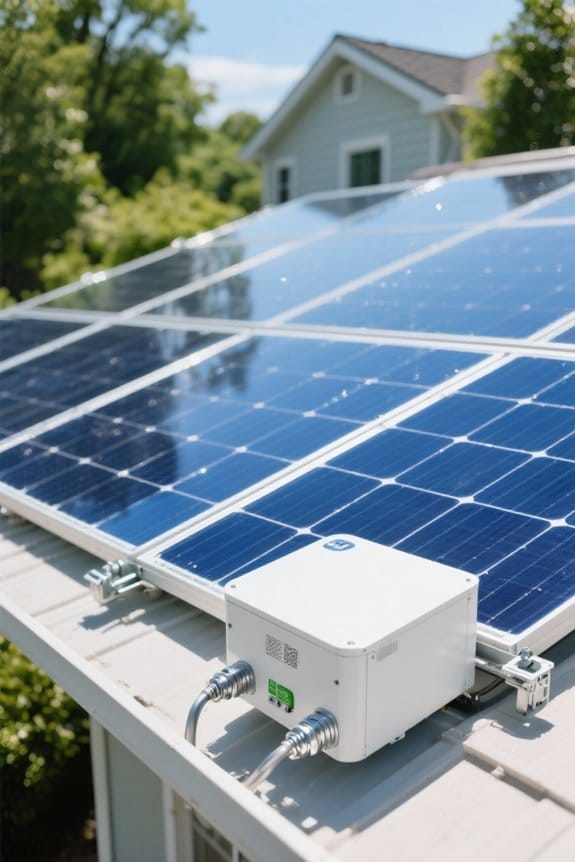
Shifting to solar energy brings a range of environmental and health benefits that remarkably improve community well-being. By moving to solar power, households can reduce greenhouse gas emissions by 3-4 metric tons annually, equivalent to planting over 100 trees each year. Solar energy generation avoids burning fossil fuels, enabling homeowners to considerably offset their carbon footprint within just a few years. Improved air quality results from decreased air pollution, including lower levels of particulate matter, nitrogen oxides, and sulfur dioxide. This reduction contributes directly to public health by lowering the incidence of respiratory illnesses, especially in urban areas. Additionally, solar installations use vastly less water, requiring only about 20 gallons per megawatt-hour compared to traditional power plants’ 20,000 to 60,000 gallons. Solar garden lights, such as those with weather resistance features, further promote environmental benefits by utilizing renewable energy sources for outdoor lighting.
Reduced Carbon Emissions

Reducing carbon emissions is a considerable advantage of adopting home solar systems. These renewable energy sources can prevent 3-4 metric tons of carbon emissions annually, equating to the carbon offset of planting over 100 trees each year. Solar energy systems generate electricity without burning fossil fuels, greatly decreasing greenhouse gas emissions. In fact, a typical home utilizing solar power can eliminate about 3-4 tons of carbon dioxide emissions each year. This not only supports global efforts to combat climate change but also promotes public health by lowering harmful air pollutants. The average energy payback time for solar panels is 2-4 years, after which they continue to provide clean energy for over 25 years, showcasing their lasting environmental benefits. High-Efficiency Solar Panels, such as those from Renogy, offer advanced technology and compact sizes, making them ideal for maximizing energy savings in home use by 2026.
Decreased Air Pollution
Residential solar installations greatly reduce harmful emissions by generating electricity without burning fossil fuels. A typical household with a solar energy system can prevent 3-4 metric tons of carbon emissions annually, equating to the impact of planting over 100 trees each year. This reduction also leads to decreased air pollution by lowering the levels of particulate matter, nitrogen oxides, and sulfur dioxide in the atmosphere. Consequently, improved air quality benefits urban residents by reducing respiratory illnesses and other health issues. By preventing emissions equivalent to about 8,440 pounds of coal each year, homes equipped with solar energy systems help create cleaner environments and enhance overall public health. Additionally, energy storage systems optimize the integration of renewable resources, enabling better utilization and efficiency, which contributes to further reductions in emissions and supports the adoption of sustainable practices at the community level.
Water Conservation Success
The adoption of solar energy systems provides significant advantages in water conservation efforts. Solar power generation requires minimal water consumption, using only about 20 gallons of water per megawatt-hour. In contrast, conventional power plants can consume up to 60,000 gallons for cooling. By installing solar panels, a typical household can reduce its reliance on water, saving approximately 3,000 to 4,000 gallons annually. These systems also enhance water quality by preventing thermal pollution associated with traditional energy sources. Additionally, since rooftop installations avoid the need for land clearance, they support sustainable land use and help preserve local ecosystems. Overall, these factors highlight the environmental benefits of solar regarding effective water conservation and reduced water pollution. High-efficiency ratings in solar panels, ideally above 23%, further amplify these benefits by ensuring maximum energy capture while minimizing resource use.
Land Use and Habitat Considerations
Rooftop solar installations exemplify a sustainable approach to energy generation that thoughtfully considers land use and habitat impacts. By utilizing existing structures, these installations notably reduce the need for land clearance, thereby minimizing environmental disruption. Proper placement of solar panels can avoid known wildlife pathways, promoting habitat preservation. Anti-reflective coatings on the panels further enhance wildlife protection by reducing bird collisions, contributing to the overall safety of local species. Additionally, solar installations can incorporate native plant landscaping, which enriches biodiversity while supporting local pollinators. This strategic integration of vegetation not only beautifies the area but also fosters healthier ecosystems. Ultimately, rooftop solar systems provide an efficient energy solution that aligns with essential environmental conservation goals. Enclosures like weatherproof junction boxes are crucial in maintaining the integrity of solar installations in varying environmental conditions, ensuring long-term efficiency and safety.
Community Solar Solutions
Community solar solutions represent a pivotal advancement in making renewable energy accessible to a broader audience. These initiatives allow individuals, particularly renters and those with unsuitable rooftops, to participate in renewable energy without installing their own solar panels. Community solar projects provide significant environmental benefits, with the potential to reduce carbon emissions by thousands of tons annually. Additionally, they help enhance local air quality by reducing reliance on fossil fuels, resulting in lower emissions of harmful pollutants. Participants often enjoy savings on electricity bills, making clean energy cost-effective. Moreover, these projects bolster local economies by encouraging community engagement and investments in sustainable practices and infrastructure, fostering a collaborative approach to cleaner energy consumption. UL certified batteries provide enhanced safety features, such as comprehensive testing by Intertek, ensuring reliable and safe energy storage solutions for community solar projects.
Benefits of Energy Storage
Energy storage systems play an essential role in enhancing the benefits of solar energy, making it more accessible and efficient for users. These systems, such as lithium-ion batteries, enable homeowners to store excess solar energy generated during the day for use during peak demand hours or nighttime. By optimizing energy usage, energy storage helps reduce dependency on fossil fuels, thereby promoting environmental sustainability. Additionally, these systems provide backup power during outages, which increases energy security and enhances resilience against grid failures. Furthermore, integrating energy storage can improve grid reliability by managing fluctuations in energy supply and demand. Ultimately, this technology can lead to significant financial savings by allowing users to take advantage of lower electricity rates during off-peak times. For instance, the 16kWh Wall-Mounted Lithium Solar Battery with Inverter offers significant capacity and a lifespan exceeding 15 years, making it an ideal choice for sustainable energy usage in residential settings.
Economic Advantages of Home Solar Systems
Considering the substantial financial implications, homeowners often find that investing in solar systems can yield notable economic advantages. Solar panels reach an average increase in property value of up to $15,000. Federal and state incentives, like solar renewable energy credits (SRECs), help offset initial installation costs, enhancing financial returns. With effective solar systems, homeowners can reduce energy costs remarkably, with some saving hundreds to thousands annually. Additionally, using solar panels enables homeowners to sell excess energy back to the grid, creating an extra income stream. The long lifespan of solar panels, typically around 25 years, allows homeowners to enjoy decades of savings, maximizing their investment and contributing to a more sustainable financial future. Solar power helps reduce energy bills and provides a sustainable energy source with minimal environmental impact, making it an attractive option for eco-conscious homeowners.
Technological Advances in Solar Energy
Although solar energy technology has advanced markedly in recent years, many homeowners may not realize the extent of these improvements. For instance, the efficiency of residential solar panels has reached 22.8%, enabling greater energy production from the same surface area. Additionally, the average energy payback time for silicon rooftop solar panels is now just 0.95 years, meaning they generate more clean energy than needed for their production in a short period. Technological innovations, such as enhanced battery storage systems, are also contributing to greater sustainability and energy efficiency. Moreover, material usage for solar cells has decreased by 84% over 16 years, underscoring a commitment to environmentally responsible solar technology and practices, resulting in benefits for both homeowners and the planet. Ideal Warranties of 25 years for performance ensure long-term reliability, protecting investments in solar technology.
Lifecycle and Recycling of Solar Panels
The lifecycle of solar panels embodies a commitment to sustainability, extending from their production to their ultimate disposal or recycling. Solar panels typically have an energy payback time of 2 to 4 years, meaning they generate enough clean energy to offset emissions from their manufacturing process. After an average lifespan of 25 to 30 years, around 95% of solar panel materials, including glass and aluminum frames, can be recycled at the end of their life. Developing recycling infrastructure supports circular economy principles, which enable the recovery of valuable components. Investments in advanced recycling technologies enhance the efficiency of this process, ensuring that the environmental benefits of solar energy continue to support sustainability efforts long after the panels are retired.
Supporting Local Economies Through Solar Adoption
Solar adoption considerably impacts local economies by providing new financial opportunities and enhancing community resilience. The installation of solar systems can increase property values by an average of $15,000, benefiting local real estate markets and boosting tax revenues. Additionally, solar energy projects create substantial job opportunities, supporting around 250,000 jobs in the U.S. as of 2023—from manufacturing to installation and maintenance. Community solar initiatives enable residents without suitable rooftops to participate economically, fostering cooperation and shared savings. By decreasing reliance on imported fossil fuels, solar installations keep an estimated $3 billion circulating within local economies. Moreover, local businesses enjoy reduced electricity costs, allowing for reinvestment and contributing to enduring economic stability and growth.
Frequently Asked Questions
Are Home Solar Panels Good for the Environment?
Home solar panels greatly contribute to the environment by promoting clean energy and renewable resources, reducing carbon footprints, enhancing energy independence, and supporting sustainable living through eco-friendly technologies and governmental incentives, showcasing their numerous solar energy benefits.
What Is the 33% Rule in Solar Panels?
Like a compass guiding a ship, the 33% rule guarantees solar panels produce excess energy, optimizing solar efficiency and system sizing. Proper panel orientation addresses financial incentives while maneuvering installation challenges and enhancing overall energy production.
What Is the Main Environmental Benefit of Using Solar Power?
The main environmental benefit of using solar power lies in its ability to reduce greenhouse gases, lower carbon footprints, and provide clean energy, promoting energy independence and a sustainable future with minimal ecological impact compared to traditional energy sources.
Why Is My Light Bill so High if I Have Solar Panels?
Despite solar panels gleaming with potential, high light bills emerge from solar system efficiency woes, energy production variability, seasonal sunlight changes, inverter performance issues, and costly maintenance, leaving homeowners grappling with utility rate structures and energy consumption habits.


