


Power requirements for a small off-grid cabin typically consist of around 2400 watt-hours (Wh) daily. This includes about 100W for continuous overnight use. Energy sources like solar, wind, and micro-hydro are essential, complemented by reliable battery storage. Lithium batteries are preferred for their efficiency. Utilizing energy-efficient appliances, such as LED lights, can greatly reduce consumption. Additionally, understanding seasonal variations in energy production is important for maintaining a consistent power supply. More details will be advantageous for best planning.
Key Takeaways
- Small off-grid cabins typically require around 2400 watt-hours (Wh) of energy daily to meet their needs efficiently.
- Utilizing renewable energy sources like solar panels and wind turbines helps supply power, especially during peak hours.
- Battery storage, particularly lithium-ion, is crucial for maintaining energy supply during low generation periods and overnight consumption.
- Energy-efficient appliances and 12V DC systems can significantly reduce overall power consumption in an off-grid setting.
- Seasonal variations necessitate regular assessments of energy needs and infrastructure adjustments to maintain sufficient power supply throughout the year.
Understanding Your Power Needs
When considering how to power a small off-grid cabin, one might wonder what specific energy requirements are necessary for daily operations. Understanding power requirements begins with calculating daily energy consumption. For many off-grid cabins, this averages around 2400 watt-hours (Wh) per day, particularly when accounting for intermittent loads. Continuous energy needs may only consume approximately 100W overnight. The implementation of a solar power system involves solar panels that convert sunlight into electricity, but it is vital to also factor in the potential decrease in energy generation during cloudy days. Sufficient battery storage is important for storing excess energy and meeting energy needs during less ideal conditions. Proper battery energy storage systems can provide reliable backup power during outages, ensuring continuous operation of essential devices. Planning thoughtfully can guarantee the cabin operates efficiently and sustainably year-round.
Assessing Daily Energy Consumption
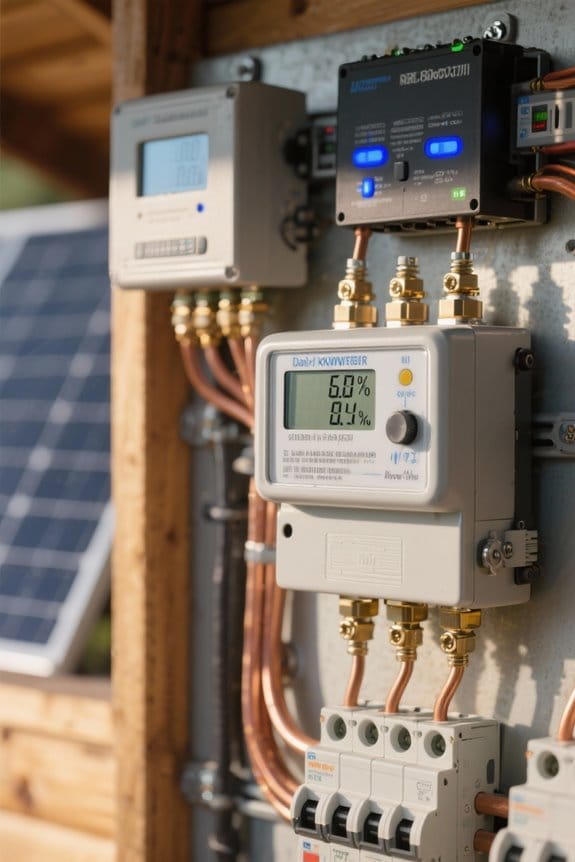
Evaluating daily energy consumption for a small off-grid cabin requires careful calculation of the total watt-hours needed based on the appliances utilized. An average off-grid cabin might expect to consume around 2400 Wh per day. Continuous operation can draw approximately 100 watts overnight, markedly adding to total energy consumption. Daytime use of appliances, such as RV water pumps and laptops, also affects energy needs. To optimize consumption, it is vital to minimize inverter use because they can increase idle energy requirements. Using 12V appliances directly connected to the battery bank is another effective strategy. Additionally, one must consider seasonal variations that affect solar panel output, which may require adjustments in battery capacity to guarantee adequate energy availability. The efficiency of solar panels plays a crucial role in energy production, with panels having ratings over 20% being recommended for optimal performance, reducing space requirements and enhancing environmental benefits.
Key Power Sources for Off-Grid Cabins
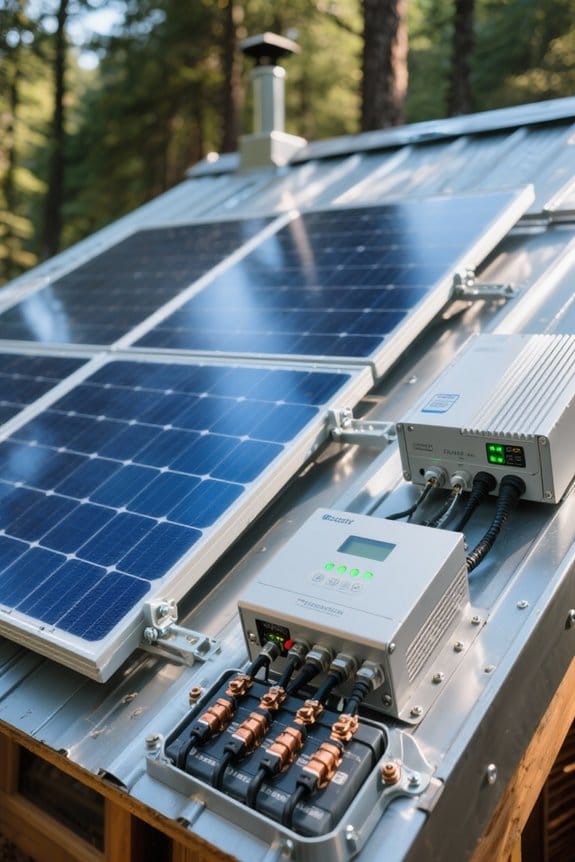
A variety of power sources are vital for effectively operating an off-grid cabin, with renewable energy options being the most common. Solar energy is a popular choice, utilizing solar panels to convert sunlight into electricity, especially during daytime hours. Wind turbines can enhance energy generation in locations with consistent winds, while micro-hydro systems provide continuous energy from flowing water. To meet diverse power needs, many off-grid setups combine these sources, ensuring reliability even in winter months or cloudy conditions. Battery banks are important, storing energy for nighttime use; options include cost-effective lead-acid batteries and longer-lasting lithium-ion batteries. Portable solar generators also offer flexibility for weekend cabins, catering to lower energy consumption demands with ease of setup. Among these, the Jackery Solar Generator stands out for its portability and rapid recharge capabilities, making it a suitable choice for off-grid living.
The Importance of Battery Storage
Battery storage plays a critical role in the success of off-grid cabins, as it guarantees a reliable power supply even during periods of low energy generation. Homeowners can store energy from renewable sources, such as solar panels, ensuring power is available at night or on cloudy days. In off-grid systems, lithium batteries are favored for their efficiency and longevity. Properly sizing battery banks is essential; a small cabin may need 100-200 amp-hours of capacity to meet average overnight energy demands of 100-300 watt-hours. This setup allows residents to avoid generators during times of low solar output, reducing both fuel costs and emissions. Maintaining ideal temperatures is key to battery performance, emphasizing the importance of insulation and battery choice in off-grid living. Many solar backup systems offer expandability options to accommodate increasing energy needs over time.
Utilizing Solar Power Effectively
Maximizing solar power in a small off-grid cabin requires strategic planning and consideration of several key factors. To achieve the necessary power, a solar system should produce approximately 2400 Wh/day. This can be accomplished with around 12 solar panels, each rated at 400 watts, especially in areas receiving enough sunlight. Proper panel placement can increase efficiency by 10-25% if tilted at an ideal angle. To guarantee continuous energy supply during cloudy days or at night, it is advisable to integrate a battery bank with four 100 Ahr LiFePO4 batteries. Additionally, monitoring energy consumption and minimizing the use of high-wattage appliances is essential to enhance solar power and align everything with generation and storage capabilities. For optimal energy storage, consider using a 48V solar battery with a robust Battery Management System (BMS) to ensure safety and compatibility with your solar setup.
Exploring Alternative Energy Options
While solar power stands out as the most common and practical alternative energy option for small off-grid cabins, other renewable sources can effectively supplement energy needs. Wind turbines can generate total power even when sunlight is insufficient, providing much energy on cloudy days or during the night. For cabins near flowing water, micro-hydro systems can offer a continuous power supply, operating 24/7 with minimal environmental impact. Additionally, homeowners may choose the right backup generators powered by gasoline or propane for prolonged low-energy periods, though these come with higher costs and emissions. By combining solar, wind, and micro-hydro systems, off-grid cabin owners can enhance reliability and efficiency, ensuring they meet their diverse energy requirements sustainably. Many solar irrigation pumps enhance sustainable farming practices with significant water savings of up to 70% compared to traditional systems.
Tips for Optimizing Energy Efficiency
To enhance energy efficiency in a small off-grid cabin, homeowners should make deliberate choices that align with sustainable practices. Utilizing 12V appliances minimizes reliance on inverters, reducing unnecessary energy consumption. Incorporating LED lights can save considerable power, especially when combined with timers or motion sensors to control lighting needs. Proper insulation and passive solar heating reduce heating costs, maximizing overall energy efficiency. Additionally, employing a battery management system allows for monitoring usage and charging cycles, which maintains the best performance of batteries. Effective solar panel positioning is essential; adjusting panels to maximize exposure during peak sunlight can greatly boost energy production. Choosing the right solar charge controller is crucial as it prevents overcharging and prolongs battery life. Implementing these strategies will guarantee more efficient energy usage in a small off-grid cabin.
Choosing the Right Appliances for Off-Grid Living
Choosing the right appliances is essential for successful off-grid living, as energy efficiency directly impacts sustainability and comfort. Selecting energy-efficient models, such as LED lights and Energy Star-rated refrigerators, helps minimize power consumption. Using 12V DC appliances whenever possible is advisable because it reduces the energy losses associated with inverters, optimizing overall usage. For example, a standard refrigerator may require 800 to 2,000 watt-hours daily, considerably influencing energy needs and solar panel capacity. Additionally, intermittent appliances like laptops and water pumps typically add about 100 watts to continuous power draw, which should be included in consumption calculations. Incorporating propane appliances can further lessen electrical demands, ensuring a more sustainable approach to off-grid living. Portable solar batteries, like the BLAVOR Solar Charger, can provide a lightweight and efficient power source for small electronic devices, contributing to a comprehensive off-grid energy solution.
Planning for Seasonal Variability in Energy Use
Understanding seasonal variability in energy use is vital for anyone managing an off-grid cabin. During winter, energy production may dwindle, with solar panels generating only 5-10% of their maximum output on overcast days. Therefore, it is essential to plan for peak energy needs, especially as appliances for heating and hot water consume more electricity. To ensure a reliable power supply, portable power stations with fast recharge times can be an effective backup during periods of low solar output. To guarantee enough solar power, cabin owners might need multiple solar panels or larger lithium batteries for storage. Energy-efficient appliances can considerably reduce overall demand, enabling effective power management. Additionally, evaluating daily energy usage and adapting resource allocation can help mitigate the impact of seasonal changes. This proactive approach assures a reliable energy supply throughout the year, despite variations in sunlight and temperature.
Frequently Asked Questions
How Much Power Do I Need for an Off-Grid Cabin?
Determining power needs for an off-grid cabin requires evaluating power consumption, energy efficiency, battery capacity, and power sources. A solar setup, careful load calculation, and inverter choice guarantee energy independence tailored to individual usage.
How Do You Power an Off-Grid Cabin?
To power an off-grid cabin, one should focus on solar panel installation, incorporate battery storage solutions, use energy-efficient off-grid appliances, consider renewable energy sources, and implement energy monitoring systems through regular cabin energy audits.
How Long Will a 100AH Battery Last Off-Grid?
A 100Ah battery can last 12 hours at 100 watts, influenced by battery capacity, energy consumption, inverter choice, and load analysis. Deep cycle usage and battery maintenance further optimize performance in off-grid systems.
Can a 200 Watt Solar Panel Run a 12 Volt Refrigerator?
In the domain of off-grid energy, a 200-watt solar panel can indeed run a 12-volt refrigerator, provided that efficiency, battery capacity, and power management are optimized to meet cooling requirements and fridge power consumption effectively.


