


To prepare your home for solar panels, first assess its solar potential by evaluating energy consumption and roof orientation. Confirm the roof is in good condition, ideally angled at 15 to 40 degrees and south-facing. Conduct a shading analysis to identify obstructions blocking sunlight. Look into financial incentives, such as a 30% federal tax credit. Finally, choose a qualified installer and prepare the installation area. More detailed steps and considerations are available for a successful solar change.
Key Takeaways
- Evaluate your home’s energy consumption to set clear solar offset goals.
- Inspect the roof for age, structural integrity, and optimal angle for sun exposure.
- Verify local regulations, incentives, and HOA restrictions related to solar panel installation.
- Clear outdoor areas and maintain a clutter-free yard for easy access during installation.
- Obtain quotes from multiple qualified solar installers to compare services and costs.
Assessing Your Home’s Solar Potential
How can homeowners effectively evaluate their solar potential? First, they should assess their energy consumption to gauge how much of their electricity costs they want to offset with solar panels. Tools like a solar pathfinder or the NREL calculator can determine site-specific sunlight exposure, taking into account any shading issues. An energy assessment by qualified solar installers will analyze current electric bills and forecast future energy needs, which may include new appliances or electric vehicles. Homeowners should also evaluate their roof space; south-facing surfaces with minimal shading maximize solar capability. Improving energy efficiency, such as upgrading to high-efficiency appliances, will enhance the performance and size requirements of the solar system, leading to peak energy generation. It’s also important to consider the importance of solar panel fuses to ensure safety and prevent overloads and short circuits in the solar setup.
Evaluating Roof Condition
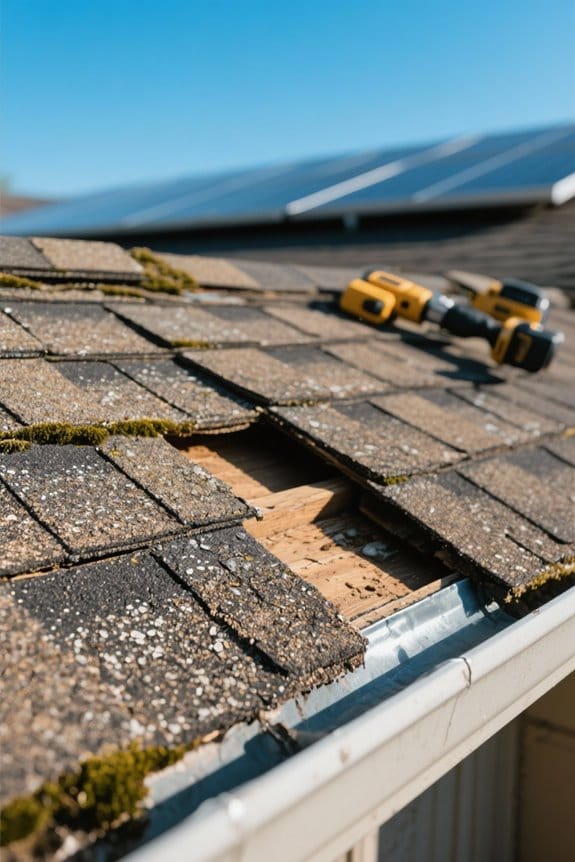
Evaluating the condition of a roof is fundamental before installing solar panels. Homeowners should assess the roof’s age and structural integrity, as it must support solar panels for at least 25 years without needing repairs. Additionally, the roof’s angle should ideally be between 15 and 40 degrees for ideal sunlight capture. Inspecting existing roofing materials is vital, as some may require adaptations during solar panel installation. Necessary repairs should be completed beforehand to guarantee a stable foundation for the solar energy system. Finally, conducting a shading analysis will help identify nearby trees or buildings that could block sunlight, allowing for adjustments that support efficient solar panel functionality and longevity. Using tinned copper benefits in your solar panel extension cables can enhance conductivity and corrosion resistance, further ensuring that your solar energy system operates efficiently over its lifespan.
Shading Analysis and Roof Orientation
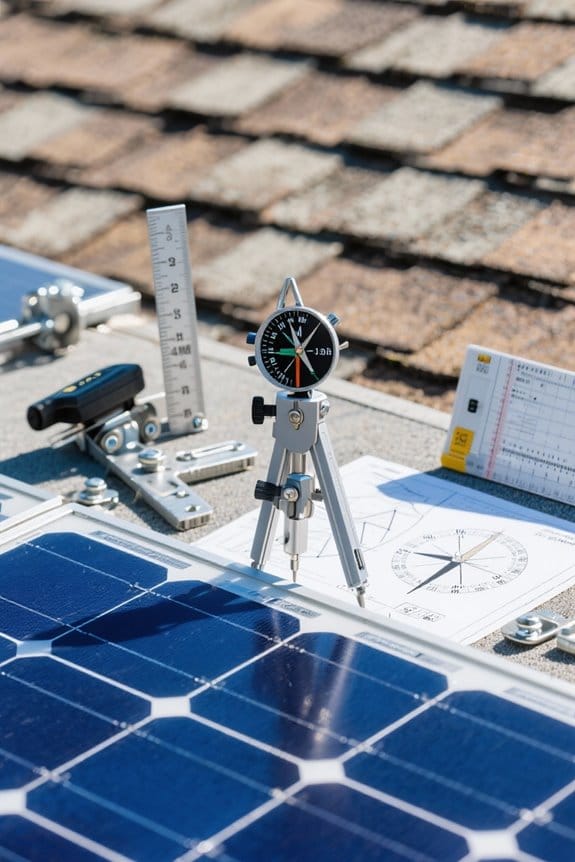
After ensuring the roof’s condition is sound, the next step involves evaluating roof orientation and conducting a shading analysis. A south-facing roof typically captures the most sunlight, making it ideal for solar panel installations. However, east or west orientations are viable depending on surrounding obstructions. A shading analysis is essential to identify trees or buildings blocking sunlight during peak hours, influencing energy production. Roof tilt matters too; a slope between 15 and 40 degrees enhances solar panel efficiency. Adequate roof space must also be measured, ensuring enough area exists for all required solar panels. Regular maintenance, such as trimming overhanging branches, helps minimize shading and improves the performance of solar energy systems over time. For optimal performance, consider using LiFePO4 batteries known for over 3,000 charge cycles to ensure longevity and durability.
Energy Consumption Assessment
Understanding energy consumption is essential for homeowners considering solar panel installation, as it directly influences the size and efficiency of the solar system needed. Homeowners should review their electricity bills from the past 12 months to calculate their average monthly energy consumption in kilowatt-hours (kWh). Identifying peak usage months helps determine the necessary size of the solar system. Projected increases in energy needs, such as adding an electric vehicle, can impact system capacity requirements. Engaging with a solar provider can assist in analyzing energy patterns to tailor a solution that meets household energy demands. Additionally, conducting an energy audit can reveal energy-saving opportunities, optimizing system efficiency and size before solar installation. Consideration of battery compatibility is crucial for efficient energy storage and utilization in off-grid solar systems.
Financial Considerations and Incentives
Financial considerations play a crucial role in the decision-making process for homeowners interested in solar panel installation. To offset the upfront cost, homeowners can take advantage of a 30% federal tax credit available for solar systems installed from 2022 to 2032. Additionally, state and local incentives, such as rebates, can also lower these costs, enhancing overall savings. Homeowners can explore various solar financing options, including personal loans, solar leases, and Power Purchase Agreements (PPAs), tailored to their financial circumstances. Engaging with a solar financing guide can help individuals navigate available solar incentives. Moreover, net metering allows homeowners to sell excess energy back to the grid, effectively reducing energy costs and maximizing financial returns from their solar investments. One effective option for solar energy storage is the 16kWh Wall-Mounted Lithium Solar Battery, which features a lifespan exceeding 15 years and over 6,000 cycles, making it a reliable choice for sustainable energy usage in residential settings.
Upgrading Electrical Systems
Upgrading electrical systems is an essential step for homeowners planning to install solar panels. A licensed electrician should review the current electrical panel’s capacity to determine whether it can support the additional load from a solar energy system. Older panels may require upgrading to handle modern demands and prevent safety hazards. Enhancing the electrical system not only allows for seamless solar integration but also improves home efficiency. Homeowners should also consider future electricity usage, such as electric vehicles, when evaluating their system’s suitability. Adhering to the National Electric Code guarantees compliance with safety standards. Pure sine wave technology ensures that the solar inverter is compatible with sensitive electronics, providing efficient power conversion for home appliances. Ultimately, upgrading electrical panels contributes to energy independence and optimizes system design for any additional energy needs.
Understanding Local Regulations and HOA Rules
Homeowners should be aware of the various local regulations and homeowners association (HOA) rules that can impact solar panel installation. Before proceeding, they must check local building codes and zoning regulations to guarantee compliance and avoid potential fines. Many HOAs impose restrictions on solar panel placement, aesthetic appearance, and installation procedures, which need careful review. Homeowners must obtain necessary permits from local government authorities prior to installation; failure to do so can result in penalties or mandated removal. Local regulations sometimes specify the distance solar installations must maintain from property lines or neighboring structures. Staying updated on changing regulations regarding renewable energy can assist homeowners in steering through future legal requirements affecting their solar projects. Ensuring battery compatibility with various types like LiFePO, AGM, or SLA is crucial for maintaining efficiency and preventing potential system damage.
Planning for Battery Storage
Battery storage plays a critical role in maximizing the benefits of a solar energy system by allowing homeowners to store excess energy for later use. To effectively plan for battery storage, it is essential to evaluate daily energy needs, determining the appropriate battery capacity, typically ranging from 5 kWh to over 20 kWh. This capacity is vital for providing backup power during outages. Installation locations should be selected for accessibility and safety, with garages or utility rooms being ideal. Additionally, early evaluation aids the installation process, helping integrate battery storage smoothly into the solar energy system. 100Ah LiFePO4 batteries offer efficient storage solutions for off-grid applications, thanks to their lightweight design and high energy density. Ultimately, a well-planned battery storage system enhances energy independence, enabling the use of stored excess solar energy during peak demand times.
Choosing the Right Solar Installer
How can one guarantee they select the most suitable solar installer for their needs? Begin by seeking solar installers with at least three years of experience, as this indicates a solid track record in the industry. It is essential to verify that the installer has proper licensing, registration, and insurance for residential solar installations. Additionally, check for NABCEP certification, which shows a commitment to high standards. Reading customer reviews helps assess the quality of service provided. To make an informed decision, obtain quotes from at least three different installers; confirm these quotes include comparable metrics such as system capacity, total costs, and warranty information. This process will confirm the most suitable installer for your home solar project while enhancing energy efficiency. Consider the importance of high capacity options, as they ensure your home can handle energy demands efficiently and reliably.
Preparing for Installation Day
Preparation for installation day is crucial to guaranteeing a smooth experience. Homeowners should clear pathways, driveways, and walkways, providing unobstructed access for the installation crew and necessary equipment. Removal of garden furniture, outdoor decorations, and personal items will create a safe and efficient work environment. Maintaining a clutter-free yard and roofline is essential; trimming overhanging branches enhances ideal solar panel placement and maximizes sun exposure. Additionally, it is important to communicate any specific access needs or concerns to the solar installer well in advance. Keeping pets indoors during the installation process not only secures their safety but also minimizes distractions for the installation crew, leading to a more effective and organized installation day. Consider using lithium batteries with a built-in Battery Management System to ensure safety and optimal performance of your solar energy system.
Frequently Asked Questions
What Is the 20% Rule for Solar Panels?
The 20% rule suggests solar panels should produce 20% of a home’s electricity needs, enhancing energy cost savings. This approach involves roof condition assessment, energy audits, and considering net metering and local solar incentives for installation benefits.
What Is the 33% Rule in Solar Panels?
In the domain of solar energy, the 33% rule symbolizes balance; it dictates that solar panel installations should cover no more than this area, ensuring ideal energy output, efficiency, roof suitability, and mitigating shading issues for long-term sustainability.
Why Is My Electric Bill so High if I Have Solar Panels?
High electric bills despite solar panels can result from low solar panel efficiency, inadequate installation, increased energy consumption habits, and fixed utility charges, overshadowing potential savings from net metering, battery storage, and incentive programs.
What Is the 120 Rule for Solar Panels?
The 120 Rule dictates that solar panel installation should not exceed 120% of a home’s energy efficiency needs to optimize government incentives and system sizing. Utility regulations guarantee compliance while addressing shading issues and maintenance requirements.


