
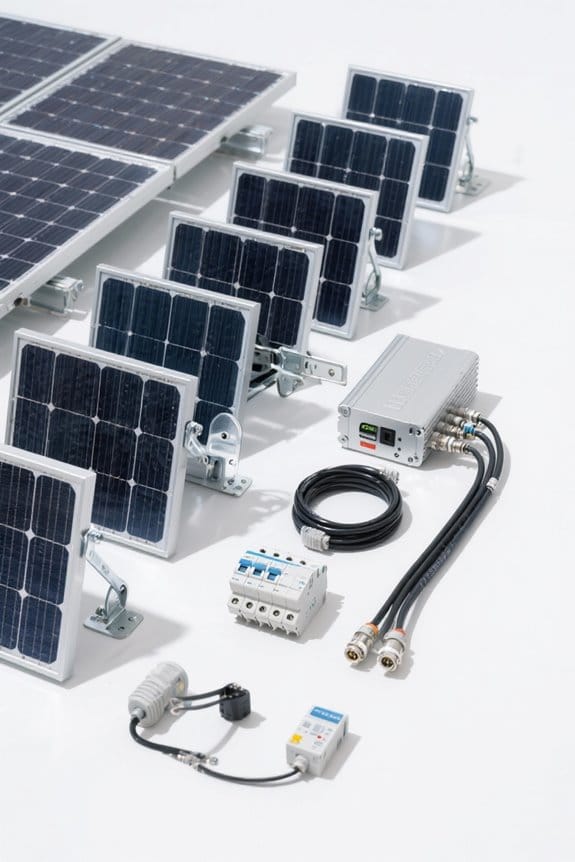

To safely expand an existing solar array, first assess current energy needs by analyzing past electricity bills and considering future consumption changes. Evaluate available roof or ground space to prevent shading and guarantee structural integrity. Check inverter compatibility, matching specifications like voltage and amperage. Regular maintenance is essential for efficiency. Utilize monitoring tools to track performance post-expansion. Finally, understand warranty requirements and local regulations to maintain compliance during upgrades. Further insights will enhance your understanding of this process.
Key Takeaways
- Assess current energy consumption and future needs using tools like the A1 SolarStore Calculator before expanding your solar system.
- Ensure new panels match the wattage, voltage, and amperage of existing installations to maintain system efficiency.
- Consult certified installers for compliance with local regulations and to avoid voiding warranties during the expansion process.
- Regular maintenance and performance monitoring are crucial to identify efficiency issues and maximize energy production after expansion.
- Check structural integrity and available space before adding new panels, considering ground-mount options if roof space is limited.
Assessing Your Current Solar Needs
When evaluating solar energy requirements, individuals should begin by thoroughly analyzing their current electricity consumption patterns. This includes reviewing electricity bills to identify trends in energy consumption. Evaluating the efficiency of the existing solar system is equally important; panels degrade at approximately 0.8% per year, impacting energy production. Regular maintenance can prevent efficiency losses; clean panels avoid a reduction of up to 25% in output. Additionally, individuals should evaluate potential changes in energy needs, such as new appliances or an increase in household size. This foresight can help determine if additional panels are necessary. Tools like the A1 SolarStore Calculator can assist in estimating the appropriate system size for future expansion needs, ensuring a well-suited solar solution. It is also beneficial to consider the integration of energy storage systems for enhanced energy management and long-term value in your solar setup.
Evaluating Available Space for Expansion
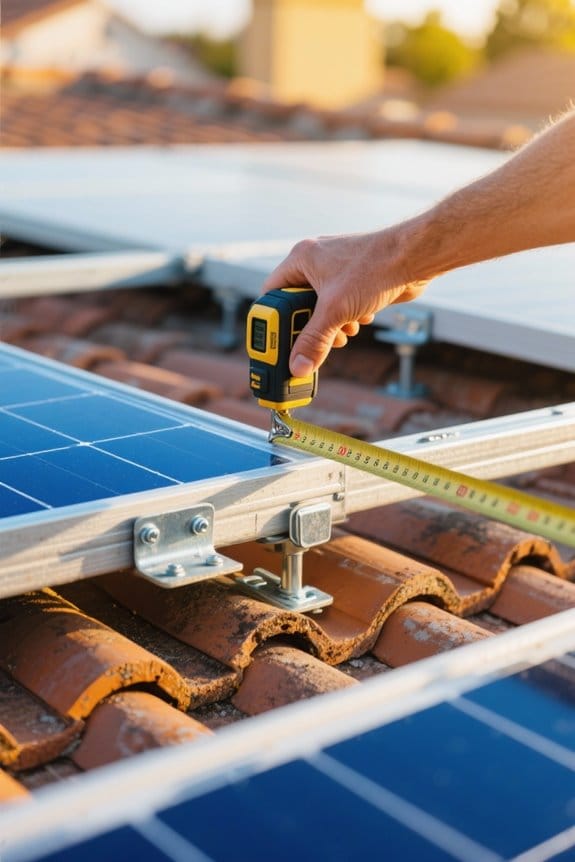
Evaluating available space for expansion is essential for enhancing a solar array’s potential. First, assess the available roof space for additional solar panels, guaranteeing there is enough area to prevent overcrowding or shading existing installations. If roof space is limited, consider ground-mount options, which allow flexible placement and peak sunlight exposure. Next, evaluate the structural integrity and weight-bearing capacity of the roof, as each additional panel weighs between 40 to 60 lbs. Additionally, check local regulations regarding installation space to ascertain compliance. Finally, verify the new panels align for maximum energy production, ideally facing true south with a tilt angle matching your latitude. This careful evaluation supports safe and efficient expanding your solar array. To ensure a long-lasting installation, consider using solar ground screws, which provide a stable foundation and enhance the durability and reliability of solar energy systems.
Understanding Inverter Compatibility
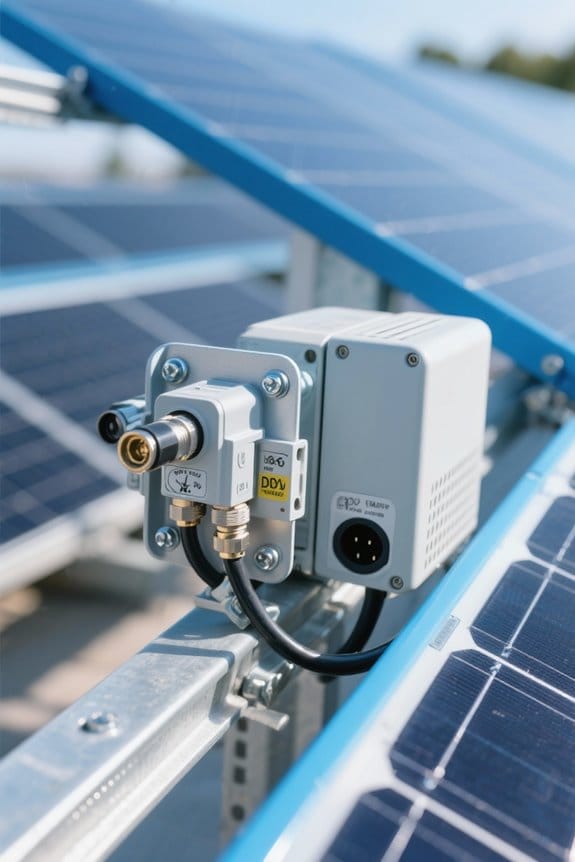
Inverter compatibility plays a vital role in the successful expansion of a solar array, as it directly impacts system efficiency and performance. When expanding your system, it is important to match the wattage, voltage, and amperage of existing panels with any new ones being added. Many inverters can handle up to 33% more power than their rated capacity, allowing some flexibility during expansion. However, a single MPPT (Maximum Power Point Tracking) inverter can only support one string of panels, limiting options. If different brands are used, verify they meet voltage specifications within 1 volt to maintain efficiency. Microinverters can simplify the process, allowing new panels to function independently and potentially enhance overall energy output without matching existing panel specifications. Additionally, considering the durability and safety features of solar battery racks can ensure longevity and reliability in your solar energy system.
Considering Different Expansion Options
Expanding a solar array offers several options, each with distinct advantages and considerations. Homeowners can choose to add new solar panels directly to their existing system, provided these panels match the wattage, voltage, and amperage of the current setup to avoid efficiency losses. Alternatively, for outdated systems, homeowners might consider installing an independent system, allowing for the integration of newer technology without guaranteeing compatibility with older components. Utilizing an inverter with multiple channels or microinverters facilitates easier expansion, as new solar panels can operate without complex matching. Consulting a certified installer is essential for maintaining warranties and complying with local regulations. Conducting a DIY solar project can be an option, but caution must be taken to guarantee safety and effectiveness. Additionally, selecting high-quality solar panel connectors can optimize energy transfer and minimize energy loss, enhancing the overall efficiency and productivity of the expanded solar array.
Analyzing Solar Panel Compatibility
When evaluating compatibility for a solar panel expansion, it is vital to contemplate the existing system’s specifications closely. This includes matching wattage, voltage, and amperage of new panels with the current system. For systems using string inverters, this becomes critical because they often have a single Maximum Power Point Tracker (MPPT) input. Adding panels from different brands can reduce energy production efficiency. In contrast, microinverter systems allow for independent addition of new panels, simplifying compatibility checks. Conducting a diagnostic on existing panels for degradation is important, as efficiency typically declines by about 0.8% annually. Solar panel efficiency is crucial for maximizing energy output, and panels with ratings over 20% are recommended to optimize performance and reduce space requirements. Finally, reviewing warranty documentation guarantees that modifications do not void existing coverage on the solar panels and inverter.
Importance of Regular Maintenance
Regular maintenance of solar panels is essential for maximizing their efficiency and longevity. By keeping panels clean and free of dirt, energy production can enhance by up to 25%. Solar panels typically degrade at a rate of 0.8% per year, making performance monitoring critical for maintaining ideal efficiency. Inspections should include checking wiring and panels for damage from storms or wildlife, which is essential for preserving system integrity. Thorough diagnostics can reveal maintenance needs before expanding the system, ensuring new components will function effectively. Regular maintenance checks can also prolong the life of solar equipment, with panels lasting up to 30 years and retaining about 80% of their rated power after 25 years.
Navigating Local Regulations and Permits
Maneuvering local regulations and permits is a critical step in the solar array expansion process, as compliance guarantees safety and effectiveness of the installation. Local authorities typically require permits for modifications to verify adherence to building codes. This process may involve submitting plans for approval from the authority having jurisdiction (AHJ). Utility companies often require a net energy metering (NEM) application to facilitate grid integration during expansion. Upgrades to safety measures, such as rapid shutdown capabilities, may be necessary, particularly in light of regulatory changes like NEC 2014. Engaging professional installers can streamline the bureaucratic process by aiding in the acquisition of permits and managing the approval process, ensuring the project aligns with established regulations. Incorporating systems with advanced controllers can enhance charging capabilities, ensuring that the expanded solar array operates efficiently while complying with all safety standards.
Working With Professional Installers
Engaging professional installers is a pivotal step in the solar array expansion process, ensuring compliance with local regulations and maximizing system performance. These certified experts help prevent legal complications by adhering to regulations and codes throughout the installation. They understand warranty requirements, performing expansions that maintain existing coverage, thereby avoiding voids. Additionally, professional installers assess the compatibility of new panels and inverters, ensuring their efficiency aligns with the current system. Regular inspections are recommended every 6 to 12 months to ensure optimal performance and safety. They simplify the process by guiding permit applications and utility requirements for net energy metering (NEM), allowing homeowners to benefit from potential savings. By leveraging their expertise, installers provide valuable insights that lead to successful solar expansions. Therefore, hiring experienced professionals is essential for a smooth, efficient, and compliant installation.
Exploring Battery Storage Integration
As homeowners explore the possibilities of enhancing their solar arrays, integrating battery storage becomes a crucial consideration. Battery systems allow for greater energy control by storing excess energy produced during the day for use in the evening. This capability can greatly reduce reliance on the grid and provide backup power during outages. When expanding an existing solar setup, it is essential to evaluate energy usage and future needs, which helps define capacity requirements for the battery system. Lithium batteries are often preferred due to their scalability and efficiency, helping achieve peak performance. Bluetooth-enabled batteries offer the added benefit of real-time monitoring, enhancing user experience and management of battery health. Additionally, considering potential cost savings, including government rebates, can make battery integration a financially sound decision for many homeowners looking to expand their solar capabilities.
Monitoring Energy Production Post-Expansion
Monitoring energy production following the expansion of a solar array is essential for maintaining ideal system performance. Regularly evaluating energy output is vital to identify any discrepancies that may arise from mismatched or incompatible panels, which can diminish overall system efficiency. Performance monitoring tools, especially in systems with microinverters, should be utilized to track the output of individual panels. Conducting annual diagnostics can uncover issues like shading, dirt buildup, or wiring problems that greatly affect energy yield. Comparing monthly energy production data before and after expansion enables an evaluation of improvements in energy yield. Keeping detailed records of energy output allows for timely maintenance, ensuring that any performance issues are addressed swiftly, and thereby enhancing long-term system reliability and efficiency. Implementing solar monitoring systems with real-time data capabilities can provide immediate insights into energy production, allowing for quick adjustments and optimizations to maximize energy savings.
Addressing Warranty and Ownership Considerations
Expanding a solar array involves careful evaluation of ownership and warranty issues, which can greatly influence the scope of modifications. For leased systems, ownership status may require the owner to obtain permission from the leasing company before proceeding. Review the original warranty documentation, as unauthorized modifications can lead to voided coverage. To maintain warranty protections, modifications should ideally be performed by authorized installers, underscoring the need for professional assistance. Additionally, when adding panels, it is crucial to take into account their weight, typically ranging from 40-60 lbs, which affects the structural integrity and compliance with local regulations. Obtaining necessary permits guarantees adherence to legal and safety standards, allowing a seamless expansion process.
Planning for Future Upgrades and Modifications
Effective planning for future upgrades and modifications to a solar array can greatly enhance energy efficiency and adaptability. First, assess your current system’s energy needs and consumption patterns to determine compatibility with new components, such as adding more solar panels or a new inverter. Consider that expansions often require additional charge controllers to manage increased capacity. To guarantee the new equipment integrates smoothly, consult with the original installer to avoid compatibility issues. Additionally, any potential expansions must adhere to local regulations and permitting processes to prevent complications. Significantly, modern solar panels are roughly 80% more cost-effective than older models, making future upgrades financially favorable. Strategic planning enhances both the functionality and longevity of solar energy systems over time.
Frequently Asked Questions
Can I Expand My Solar Array?
Expanding a solar array is feasible after evaluating energy needs and installation costs. Consider solar panel compatibility, system size, maintenance considerations, local regulations, and grid connection to guarantee a successful upgrade without efficiency loss.
What Is the 33% Rule in Solar Panels?
The 33% rule suggests maximizing solar array potential by allowing an inverter to support an additional 33% of panel efficiency, guiding installation guidelines, energy output management, and ensuring system compatibility and grid connection while considering financing options and maintenance practices.
What Is the 20% Rule for Solar Panels?
The 20% rule for solar panels guarantees installations align with state regulations and electrical codes, maintaining panel compatibility and system efficiency. It considers installation timelines, warranty considerations, and financial incentives related to energy consumption.
What Is the 120 Rule for Solar Panels?
The 120 Rule for solar panels dictates maintaining inverter capacity limits at 120% to guarantee solar panel efficiency, ideal installation angles, and compliance with grid connection requirements, consequently facilitating effective energy output assessment and battery storage options.


