


Planning solar power for a garden office or studio starts with evaluating energy needs. Identify essential devices like computers and printers, and calculate their daily usage. Next, choose a location with at least four hours of direct sunlight, minimizing shading from trees. Incorporate high-efficiency solar panels, a reliable inverter, and battery storage for energy retention. Installation requires secure mounts and proper electrical connections. Regular maintenance guarantees peak performance. Finding out more specifics on these components will enhance your planning process.
Key Takeaways
- Assess energy needs by auditing devices used in your garden office to determine total energy demand and daily usage hours.
- Choose a location for solar panels that receives at least four hours of direct sunlight daily and is free from shading obstacles.
- Select efficient components, such as rigid monocrystalline solar panels and a pure sine wave inverter, to optimize energy capture and reliability.
- Consider installing battery storage with a capacity of at least 5kWh to retain excess energy for use during peak demand or outages.
- Regularly document energy requirements and perform maintenance on solar panels to ensure optimal performance and adjust capacity as needed.
Assessing Your Energy Needs
When determining how much solar power is needed for a garden office, what key factors should be considered? First, identify specific devices, like computers and printers, to assess your energy consumption requirements. Next, determine the daily usage hours for each to calculate total energy demand. Additionally, evaluate heating and cooling needs, especially during extreme weather, which may increase energy requirements. Using solar energy calculators can help estimate energy needs based on peak sun hours—amounts of direct sunlight per day in your location. Conducting an energy audit offers a clear picture of overall energy needs, making it easier to size solar panel capacity accurately. This detailed process guarantees effective solar power integration into your workspace. Additionally, consider utilizing a solar water purification system to ensure clean drinking water in your garden office, especially if it’s in a remote area.
Choosing the Right Location for Solar Panels
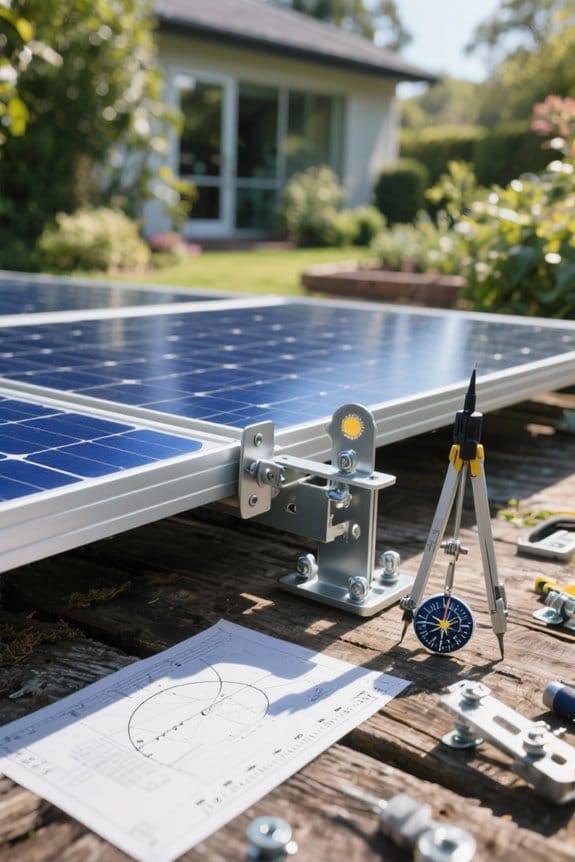
Selecting the ideal location for solar panels is essential for maximizing energy generation. To guarantee efficiency, the chosen area should receive at least four hours of direct sunlight daily. It is important to assess potential shading from nearby trees, buildings, or other structures, as these can obstruct sunlight and reduce solar output. Solar panels should be positioned to achieve the best angle, typically between 30 to 45 degrees, and oriented towards the south for maximum exposure. Additionally, the location must allow for easy access for maintenance and cleaning, which is critical for sustaining high performance. Understanding the energy requirements of the garden office or studio is significant, as it directly influences the number and placement of solar panels needed. Considering bifacial solar panels can increase efficiency by capturing sunlight from both sides, which is ideal for maximizing energy conversion in varied conditions.
Conducting an Energy Audit
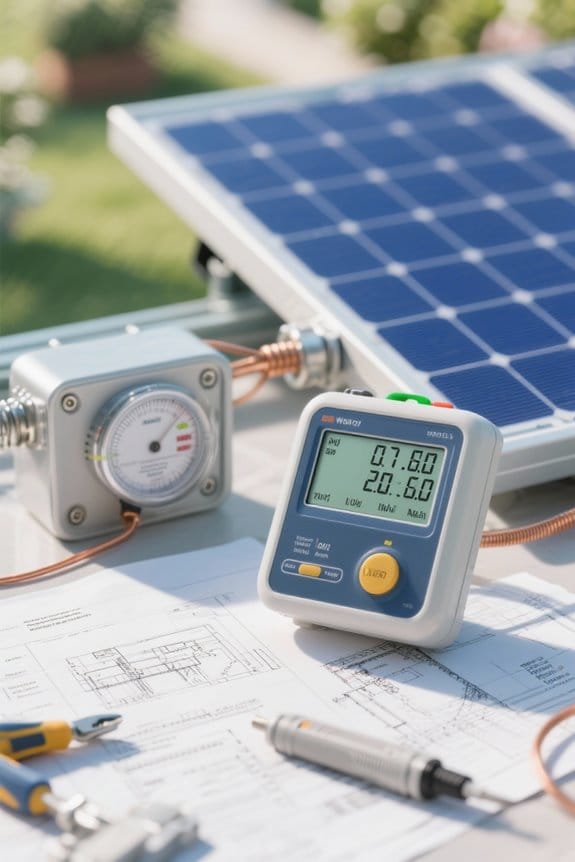
To effectively harness solar energy for a garden office, conducting a thorough energy audit is essential. This process involves identifying all devices and appliances, such as computers and heating systems, to assess their energy consumption. By calculating the total daily usage hours for each device, one can understand peak energy demands, which aids in accurate solar panel sizing. Using online calculators tailored to the specific geographic location can help estimate the solar energy needs based on overall energy requirements. Seasonal variations should also be taken into account, particularly increased heating needs during winter. Regular documentation and verification of energy requirements are necessary to adjust solar power system capacity, ensuring energy independence and efficiency over time. Additionally, considering the solar compatibility of energy storage options can significantly enhance the effectiveness of harnessing and storing renewable energy.
Essential Components of Your Solar Power System
A well-designed solar power system for a garden office consists of several essential components, each playing a significant role in converting sunlight into usable electricity. Solar panels, particularly rigid monocrystalline types, are recommended due to their high efficiency, producing between 315 to 500 watts each to meet specific energy needs. The inverter, typically a pure sine wave model starting at 1KW, stabilizes power for sensitive electronics. Battery storage, beginning at a 5kWh capacity, enables the retention of excess energy generated during the day for later use or during outages. To guarantee the system’s long-term reliability, regular inspections and maintenance of electrical connections, panels, and batteries are essential. Professional installation is recommended for ideal performance and safety. MPPT Technology enhances energy capture efficiency by providing up to 99% tracking efficiency, thereby extending battery life and optimizing overall system performance.
Installation Process for Solar Panels
Setting up solar panels for a garden office involves several essential steps that guarantee efficient energy production and functionality. The installation process begins with evaluating the roof or ground area for ideal solar panel positioning, aiming for at least four hours of direct sunlight daily. Next, secure the solar panels with mounts, anchoring them to rafters or sturdy structures for stability. Standard solar cables and MC4 connectors simplify electrical connections, while ensuring compliance with local electrical codes is vital for safety. If incorporating battery storage, install an inverter system to manage energy use effectively, typically starting with a 5kWh capacity. Finally, testing the system performance during peak sun hours verifies that energy output meets calculated energy needs, ensuring reliable efficiency. It is essential to consider high efficiency of N-Type panels to maximize energy production, especially when space is limited.
Testing and Optimizing Your Setup
While ensuring that solar panels perform at their best, monitoring their output regularly is essential for maximizing energy efficiency. Testing should occur during peak sun hours to verify they generate expected wattage. Utilizing real-time data monitoring systems aids in tracking solar input, battery levels, and overall energy usage. Maintenance includes cleaning the solar panels at least twice a year, as dirt can hinder efficiency. In addition, inspecting electrical connections quarterly is important to detect wear or damage, thereby preserving system performance. Seasonal adjustments may also be necessary, especially in winter, where testing the heating efficiency of a solar-powered garden office under various weather conditions becomes critical for ideal energy management. It is crucial to select the right ground screw to ensure the stability and long-term reliability of your solar installations, particularly in diverse environmental conditions.
Maintaining Your Solar Power System
Effective maintenance of a solar power system is vital for guaranteeing its long-term performance and reliability. To maintain efficiency, solar panels should be cleaned at least twice yearly, as dirt can considerably reduce energy output. Conduct electrical inspections quarterly to verify connections, preventing potential issues that may disrupt energy generation. Monitoring energy output consistently is imperative; track real-time data on solar input and battery levels to assure peak performance. Additionally, manage battery storage by checking charge cycles and replacing batteries every five to ten years, assuring a dependable off-grid energy supply. Finally, trim shade-producing trees or structures to maximize solar exposure and confirm that panels receive at least four hours of direct sunlight for maximum efficiency in harnessing clean energy. Consider integrating an Ethernet surge protector for network-connected solar systems to safeguard against electrical surges and ensure uninterrupted solar monitoring and data transmission.
Exploring Additional Benefits of Solar Energy
Solar energy offers a range of benefits that extend beyond simply generating electricity, as it enhances both financial and environmental outcomes for garden office owners. By harnessing this renewable energy source, users can greatly reduce their electricity bills, leading to long-term cost savings. Solar installations promote energy independence, allowing individuals to rely less on traditional utility companies and protect against rising energy prices. Additionally, many solar power systems come equipped with battery storage, enabling users to save excess energy for later use, which enhances reliability during outages. Furthermore, utilizing solar energy can help reduce carbon footprints, thereby contributing to environmental sustainability. Such features can also increase property value, appealing to environmentally conscious buyers seeking modern, energy-efficient spaces. A 100Ah LiFePO4 battery is an ideal option for off-grid solar applications due to its high energy output, durable design, and advanced safety features, making it a valuable addition to solar power systems.
Frequently Asked Questions
Can You Power a Garden Room With Solar Panels?
Indeed, one can power a garden room with solar panels, provided they navigate the labyrinth of solar panel installation, energy efficiency, sunlight exposure, and cost analysis—while adhering to local regulations and maintenance tips for peak performance.
What Is the 33% Rule in Solar Panels?
The 33% rule in solar panels suggests covering at least one-third of energy needs, enhancing solar panel efficiency, optimizing solar energy storage, and facilitating energy consumption reduction while maximizing renewable energy benefits through effective solar panel installation and maintenance.
How Do You Run Power to a Garden Office?
Running power to a garden office involves selecting suitable power sources, running cables, and obtaining electrical permits. Maintenance tips including checking circuit breakers, exploring lighting options, and evaluating installation costs enhance energy efficiency and reliability.
What Is the Biggest Downside to Solar Electricity?
The biggest downside to solar electricity includes high installation costs, weather dependency impacting energy generation, maintenance requirements, aesthetic considerations, installation challenges, and the need for energy storage solutions, alongside variable grid connection and local regulation compliance.


