As an Amazon Associate, we earn from qualifying purchases. Some links may be affiliate links at no extra cost to you. Although our opinions are based on curated research, we haven't used these products. Articles generated with AI.

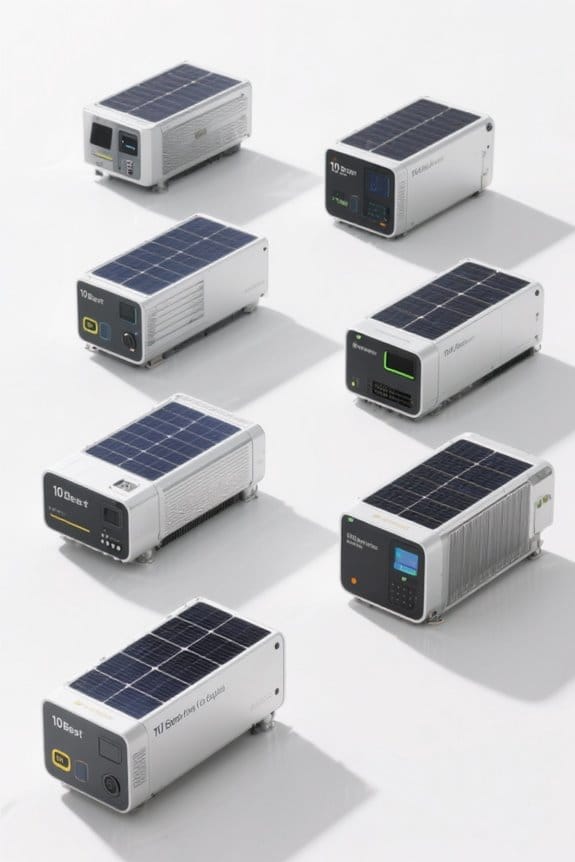
10 Best Hydrogen Fuel Cells of 2026: Powerful Solutions for a Greener Future

In 2026, consider the top hydrogen fuel cells like Proton Exchange Membrane Fuel Cells (PEMFCs), which convert hydrogen and oxygen into electricity, producing only water. Look for systems that generate between 15 and 30 megawatts for vehicle and backup power applications. Also, emerging models like HydroCell Plus showcase improved efficiency and durability. Pay attention to features such as platinized titanium anodes for longevity and lower maintenance costs. Keep exploring to discover more about these powerful solutions for a greener future.
Key Takeaways
- Top hydrogen fuel cells in 2026 will prioritize efficiency, with advanced Proton Exchange Membrane (PEM) and Solid Oxide Fuel Cell (SOFC) technologies enhancing performance.
- A shift towards renewable hydrogen production methods, using solar or wind energy for electrolysis, will improve sustainability and reduce carbon emissions.
- Evolving materials and designs will enhance durability, addressing corrosion and operational challenges, thereby extending the lifespan of fuel cells on the market.
- Integration of hydrogen fuel cells in public transportation and commercial equipment will significantly contribute to cleaner air and lower greenhouse gas emissions.
- Costs for hydrogen fuel cells are expected to decrease as technology advances, improving affordability and encouraging wider adoption in various applications.
Water Electrolysis Hydrogen Fuel Cell Experiment Apparatus
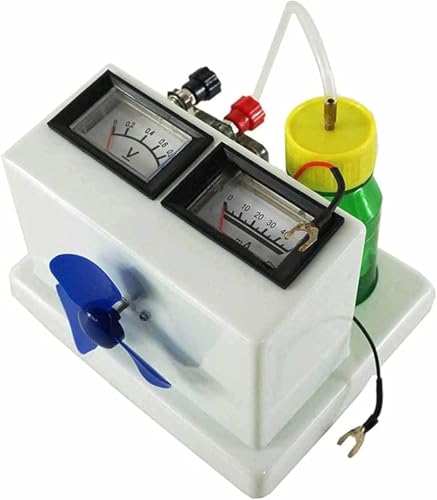
MOWFXUA Water Electrolysis Hydrogen Fuel Cell Experiment Apparatus PEM Hydrogen Demonstrator...
- Structure: The instrument consists of a plastic bracket, a hydrogen fuel cell, a conduit, a hydrogen production bottle, an ammeter, a capacity meter, a motor, and a fan...
- A fuel cell is an electrochemical device that converts the chemical energy of hydrogen and oxygen into electricity without polluting and emitting harmful substances.
- A PEM (Proton Exchange Membrane Fuel Cell) fuel cell consists of two electrodes (cathode and anode) connected by a polymer membrane.
The Water Electrolysis Hydrogen Fuel Cell Experiment Apparatus is an excellent choice for educators and students interested in exploring hydrogen fuel cell technology. This apparatus includes essential components like a hydrogen fuel cell, hydrogen production bottle, and measuring tools such as an ammeter and a capacity meter. It operates on a voltage of 0.3 to 0.6 V, producing power ranging from 15 to 30 MW. You can utilize it as a hands-on teaching tool, demonstrating reversible chemical processes in hydrogen production experiments. Additionally, it serves as a chemical instrument, helping you understand electrochemical reactions without generating pollution or harmful emissions.
Best For: Educators and students seeking to explore and understand hydrogen fuel cell technology through hands-on experimentation.
Pros:
- Hands-on Learning: Provides an interactive experience for understanding hydrogen production and fuel cell operation.
- Environmental Benefits: Operates without pollution or harmful emissions, aligning with sustainable energy practices.
- Versatile Applications: Can be used for both teaching and practical chemical experiments, enhancing educational value.
Cons:
- Power Output Limitations: Limited to 15-30 MW, which may not meet high-demand experimental needs.
- Operating Voltage Restrictions: Requires specific voltage range (0.3-0.6 V), potentially limiting its use with other devices.
- Complex Setup: May require additional knowledge and setup time for effective demonstrations and experiments.
Hydrogen Fuel Cell Regeneration Module Experimental Model
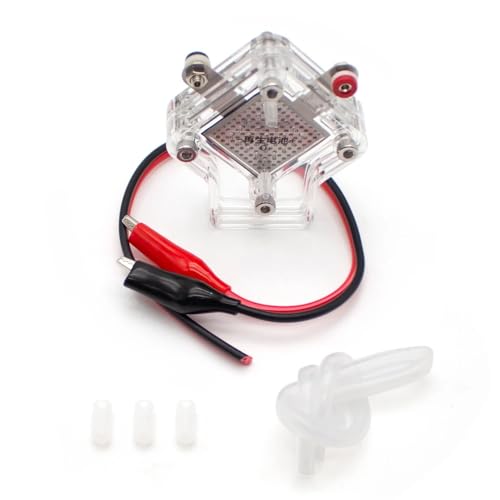
Hydrogen Fuel Cell Regeneration Module Hydrogen-Oxyge Teaching Reversible Battery Physical...
- Electrolytic area: 25*25mm
- Power generation area: 25*25mm
- Electrolysis voltage: 1.5V-3.0V
For educators and students looking to explore the principles of hydrogen fuel cells, the Hydrogen Fuel Cell Regeneration Module Experimental Model stands out as an ideal choice. This system combines hydrogen and oxygen in a reversible battery design, allowing hands-on learning of key concepts. With an electrolytic area of 25mm by 25mm, it operates effectively within a voltage range of 1.5V to 3.0V. At a generation voltage of 0.5V to 0.9V, the model produces hydrogen at a rate of 8ml and oxygen at 4ml per 1A. Its various color options add visual interest, enhancing the educational experience.
Best For: Educators and students interested in hands-on learning about the principles of hydrogen fuel cells and renewable energy systems.
Pros:
- Hands-on learning experience that enhances understanding of hydrogen fuel cell technology.
- Compact design with a manageable electrolytic area of 25mm x 25mm, suitable for classroom settings.
- Versatile voltage range (1.5V – 3.0V) allowing for various experimental setups and exploration.
Cons:
- Color variations are randomly shipped, which may not meet specific aesthetic preferences.
- Hydrogen production rates may be limited to 8ml per 1A, which could be slow for extensive experimentation.
- Requires a specific operating voltage that may not be universally compatible with all educational setups.
Hydrogen Fuel Cell Electric Car Model

Hydrogen Fuel Cell Electric Car Hydrogen and Oxygen Power Generation Clean Energy Vehicle Model...
- The Hydrogen fuel trolley uses zinc particles and food grade citric acid to synthesize hydrogen, and then uses the produced hydrogen and air to generate electricity to...
- During the experiment, please use 80℃ hot water for Combination reaction (if the water temperature is low, the amount of hydrogen and air pressure from the Combination...
Hydrogen Fuel Cell Electric Car models represent a significant advancement in clean energy technology, making them an ideal choice for environmentally conscious drivers. These vehicles generate electricity through a chemical reaction between hydrogen and oxygen. By using zinc particles and food-grade citric acid, you can synthesize hydrogen, which is essential for power generation.
To operate effectively, verify you have 80℃ hot water, as lower temperatures can yield insufficient hydrogen. Follow the fuel cell setup procedures closely: release gas from the vent pipe, then seal it to maintain a pure hydrogen mix for peak performance. This precise process maximizes power output.
Best For: Environmentally conscious drivers seeking innovative clean energy solutions in their vehicles.
Pros:
- Eco-friendly: Produces zero emissions, contributing to a cleaner environment.
- Innovative technology: Utilizes advanced hydrogen fuel cell technology for efficient energy generation.
- Educational value: Serves as a high-tech teaching instrument for understanding clean energy and chemical reactions.
Cons:
- Temperature sensitive: Requires precise operational conditions, specifically 80℃ hot water, to function optimally.
- Hydrogen synthesis complexity: The process of synthesizing hydrogen may be complicated for some users.
- Initial cost: May involve a higher initial investment compared to conventional vehicles.
Platinized Titanium Anode Mesh for Jewelry Processing and Fuel Cells

Platinized Titanium Anode Mesh Electrolytic Mesh with Platinum Coating Used for Jewelry Processing...
- 【Characteristics of Platinum-Titanium Mesh】Fully electroplated platinum titanium anodes [including handle] maintain good performance in saturated sodium chloride...
- 【Advantages of Titanium Substrate】Platinized titanium anodes are based on Gr1 titanium, the substrate can be used many times without contaminating the medium during...
- 【Advantages of Platinum Coating】DSA platinized platinum titanium electrode offer high current efficiency, long electrode life, excellent electrocatalytic activity and...
Engineered with a platinum coating, the Platinized Titanium Anode Mesh proves to be an essential tool for those involved in jewelry processing and hydrogen fuel production. Made from Grade 1 titanium, this anode is durable in sodium chloride solutions and retains its integrity under high pressure. The platinum layer enhances electrical conductivity and electrode life. Use it for electroplating gold or platinum on jewelry to prevent oxidation and fading. With an effective area of 10 by 13 centimeters, its compact size fits most electroplating machines perfectly. Reuse it multiple times without contamination during electrolysis, making it a practical choice for efficient production.
Best For: Jewelry manufacturers and artisans looking for a reliable and efficient solution for plating and electrolysis.
Pros:
- Durability: Made from Grade 1 titanium, resistant to corrosion and high pressure.
- Versatility: Suitable for both jewelry plating and hydrogen production applications.
- Reusability: Can be used multiple times without contaminating the electrolysis medium.
Cons:
- Initial Cost: The platinum coating may result in a higher upfront investment.
- Maintenance: Requires proper care and handling to maintain effectiveness over time.
- Compatibility: May not fit all models of electroplating machines without adjustment.
HydroCell Plus

Designed for those seeking efficient and powerful hydrogen generation, the HydroCell Plus stands out with its robust 21 plate hydrogen generator. This compact unit, weighing only 2 pounds and measuring 4 x 2 x 4 inches, produces over 7 liters of hydrogen per minute at 30 amps. Made of durable 316L stainless steel, it’s designed for longevity and reliability. Manufactured by HydroClubUSA, it boasts an average customer rating of 4.0 out of 5 stars from 14 reviews. You can quickly return it within 30 days if needed. As a top performer, the HydroCell Plus is a solid choice for your hydrogen generation needs.
Best For: Individuals seeking an efficient and reliable hydrogen generator for automotive applications.
Pros:
- High Production Rate: Generates over 7 liters of hydrogen per minute at 30 amps, ensuring effective performance.
- Durable Material: Constructed from 316L stainless steel for enhanced longevity and resistance to corrosion.
- Compact Size: Lightweight and small dimensions make it easy to install and transport.
Cons:
- Weight Limitations: At only 2 pounds, it may lack sturdiness compared to heavier models in rugged environments.
- Limited Reviews: An average rating of 4.0 stars from just 14 reviews may not provide a comprehensive view of its performance.
- Specific Application: Geared mainly towards automotive use, which may restrict its utility for other applications.
Horizon Fuel Cell Technologies Solar Hydrogen Education Kit

Horizon Fuel Cell Technologies Solar Hydrogen Education Kit
- Horizon puts renewable energy technology into the hands of our future scientists
- Solar Hydrogen Education Kit generates clean energy using the sun
- Renewable hydrogen is created using only solar energy and water
The Horizon Fuel Cell Technologies Solar Hydrogen Education Kit is a fantastic resource for aspiring young scientists aged 12 to 15. This kit generates clean energy by using solar power and water to produce renewable hydrogen, making it an engaging educational tool. You’ll find an electric motor and propeller blade included, allowing you to explore various motorized applications. With dimensions of 8.27 by 5.91 by 3.94 inches and weighing just 1.28 pounds, it’s easy to handle. The kit comes with an experiment manual, assembly guide, and curriculum materials, promoting creativity and hands-on learning. It’s perfect for classroom settings, enhancing your understanding of renewable energy.
Best For: This product is best for aspiring young scientists aged 12 to 15 who are interested in clean energy and hands-on learning.
Pros:
- Encourages creativity and inventiveness through hands-on experiments.
- Provides educational curriculum materials that enhance classroom learning.
- Includes motorized components for practical applications of renewable energy concepts.
Cons:
- May require adult supervision for younger users to ensure safety during assembly.
- Limited to a specific age range, which may not accommodate younger or older students’ interests.
- Some users may find the kit’s experiments challenging without prior knowledge of renewable energy principles.
Converted: How to Convert Your Vehicle into a Hydrogen Hybrid

Converted: How to Convert Your Vehicle into a Hydrogen Hybrid in about 3 Hours and Save!
- Used Book in Good Condition

If you’re looking to boost your vehicle’s fuel economy while reducing emissions, converting your car into a hydrogen hybrid could be an excellent choice. The process involves electrolysis, where water is split into hydrogen and oxygen. This hydrogen flows into your engine, enhancing fuel efficiency and lowering emissions. To start, you can refer to the guide, “Converted!” which offers step-by-step assistance, illustrations, and clear language. You might opt for a complete kit from Richie, ensuring you have all necessary components. Proper installation and tuning lead to safer use and a cooler engine. Combine this with independent sourcing for a cost-effective upgrade.
Best For: Drivers looking to improve fuel efficiency and reduce vehicle emissions through a cost-effective hydrogen hybrid conversion.
Pros:
- Enhanced Fuel Economy: The hydrogen hybrid system significantly boosts fuel efficiency.
- Reduced Emissions: Converting to a hydrogen hybrid helps lower harmful emissions from your vehicle.
- User-Friendly Guidance: The installation guide is easy to understand, complete with helpful illustrations.
Cons:
- Initial Costs: While cost-effective in the long run, the upfront cost for parts or a complete kit may be a barrier for some.
- DIY Complexity: The conversion process may be challenging for individuals without mechanical experience.
- Limited Availability: Parts may not be readily available depending on your location, making it harder to execute the conversion.
Hydrogen Fuel Cell Technologies: A Simple Guide to Big Ideas
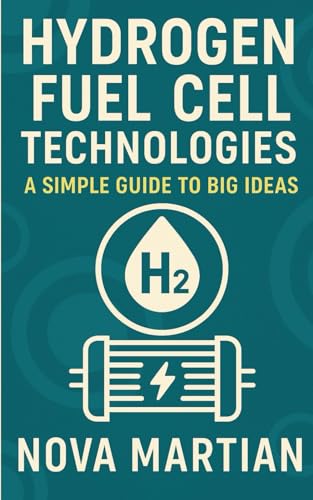
Hydrogen fuel cells are a promising energy solution, particularly for those interested in environmentally friendly technology and its practical uses. They work by combining hydrogen and oxygen to produce electricity, with water as the only byproduct. There are different types of fuel cells, such as Proton Exchange Membrane Fuel Cells (PEMFCs) and Solid Oxide Fuel Cells (SOFCs). Hydrogen can be produced through methods like electrolysis, which splits water into hydrogen and oxygen, or steam methane reforming. Fuel cells find applications in cars, buses, backup power sources, and even military equipment, paving the way for a sustainable energy future.
Best For: Individuals and organizations looking for sustainable energy solutions and environmentally friendly technology.
Pros:
- Fuel cells produce only water as a byproduct, making them an eco-friendly energy source.
- They can be used in various applications, including transportation, stationary power, and portable devices.
- Hydrogen fuel cells have the potential to reduce reliance on fossil fuels, contributing to a cleaner energy future.
Cons:
- Infrastructure for hydrogen production and distribution is still underdeveloped, limiting widespread adoption.
- The cost of hydrogen fuel cell technology and production methods can be high.
- Public perception and understanding of hydrogen technologies may hinder acceptance and implementation.
Build Your Own Fuel Cells

For those interested in renewable energy solutions, “Build Your Own Fuel Cells” offers a practical and engaging resource. This book provides straightforward instructions for creating various proton exchange membrane (PEM) fuel cells, including convection and oxygen-hydrogen types, in both single slice and stack configurations. You’ll find two construction methods, one needing a bandsaw and drill press, while the other requires only basic hand tools. Additionally, the guide lists suppliers for obtaining necessary materials. It also discusses building an electrolyzer for hydrogen production and the use of PV solar panels to power it. With 221 pages and many detailed templates, it’s an invaluable tool.
Best For: Individuals interested in renewable energy solutions and DIY projects involving fuel cell technology.
Pros:
- Comprehensive instructions for constructing various types of proton exchange membrane (PEM) fuel cells.
- Two construction methods cater to different skill levels and tool availability.
- Includes information on suppliers for materials and discusses electrolyzer integration with solar power.
Cons:
- Some may find the need for tools like bandsaws and drill presses inconvenient or limiting.
- The focus on DIY methods may require a significant time investment for assembly and experimentation.
- The book may not cover advanced fuel cell technologies for those seeking more in-depth knowledge.
Proton Exchange Membrane Fuel Cell for High School Lab Teaching
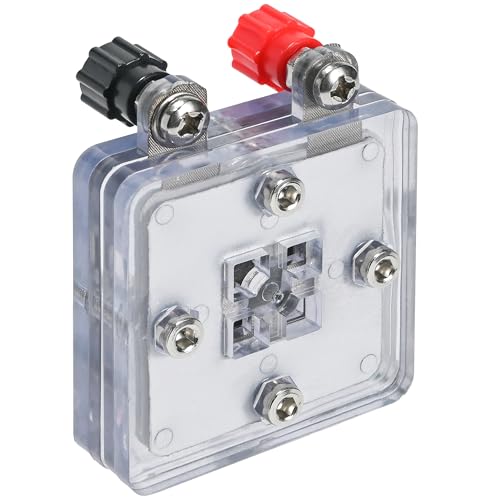
Proton Exchange Membrane Fuel Cell, Proton Exchange Membrane Hydrogen Fuel Cell, Proton Exchange...
- Type of Proton Exchange Membrane
- Overall size of 2.0x2.0inch
- Used to convert hydrogen into electrical energy in a clean way
Designed specifically for educational environments, the Proton Exchange Membrane Fuel Cell (PEMFC) offers an excellent tool for high school lab teaching. This compact cell, measuring just 2.0 x 2.0 inches, converts hydrogen into electrical energy efficiently. Because it operates cleanly, using only carbon paper and ion exchange membranes, it promotes environmentally friendly practices. Students can easily manage its operation, allowing them to explore fuel cell technology hands-on. By working with the PEMFC, you’ll stimulate interest in science while learning about renewable energy sources. Such practical applications encourage deeper understanding of energy conversion and sustainable technology in a lab setting.
Best For: The Proton Exchange Membrane Fuel Cell is best for high school students and educators seeking hands-on learning experiences in renewable energy technologies.
Pros:
- Environmentally Friendly: Operates cleanly without harmful emissions, promoting sustainable practices.
- Compact Design: With a size of 2.0 x 2.0 inches, it’s easy to integrate into laboratory settings.
- Interactive Learning: Engages students through practical application and experiments, enhancing interest in science and technology.
Cons:
- Limited Power Output: May not provide sufficient energy for larger projects or applications.
- Requires Hydrogen Source: Needs a hydrogen supply for operation, which may not always be readily available or safe to handle in all school environments.
- Lack of Battery Component: Does not store energy, necessitating continuous hydrogen input for operation.
Factors to Consider When Choosing a Hydrogen Fuel Cell
When choosing a hydrogen fuel cell, you should consider several important factors that affect its performance and suitability for your needs. Look at operational specifications and efficiency ratings to verify the cell meets your power requirements, such as a typical efficiency range of 40-60%. Additionally, evaluate the environmental impact and material durability, as well as how versatile and user-friendly the application is for educational or practical purposes.
Operational Specifications and Efficiency
Understanding the operational specifications and efficiency of hydrogen fuel cells is vital for making an informed choice. Hydrogen fuel cells generally operate within a voltage range of 0.3 to 3.0 volts. The Proton Exchange Membrane (PEM) fuel cells, for example, can deliver between 15 and 30 megawatts, with load capabilities from 10 to 20 megawatts. It’s important to note that certain configurations can produce up to 8 milliliters of hydrogen per ampere of current. The electrolysis voltage needed for hydrogen production typically ranges from 1.5 to 3.0 volts. Finally, factors like the effective electrode area, material composition, and current efficiency greatly impact overall performance. By considering these elements, you can better evaluate which hydrogen fuel cell meets your needs.
Environmental Impact Assessment
Selecting the right hydrogen fuel cell involves more than just evaluating its operational specifications and efficiency; the environmental impact is a significant factor to contemplate. Hydrogen fuel cells produce only water and heat as byproducts, leading to zero harmful emissions during operation. However, consider how hydrogen is produced. If sourced from fossil fuels, it can generate carbon emissions and deplete resources. Opting for renewable methods, like using solar or wind energy for electrolysis, greatly reduces environmental harm. Additionally, hydrogen fuel cells show lower greenhouse gas emissions than traditional combustion engines, especially when paired with sustainable hydrogen production. Shifting to this technology can improve air quality and public health, making it an essential choice for a greener future.
Material Durability and Composition
Choosing a hydrogen fuel cell means paying close attention to material durability and composition. The materials used must resist corrosion, moisture, and chemicals over time. For instance, components like the anode and cathode often rely on platinized titanium or carbon paper, which provide excellent conductivity while resisting degradation. Additionally, the electrolyte membranes, typically made from polymer materials, should maintain their integrity under various temperatures and humidity levels to guarantee effective proton exchange. High-quality materials not only enhance a fuel cell’s lifespan but also boost its efficiency. By understanding the chemical composition and physical properties of these materials, you can select a fuel cell that maximizes performance through ideal electrocatalytic activity and conductivity. Choose wisely for lasting results.
Application Versatility and Usability
When evaluating hydrogen fuel cells, it’s essential to reflect on their application versatility and usability. These fuel cells can be utilized in diverse areas, such as transportation, stationary power generation, and portable devices. The Proton Exchange Membrane (PEM) Fuel Cell is particularly efficient for automotive use and small-scale applications. Additionally, hydrogen production methods like electrolysis enable these fuel cells to integrate with renewable energy systems, making them more sustainable. Furthermore, various types, including Alkaline and Solid Oxide Fuel Cells, showcase adaptability across different environments and energy needs. For educational purposes, models and kits designed for high school labs illustrate how hydrogen fuel cells can be used in academic settings, further emphasizing their practical applications.
Educational and Teaching Value
Incorporating hydrogen fuel cells into educational settings can profoundly enhance learning experiences. These fuel cells provide hands-on learning that deepens your understanding of electrochemical processes and energy conversion through engaging experiments. Educational kits often come with curricula and manuals, allowing you to seamlessly integrate hydrogen fuel cell technology into your science lessons.
Using these cells fosters curiosity about renewable energy, equipping you with knowledge relevant to sustainable technology. Demonstrating hydrogen production via electrolysis offers clear examples of environmental concepts, helping you visualize theoretical principles. The versatility of hydrogen fuel cells enables a range of applications, from simple experiments to complex projects, encouraging innovation and creative problem-solving among students, thereby making learning more effective and relevant.
Cost-Effectiveness and Maintenance
Understanding the cost-effectiveness and maintenance of hydrogen fuel cells is essential for making an informed decision about their implementation. The initial investment varies greatly based on complexity and materials, making it vital to evaluate long-term affordability. Compared to traditional combustion engines, maintenance costs are typically lower since hydrogen fuel cells have fewer moving parts, leading to less frequent servicing. Operational expenses depend on production efficiency; for example, using electrolysis can lower energy input and enhance cost-effectiveness. The lifespan of significant components, like membranes and electrodes, also impacts maintenance costs. As a result, consider the total cost of ownership, including installation and fuel sourcing, to accurately assess the financial viability of hydrogen fuel cell systems for your needs.
Frequently Asked Questions
What Are the Main Advantages of Hydrogen Fuel Cells Over Batteries?
Hydrogen fuel cells offer several key advantages over batteries. They refill quickly, often in just three to five minutes, compared to hours for batteries. With a greater energy density, hydrogen fuel cells can store more energy, powering vehicles for longer distances—up to 300 miles or more on a single tank. Additionally, they produce only water vapor as a byproduct, making them an environmentally friendly option for clean transportation solutions.
How Long Do Hydrogen Fuel Cells Typically Last?
Hydrogen fuel cells typically last between 5,000 to 10,000 hours of operation. This lifespan translates to several years of use, depending on the application. For example, in vehicles, they might last around 500,000 miles, comparable to traditional combustion engines. Their durability stems from efficient chemical reactions that convert hydrogen into electricity. Regular maintenance and proper usage can further extend their life, ensuring you get the most out of this eco-friendly technology.
Are There Any Safety Concerns With Hydrogen Fuel Cells?
Yes, there are safety concerns with hydrogen fuel cells. Hydrogen is highly flammable, so proper storage and handling are essential. You should guarantee systems have ventilation and use sensors to detect leaks, as hydrogen rises and disperses quickly. In the event of a leak, you should evacuate the area immediately. Additionally, fuel cell systems must comply with strict safety standards to minimize risks during normal operation and emergencies, promoting safe use in vehicles and stationary applications.
What Is the Current Cost Trend for Hydrogen Fuel Cells?
Currently, the cost of hydrogen fuel cells is on a downward trend. In 2023, the average price is about $1,500 per kilowatt, and analysts predict it may drop to around $1,200 by 2026. This decline is largely due to technological advancements and increased production efficiency. If you’re considering hydrogen solutions, expect more affordable options soon, making this clean energy source increasingly accessible for transportation and other applications.
How Does Hydrogen Production Impact the Environment?
Hydrogen production can greatly impact the environment. For instance, if you create hydrogen through fossil fuels, it releases carbon dioxide, a greenhouse gas. Conversely, renewable methods like electrolysis—using electricity from wind or solar sources—produce minimal emissions. In 2022, about 70% of hydrogen came from natural gas, contributing to pollution. If you shift toward greener production methods, it helps reduce your carbon footprint, supporting a more sustainable future.


