
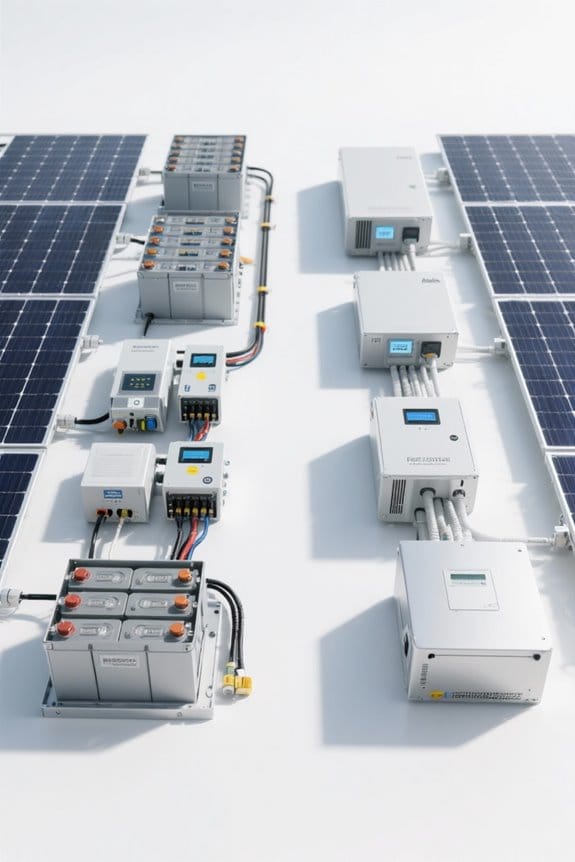

Off-grid solar systems provide energy independence in remote areas, costing between $50,000 and $65,000 due to battery storage needs. These systems require careful energy management. In contrast, grid-tied systems are typically less expensive, averaging around $20,000, allowing users to send excess energy back to the grid for credits. While off-grid setups offer self-sufficiency, grid-tied options guarantee reliable power access. Understanding each system’s advantages can help inform your choice for energy needs. More insights await you.
Key Takeaways
- Off-grid systems provide energy independence, catering to remote areas without utility access, while grid-tied systems connect users to the utility grid for stable electricity.
- Cost differences are significant: off-grid setups range from $50,000 to $65,000 due to battery expenses, while grid-tied systems average around $20,000.
- Off-grid systems require extensive maintenance, focusing on battery health, whereas grid-tied systems have minimal maintenance mainly involving panel cleaning.
- Grid-tied systems often feature net metering, allowing users to earn credits for excess energy fed back to the grid, enhancing financial savings.
- Hybrid systems blend benefits of both setups, offering energy storage with grid connectivity, ensuring reliability during outages for diverse energy management needs.
Understanding Off-Grid Solar Systems
Understanding off-grid solar systems is crucial for individuals seeking energy independence, especially in areas lacking access to utility grids. These systems operate independently, consisting of solar panels, battery storage, and inverters for electricity generation. Installation costs typically range from $50,000 to $65,000, primarily due to the expense of battery storage systems. Effective energy self-sufficiency relies on proper management of energy production and consumption. In remote areas, these systems are particularly beneficial where conventional grid access is costly or unavailable. Users must ascertain adequate battery capacity to maintain consistent power availability, preventing disruptions. Additionally, solar charge controllers are essential for managing battery charging, avoiding overcharging, and guaranteeing reliability throughout system use. Battery Energy Storage Systems enhance energy management and sustainability, ensuring that power is efficiently stored and used when needed.
Exploring Grid-Tied Solar Systems
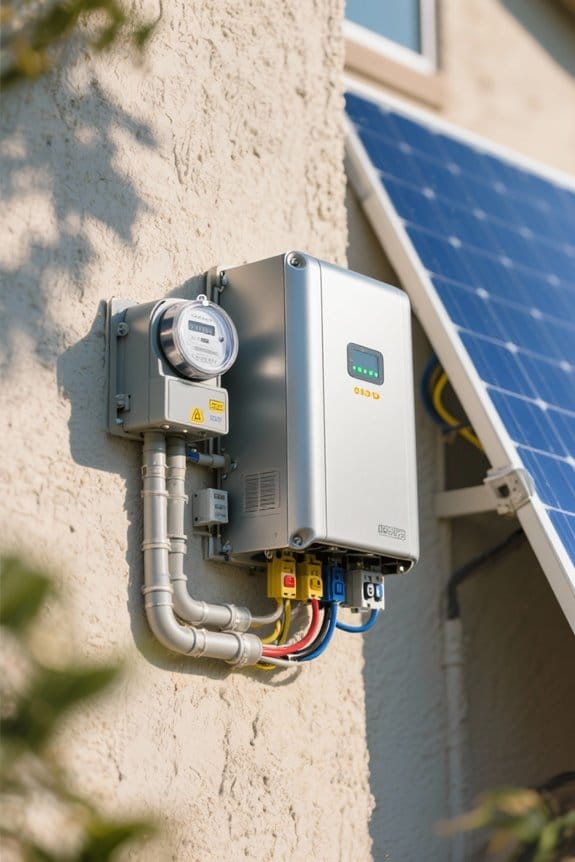
Grid-tied solar systems offer an effective solution for homeowners looking to harness solar energy while maintaining access to the utility power grid. These systems utilize solar panels to convert sunlight into DC electricity, which is then transformed into AC electricity for household use. Surplus energy generated can be sent back to the grid, earning homeowners valuable net metering credits that offset electricity costs. The average installation costs for grid-tied systems are around $20,000 before incentives, potentially dropping to about $14,000 after applying federal tax credits. Maintenance requirements for these systems are minimal, making them more cost-effective compared to off-grid options. Overall, grid-tied systems provide reliable electricity access in areas with stable utility power grid connections and favorable net metering policies. High-Efficiency Solar Panels like the Renogy 200 Watt N-Type offer 25% efficiency, making them a valuable component in maximizing home energy savings.
Key Advantages of Off-Grid Systems
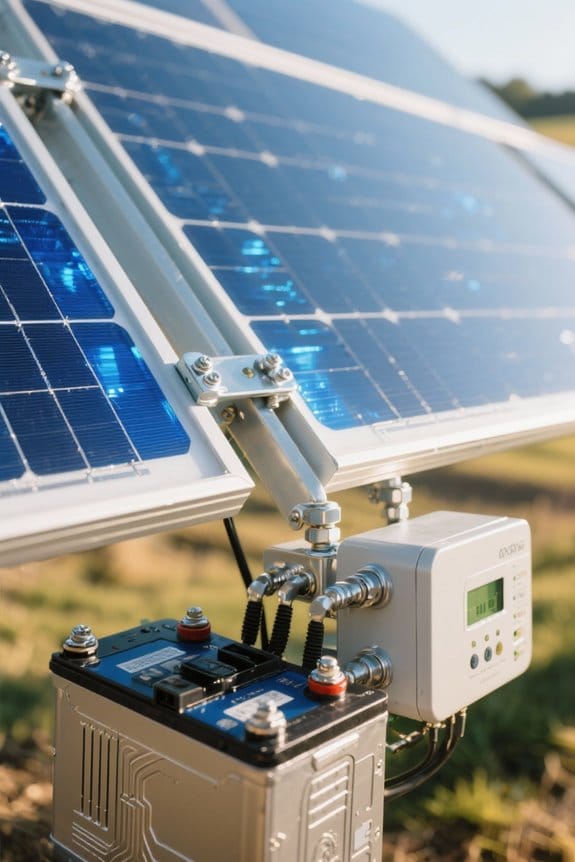
Off-grid solar systems present significant advantages for individuals seeking energy independence and reliability, especially in remote areas without utility grid access. These systems allow users to generate electricity using solar panels and store it in energy storage solutions, like lithium-ion batteries, which provide battery backup during power outages. By eliminating monthly electricity bills, off-grid users can potentially save thousands of dollars over time. This self-sufficiency empowers homeowners to manage their energy resources without fluctuations in utility prices. Additionally, modern off-grid technology enhances system efficiency and longevity, minimizing maintenance needs. Overall, off-grid systems foster resilience, allowing users to meet their energy demands sustainably and consistently, showcasing the potential of renewable energy in everyday life. ECO-WORTHY Lithium Batteries offer versatility and robust performance, making them an ideal choice for off-grid systems.
Key Advantages of Grid-Tied Systems
When considering solar energy options, many homeowners find that grid-tied systems offer distinct advantages. These systems typically have a lower installation cost, averaging $20,000 before incentives, compared to the higher costs of off-grid systems. Homeowners benefit from net metering, which allows them to earn credits for excess energy sent back to the grid, greatly reducing their electricity bills. Grid-tied systems require fewer components, leading to lower maintenance needs and simpler installation processes. Additionally, these systems provide stable electricity access, using grid power during times of low solar production, ensuring a continuous power supply, even at night. By utilizing grid storage, homeowners can optimize energy efficiency without incurring costs for additional battery storage, enhancing overall system performance. Moreover, many solar products come with warranties ranging from 10 to 25 years, providing peace of mind regarding long-term investment.
Comparing Costs and Financial Implications
Considering the financial aspects of solar energy systems reveals significant differences between grid-tied and off-grid options. Grid-tied systems typically have an installation cost of about $20,000 before incentives, while off-grid systems range from $50,000 to $65,000 due to battery storage expenses. Grid-tied systems allow homeowners to utilize net metering, earning credits for excess energy sent back to the grid, which can lower utility costs. In contrast, off-grid systems provide energy independence, eliminating utility bills. Both system types benefit from a federal tax credit of 30%, although the higher cost of off-grid systems may yield a better financial return. Homeowners considering off-grid options might explore the 16kWh Wall-Mounted Lithium Solar Battery, which offers a lifespan exceeding 15 years and robust energy storage capabilities. Ultimately, homeowners must weigh upfront investments against long-term savings in energy costs.
Power Availability and Reliability
How does the power availability and reliability of solar energy systems affect homeowners’ choices? Grid-tied systems offer consistent access to electricity by automatically switching to utility power when solar production is low. In contrast, off-grid systems depend on battery storage to maintain reliability, which can be challenging during long cloudy periods. Off-grid homeowners must implement extensive energy management practices to guarantee power availability. While grid-tied systems have a lower average upfront cost of around $14,000, off-grid systems can range from $50,000 to $65,000 due to the need for additional components. However, off-grid systems can provide reliable power in remote areas, independent of utility infrastructure. This aspect is significant for those living in regions with frequent power outages. Advanced monitoring features in modern charge controllers can help optimize power management, providing real-time data tracking and customizable settings to enhance energy efficiency.
Maintenance and Management Requirements
While both grid-tied and off-grid solar systems provide renewable energy options, their maintenance and management requirements differ considerably. Grid-tied systems typically require minimal maintenance, emphasizing solar panel cleaning and periodic checks on inverters. This simplicity is largely due to reliance on utility infrastructure for power storage. Conversely, off-grid systems necessitate more rigorous oversight. These systems involve battery management, which includes monitoring battery health, managing charging cycles, and maintaining backup generators to guarantee continued energy production. The complexity of battery systems demands regular checks, such as monitoring electrolyte levels. These additional maintenance requirements can lead to higher costs and efforts, especially to prevent power shortages. Users must be diligent in maintaining both solar panel efficiency and battery health for peak performance. Incorporating Battery Management Systems is crucial for enhancing safety and performance in off-grid setups.
Factors to Consider When Choosing a System
When selecting between off-grid and grid-connected solar systems, individuals must carefully weigh several key factors that will shape their energy experience. One primary consideration is energy independence; off-grid systems provide complete autonomy from utility companies, while grid-connected systems easily access supplemental electricity. The initial setup costs vary considerably, with off-grid systems costing between $50,000 and $65,000 due to battery storage needs, compared to roughly $20,000 for grid-tied systems. Geographical location also plays a role, as homes near utility grids can benefit from net metering, offering credits for excess energy. For enhanced energy reliability, some may explore hybrid solar systems, combining grid support and energy storage, typically starting around $32,000, ensuring effective energy management amid outages. Many 12V solar chargers are compatible with diverse battery types and can be utilized as supplementary power sources to enhance the efficiency and sustainability of solar systems.
Frequently Asked Questions
Can Off-Grid Systems Support Electric Vehicle Charging?
Off-grid systems can indeed support electric vehicle charging, akin to a well-watered garden thriving under the sun. With sufficient battery capacity and solar power, they accommodate charging stations while balancing energy consumption, costs, and the environmental impact efficiently.
How Do Solar Batteries Function in Off-Grid Setups?
Solar batteries in off-grid setups store energy from renewable sources, enabling power management. Key factors include battery types, system sizing, inverter compatibility, and maintenance requirements, all influencing lifespan considerations and charging cycles, ensuring off-grid independence.
What Happens During Long Periods of Cloudy Weather?
During prolonged cloudy days, solar efficiency diminishes, impacting energy storage and system reliability. Users may rely on backup generators, implement power conservation strategies, and adjust lifestyles, while addressing maintenance concerns that arise from weather impacts and grid dependency.
Are Government Incentives Available for Both Systems?
Government incentives are available for both systems, including federal tax credits, state rebates, renewable energy certificates, installation grants, energy efficiency programs, loan programs, property tax exemptions, utility buyback plans, low-income assistance, and commercial incentives.
How Can I Upgrade My Grid-Tied System Later?
Like a puzzle expanding over time, one can explore grid expansion options with compatible upgrade pathways. Considering storage solutions comparison, technology advancements, and cost analysis factors, hybrid system integration enhances energy management strategies while maintaining essential maintenance considerations.


