
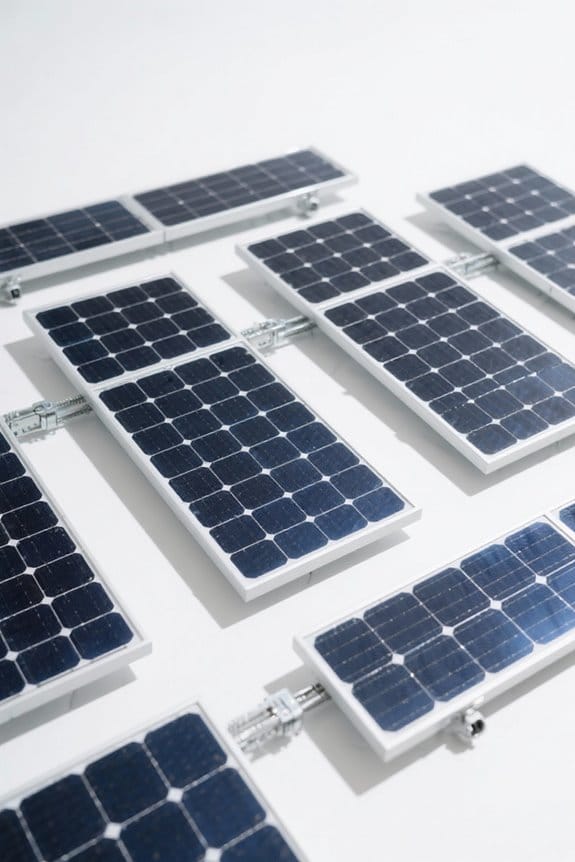

Solar panels require direct sunlight to function effectively. They achieve peak performance at around 1000 W/m² of solar irradiance. On cloudy days, they can still produce 30% to 50% of their full capacity, depending on cloud thickness. Shading from nearby trees or buildings can greatly reduce output, leading to losses of 50% or more. For economic viability, at least four hours of peak sun daily is typically necessary. Further insights into maximizing solar efficiency will follow.
Key Takeaways
- Solar panels require direct sunlight for optimal efficiency, ideally reaching levels of 1000 W/m² during peak sunshine hours.
- A minimum of four peak sun hours daily is typically necessary for economic viability in solar energy production.
- Cloudy days allow for 10%-60% of peak output, depending on weather conditions, impacting energy generation.
- Shade from trees or buildings can reduce solar panel efficiency by 50% or more, necessitating careful site evaluation.
- Advanced technologies like half-cut cells and solar tracking can enhance energy output in varying sunlight conditions.
Understanding Solar Panel Functionality
Understanding solar panel functionality begins with recognizing how they convert sunlight into electricity. Solar panels operate effectively even without direct sunlight, achieving between 30% to 50% efficiency on cloudy days. Their solar output depends greatly on sunlight intensity, reaching peak performance at irradiance levels of 1000 W/m². Weather conditions can also impact energy production, as cloudy days may yield 10% to 60% of the energy compared to sunny ones, depending on cloud thickness. Additionally, shading can decrease efficiency, though modern technology—such as half-cut photovoltaic cells—helps alleviate some negative effects. Evaluating local objects that cast shadows and ensuring maximum sunlight exposure are essential steps for optimizing solar panel effectiveness and maximizing energy production for household use. Many modern solar chargers feature MPPT technology that optimizes energy conversion even in varied weather conditions, enhancing their reliability in different environments.
The Role of Direct Sunlight in Solar Energy Production
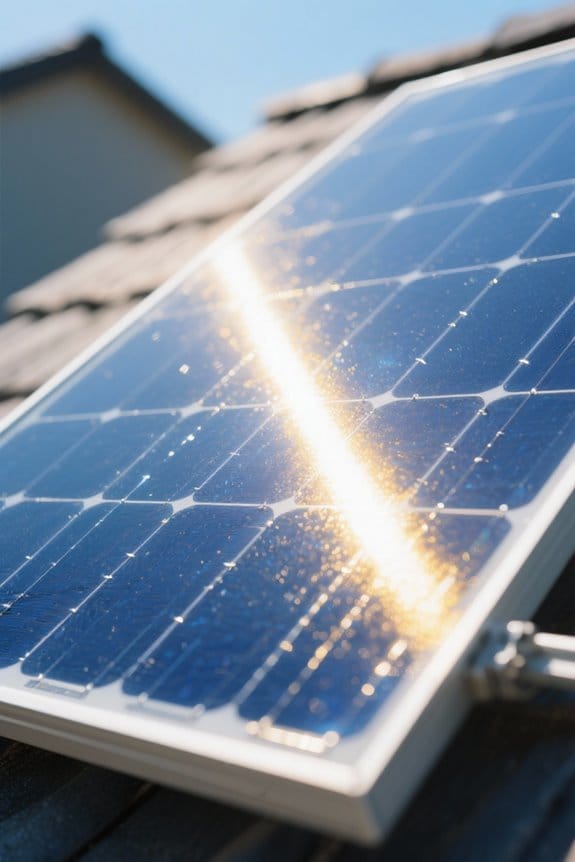
Direct sunlight plays an essential role in enhancing the efficiency of solar panels. These panels perform at their best during peak sunshine hours, which is defined as receiving 1000 W/m² of sunlight. In ideal conditions, they can achieve their maximum energy production. However, even under cloudy weather, solar panels can still generate 30%-50% of their capacity, although this is noticeably lower than under direct sunlight. Shade from trees or buildings greatly impacts solar panel efficiency, potentially causing output losses of up to 50%. Achieving economic viability in a solar system typically requires at least four peak sun hours daily to guarantee sufficient energy production, emphasizing the importance of minimizing shade and maximizing direct sunlight for effective energy generation. Bifacial solar panels capture sunlight on both sides, increasing efficiency by up to 30% and providing long-term energy savings.
Solar Panel Performance in Cloudy and Shady Conditions
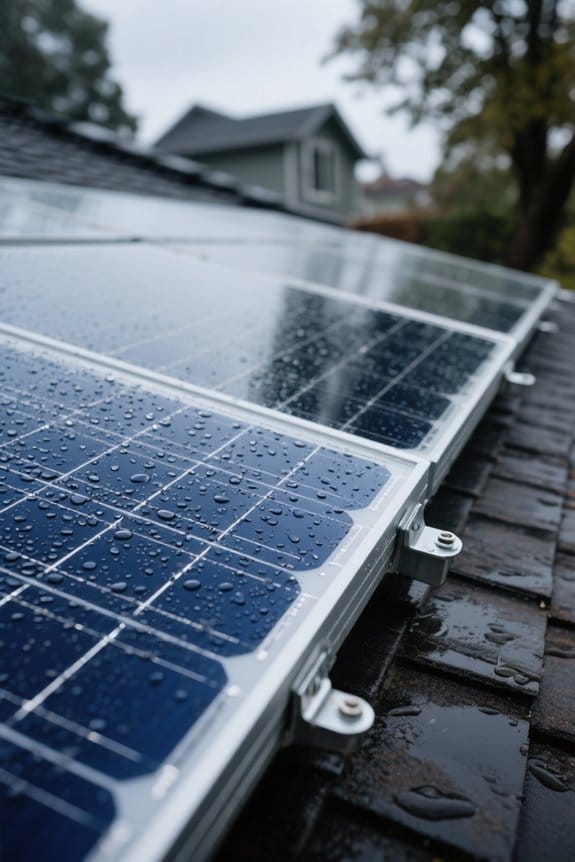
Cloudy and shady conditions often occur, affecting the performance of solar panels in various ways. During cloudy conditions, solar panels receive 10% to 60% of their peak output, depending on the thickness of the clouds. On overcast days, they can still generate electricity, capturing 10% to 30% of the energy available in direct sunlight. In shaded conditions, performance can drop by 50% or more, depending on how long the shading lasts. Advanced technologies, such as half-cut solar cells and microinverters, help mitigate efficiency losses caused by partial shading. Evaluating potential shading factors before installation is essential, as obstructions can considerably impact solar panel performance, ultimately reducing energy generation over time. Average lifespan is typically over 25 years for solar panels, making them a reliable long-term investment, especially with advancements in efficiency and technology.
Weather’s Impact on Solar Energy Generation
Weather conditions play a significant role in the energy generation capacity of solar panels. For instance, during cloudy days, solar panels may produce only 10% to 60% of their maximum output, depending on cloud thickness. Rainy weather can lead to a performance drop of 40% to 90%, but it also cleans the panels, potentially increasing electricity production afterward. Light snow does not hinder functionality, as panels are designed to shed snow and continue capturing sunlight. Cold weather can boost efficiency by reducing overheating, yet performance may still decline by 10% to 20% in winter conditions. Regions with consistent overcast skies can yield reliable energy output, demonstrating that sunlight availability is not the sole determinant for effective solar energy generation. Additionally, utilizing MPPT technology in grid tie inverters can enhance energy output by over 25%, ensuring optimal performance even in varying weather conditions.
Evaluating Local Weather and Climate for Solar Viability
How can local climate conditions determine the viability of solar energy? In areas like Northern Ohio, which experience cloudy conditions for about 55% of the year, solar panels can still produce energy—10% to 30% of their capacity during overcast days. Evaluating local weather data is vital for accurate solar system design, highlighting factors like peak sun hours, which should average four daily for effective energy output, totaling around 4000 watt-hours. Additionally, local shading factors, such as trees and buildings, can greatly affect energy generation, often outweighing the impact of weather. As a result, a thorough site analysis is essential to assess potential sunlight exposure and optimize system performance, ensuring a viable solar investment regardless of regional climate challenges. 100Ah Solar Batteries are highly efficient energy storage solutions for off-grid solar systems, providing longevity and safety benefits despite higher initial costs.
How Much Sunlight Is Needed for Economic Viability?
Determining the amount of sunlight needed for a solar energy system to be economically viable is essential for potential investors. Typically, systems require at least four peak sun hours daily to produce about 4,000 watt-hours of solar energy. In sunnier regions, systems benefit from more direct sunlight, increasing energy production and enhancing economic viability. Conversely, areas with fewer average peak sun hours, like northern Ohio, can still succeed through financial incentives and favorable local utility rates. Higher utility rates can offset initial investment costs, making solar panels more attractive for saving money. Evaluating both local utility rates and available incentives is critical in determining the payback period and overall return on investment for solar energy. Additionally, integrating solar panels with high-capacity lithium batteries can significantly enhance energy storage efficiency and support energy independence, further improving the economic viability of solar energy systems.
Strategies to Maximize Solar Output in Less Ideal Conditions
In regions where sunlight may be limited, several strategies can help solar energy systems achieve optimum output. Conducting a thorough shading analysis before installation allows for strategic placement of solar panels, ensuring maximum exposure to available sunlight. Upsizing the system by adding extra panels can also improve energy production during cloudy or shaded periods, compensating for reduced energy output. Utilizing advanced technologies like half-cut photovoltaic cells and microinverters helps optimize performance by enhancing the efficiency of each panel. Implementing a solar tracking system, which follows the sun’s path, can increase output by 30% to 40%. Regular maintenance, including cleaning, preserves energy efficiency, ensuring systems perform well even in less sunny conditions. Integrating MPPT technology in solar regulators is crucial as it enhances charging efficiency by optimizing energy capture, particularly in variable light conditions, thereby maximizing solar output.
Frequently Asked Questions
Can Solar Panels Work in Shade?
Solar panels can function in shade, but shade impact reduces solar efficiency and energy production. Strategic panel placement, shade solutions, and awareness of environmental factors are essential for optimizing solar performance amidst partial shading and rooftop shading challenges.
What Is the 33% Rule in Solar Panels?
The 33% Rule highlights that solar panels need about one-third of their maximum sunlight capacity for ideal efficiency. Effective installation considers orientation, climate impact, and shading, enhancing energy savings and long-term benefits through smart shade solutions and incentive programs.
How Many Hours of Direct Sunlight Do Solar Panels Need?
Solar panels typically require four to five hours of direct sunlight daily for ideal energy production. Factors like sunlight intensity, installation angle, location impact, and seasonal variation influence solar panel efficiency and battery storage efficiency.
Does My Roof Get Enough Sun for Solar Panels?
Determining if a roof qualifies for solar panels is akin to picking a winner in a beauty pageant. Factors like roof orientation, shading analysis, and geographical location ultimately dictate solar panel efficiency and energy generation potential.


