
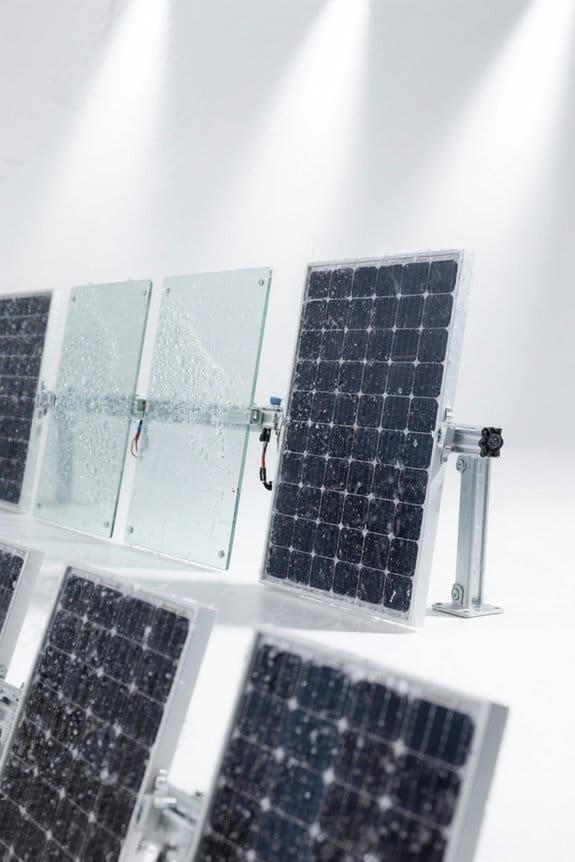

Weather conditions greatly influence solar panel performance by affecting energy output and efficiency. For instance, cloudy days can reduce energy production by 20% to 60%. Dust may lower output by as much as 60% in dry areas, while rain can help clean panels. Temperature also plays a role; efficiency drops by about 0.4% to 0.5% for each degree above 25°C. Understanding these factors is crucial for optimizing solar energy systems and maximizing their benefits. More insights await.
Key Takeaways
- Cloud cover can reduce solar energy production by 20% to 60%, while unexpected sunlight during cloudy days can enhance output.
- Dust accumulation can decrease solar panel efficiency by up to 60%, highlighting the need for regular cleaning, particularly in sandy regions.
- Higher temperatures above 25°C decrease efficiency by approximately 0.4% to 0.5% per degree Celsius, with optimal performance occurring between 15°C and 35°C.
- Rain acts as a natural cleaning agent for solar panels, while snow can reflect light but may also obstruct panels if accumulated excessively.
- Geographical factors, such as solar irradiance and local climate conditions, significantly impact solar panel performance and efficiency across different regions.
The Science Behind Solar Panel Functionality
Solar panels are designed to harness the power of sunlight and convert it into usable electricity through a process known as the photovoltaic (PV) effect. This effect excites electrons within semiconductor materials, generating electricity when sunlight strikes the panels. However, the performance of solar panels greatly depends on weather conditions and environmental factors. For instance, clouds can drastically reduce energy production, with shaded panels often generating only 50% of their ideal output. Additionally, dust accumulation can decrease performance by up to 60%, making regular maintenance essential, especially in sandy regions. Atmospheric elements like humidity and pollutants also impact solar irradiance and overall energy efficiency, necessitating tailored strategies to enhance PV systems based on local climates. To further protect sensitive electronics from environmental factors, installing a whole house surge protector can safeguard against voltage spikes caused by weather-related electrical surges.
Temperature Effects on Solar Panel Efficiency

The efficiency of solar panels is considerably influenced by temperature, which can impact energy production in various ways. Typically, solar panel efficiency decreases by approximately 0.4% to 0.5% for each degree Celsius above 25°C (77°F). The ideal temperature range for solar photovoltaic (PV) performance is between 15°C and 35°C (59°F and 95°F), where efficiency is maximized. Beyond 35°C, the efficiency loss becomes significant, reaching around 3.6% at that temperature due to a temperature coefficient of -0.36%. In response to extreme weather events, engineers often implement cooling mechanisms or select low temperature loss coefficient modules to counteract these efficiency drops. Understanding these temperature effects is essential for optimizing solar panel performance and energy production in various climates. Notably, bifacial solar panels can increase efficiency by capturing sunlight on both sides, offering an advantage in variable weather conditions.
Impact of Sunlight and Cloud Cover

Effective energy generation from solar panels relies heavily on sunlight exposure and the presence of clouds. Solar panels, which convert sunlight into electricity through the photovoltaic (PV) effect, can experience a significant reduction in performance on cloudy days, with output declining by 20% to 60% compared to full sunlight. However, the edge-of-cloud effect can sometimes increase energy production on partly cloudy days, allowing panels to capture unexpected sunlight due to refraction. Despite reduced output in shaded conditions, solar panels still generate energy, demonstrating their functionality even under less-than-ideal lighting. Cooler temperatures from cloud cover can also enhance solar cell performance by lowering resistance, improving efficiency. Therefore, while direct sunlight is most favorable, technology advancements help maintain performance in various weather conditions. A key factor in maintaining efficiency is the use of MPPT Technology, which enhances energy capture efficiency and supports extended battery life.
The Role of Rain and Snow in Energy Production
While rain and snow might seem detrimental to solar panel efficiency at first glance, both elements play significant roles in the overall energy production of solar systems. Rain acts as a natural cleaning mechanism, helping to remove dust and debris that can obstruct sunlight absorption. Similarly, snow can reflect light onto solar panels, enhancing energy production during melting, despite temporarily blocking direct sunlight. Cooler temperatures during rain or snowfall further benefit solar panel efficiency by reducing electrical resistance, leading to improved energy output. However, in areas with significant snowfall, accumulated snow can obstruct panels, negating potential generation gains until cleared. Therefore, understanding the role of rain and snow is vital for optimizing solar installations and maximizing solar power output. Regular cleaning with eco-friendly solutions like Teexpert Solar Panel Cleaner helps maintain efficiency by removing stubborn grime and preventing buildup between natural cleaning cycles.
Geographical Influences on Solar Performance
Geographic factors greatly impact solar panel performance, with differences in sunlight exposure leading to varying energy production levels across regions. Solar panels installed in areas with high solar irradiance produce considerably more energy compared to those in less sunny locations. For example, dust in desert regions can reduce PV systems’ output by up to 60%. Additionally, temperature increases in hotter climates lead to a performance loss of approximately 0.88% annually, compared to just 0.48% in cooler areas. Furthermore, regions with high albedo, reflecting light from surfaces like snow, can enhance energy generation despite some snow cover. Understanding geographic variations, including weather patterns and local conditions, is essential to maximize energy production and optimize panel efficiency for global energy objectives. Solar lights operate in winter with reduced effectiveness due to shorter daylight hours and potential snow cover hindering sunlight access.
Technological Advancements for Weather Adaptability
Technological advancements in solar panel design are making it possible to enhance performance in varying weather conditions. Modern panels are designed to perform efficiently under diverse environmental factors. For instance, anti-reflective coatings improve light absorption during low-light situations. Additionally, new materials combat the heat that often reduces efficiency, ensuring consistent PV performance in hotter climates. Innovations also enable panels to capture energy effectively from ambient light, even in rain or snow. Advanced cooling mechanisms, including reflective roofing and elevated installations, minimize temperature-induced efficiency losses, especially in extreme heat. Collectively, these advancements enhance solar panel resilience, allowing systems to adapt to atmospheric variabilities and maximizing energy output, thereby reducing the detrimental effects caused by less-than-ideal weather conditions. A crucial component of solar energy systems is the solar panel charge controller, which optimizes energy efficiency by managing the flow of electricity from the solar panels to the batteries.
Frequently Asked Questions
How Do Extreme Weather Events Impact Solar Installations?
Extreme weather events critically challenge solar installations; storm damage and hail impact can shatter panels, while temperature fluctuations and snow accumulation stress materials. Additionally, flooding risks and lightning strikes threaten efficiency, potentially reducing lifespan considerably over time.
Can Solar Panels Operate During Nighttime or Low Light?
Solar panels can generate minimal solar energy at nighttime due to advancements in technology detecting infrared light and moonlight impact. However, their nighttime efficiency relies on battery storage to guarantee continuous energy generation despite low light conditions.
What Maintenance Is Required for Solar Panels in Extreme Weather?
In extreme weather, solar panels require meticulous maintenance: panel cleaning, storm preparation, and equipment inspection guarantee structural integrity. Performance monitoring, debris removal, and seasonal adjustments safeguard warranties, proving even solar needs pampering amidst nature’s wrath.
How Does Humidity Affect Solar Panel Performance?
Humidity effects can lead to moisture accumulation on solar panels, potentially causing performance degradation. This environmental factor can diminish energy efficiency by reducing solar absorption, particularly if panel materials lack sufficient weather resilience against high humidity conditions.
Do Dust and Dirt Impact Energy Generation on Solar Panels?
Dust accumulation settles on solar panels like a shroud, diminishing energy efficiency. Regular dirt removal and effective maintenance schedules, paired with advanced cleaning techniques and durable panel coatings, enhance performance metrics, mitigating adverse environmental factors.


