
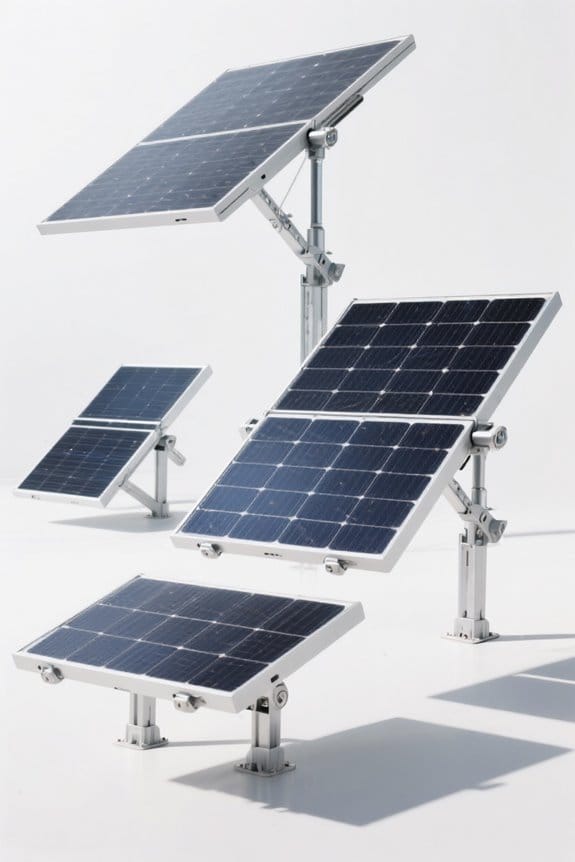

Seasonal adjustments are essential for improving solar panel output. During winter, days are shorter, with only about 7 hours of sunlight compared to over 16 hours in summer. This can lead to up to an 80% drop in energy generation due to less sunlight and increased cloud cover. Regular maintenance, such as snow removal, guarantees panels capture maximum light. Smart technologies, like automated tracking, optimize energy capture year-round. Discover practical strategies to enhance efficiency and performance that can lead to significant benefits.
Key Takeaways
- Regularly adjust panel tilt to optimize sunlight capture, potentially increasing winter production by 22%.
- Schedule snow removal to prevent complete blockage of solar panels, ensuring consistent energy generation during winter.
- Implement smart technology for real-time monitoring and automated adjustments to maximize energy capture year-round.
- Clean solar panels seasonally to remove dust and debris, boosting efficiency in both summer and winter months.
- Utilize bifacial solar panels to enhance energy conversion and capture reflected sunlight, benefiting efficiency in diverse weather conditions.
Understanding Seasonal Variations in Solar Efficiency
Understanding seasonal variations in solar efficiency is essential for optimizing energy production from solar panels. During the winter months, solar power output can decrease dramatically, with production dropping by up to 80% compared to summer. This reduction is primarily attributed to shorter days and lower sun angles, which hinder the panels’ ability to capture direct sunlight. Additionally, light clouds can further diminish solar efficiency, resulting in energy production losses of 10-25%. Notably, cooler temperatures can enhance the performance of solar panels, as they function more effectively in lower heat, provided they are not hindered by snow or debris. Incorporating battery backup systems ensures that energy needs are met even when solar output is low, by storing excess power generated during peak times. Considering these factors allows for better planning and utilization of solar energy year-round, adapting to the seasonal changes that impact solar panel effectiveness.
Sunlight Exposure: Length of Days Across Seasons
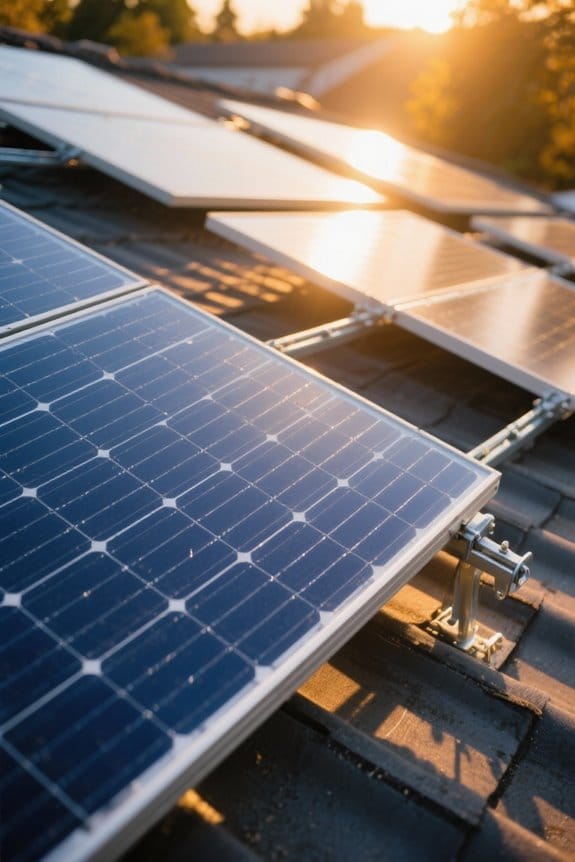
Solar panel efficiency varies considerably with the length of daylight hours across seasons. During summer, solar panels benefit from over 16 hours of daylight, which greatly maximizes solar energy generation. In contrast, winter days provide just over 7 hours of daylight, leading to a marked decrease in energy production. The lower sun angle in winter further diminishes sunlight exposure, contributing to a substantial reduction in solar panel efficiency. Additionally, increased cloud cover during winter can reduce energy output by up to 80% compared to summer months. To counteract these effects, seasonal adjustments, such as optimizing panel tilt, can enhance sunlight capture and improve energy efficiency. This method helps to harness maximum solar energy from the limited daylight hours in winter. Using high-efficiency panels with conversion rates of 20-25% can also significantly improve energy capture during periods of reduced sunlight exposure.
Temperature Impact: Cooler Conditions Can Enhance Performance
While many may associate solar energy production exclusively with sunny conditions, it is essential to recognize that cooler temperatures can actually enhance the performance of solar panels. Cooler conditions reduce electrical resistance in the panels, leading to increased solar panel efficiency. In fact, higher temperatures can decrease this efficiency by approximately 0.4-0.5% for every degree Celsius above 25°C. For regions with high summer temperatures, selecting panels with a superior temperature coefficient becomes critical for maintaining peak performance. HPBC solar modules are designed specifically for better functioning in such climates, minimizing the common efficiency losses. Understanding the temperature impact and its effects on solar performance is crucial for optimizing energy generation throughout different climatic conditions. Additionally, using solar charge controllers with intelligent charging features can further enhance the lifespan of the solar system by effectively managing battery performance.
Weather Challenges: Effects of Cloud Cover and Snow
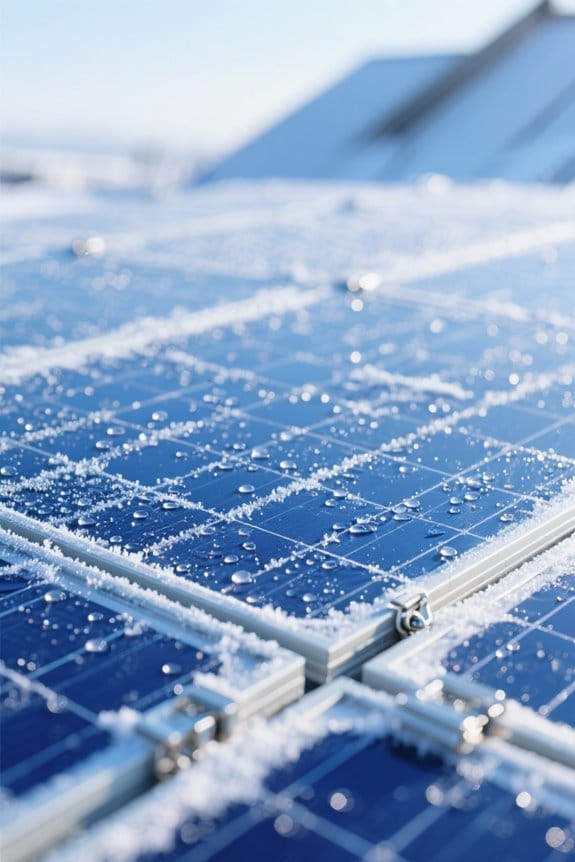
When considering the weather challenges that affect solar panel output, cloud cover and snow present significant obstacles to energy production, especially during winter months. Cloudy conditions can reduce output by 10-25%, which greatly impacts solar efficiency when sunlight is limited. Snow accumulation poses a more serious issue, as it can completely block solar panels, halting energy generation until the snow melts or slides off. This can lead to substantial downtimes during peak snowfall periods. While ground snow can occasionally reflect light and enhance performance, the overall effect of snow cover remains negative, primarily when it obstructs solar panels. Hence, understanding these weather conditions is essential for optimizing solar energy production in winter months. Regular cleaning significantly boosts photovoltaic efficiency and maintains the lifespan of solar panel systems while enhancing visual appeal.
Seasonal Maintenance Practices for Optimal Output
Maintaining solar panels through seasonal practices is vital for maximizing energy output throughout the year. In winter, regular snow removal is essential, as accumulated snow can halt power production, ensuring uninterrupted energy generation. Spring cleaning is necessary to remove dust and debris collected during winter, enhancing sunlight absorption and efficiency. In summer, consistent cleaning helps prevent dust buildup, which can decrease solar output by up to 60% in arid regions. Fall preparations should include thorough inspections of the system and debris clearance to avoid shading and damage during winter. Overall, seasonal maintenance practices, such as monitoring for ice damage and conducting regular inspections, are important for ensuring solar panels operate efficiently and maintain peak energy production throughout changing weather conditions. Using eco-friendly options for solar panel cleaning during these seasonal maintenance tasks can further protect the environment while maintaining optimal panel efficiency.
Smart Technology Integration for Year-Round Performance
As solar technology continues to evolve, the integration of smart technology becomes essential for optimizing performance throughout the year. Smart technology integration in solar panel systems allows for real-time monitoring and adjustments that maximize output. Automated tracking systems actively change the angle of solar panels, effectively capturing sunlight even during winter months when the sun is lower in the sky. Energy management systems optimize energy usage, ensuring that excess renewable energy generated on sunny days is stored for use during cloudy periods. Additionally, advanced weather forecasting tools facilitate proactive adjustments, reducing losses during extreme weather events. Overall, smart grid technologies improve the distribution of solar energy, allowing for intelligent load balancing and enhancing year-round performance stability. Furthermore, the use of MPPT technology in solar charge controllers provides maximum tracking efficiency, optimizing energy collection in varying environmental conditions.
Tailoring System Design to Regional Climate Differences
Tailoring solar panel system design to regional climate differences is essential for maximizing energy generation. Each region presents unique local conditions that impact solar panel performance. For instance, in hotter areas, using panels with a superior temperature coefficient can mitigate efficiency losses caused by high temperatures. Monocrystalline panels perform better in regions with significant cloud cover, while bifacial panels capitalize on snow reflection in winter-prone areas. To address seasonal variations, a solar system 10-15% larger can help compensate for reduced winter production. In addition, understanding local atmospheric patterns, such as cloud cover and dust, is crucial for optimizing system design. Adjusting tilt angles in areas farther from the equator can enhance solar irradiance capture throughout the year, ensuring consistent energy generation. Using bifacial solar panels can increase efficiency by up to 30%, making them a suitable choice for maximizing energy conversion in varied weather conditions.
Customer Experiences and Success Stories With Seasonal Adjustments
Adjustments to the angle of solar panels can greatly enhance energy production throughout the year. Customers implementing seasonal adjustments reported impressive results. For instance, some noted a 22% increase in winter solar production after adjusting panel angles, markedly boosting energy generation during low sunlight months. One user achieved over 16,000 kWh/year, while only consuming 2,000 kWh/year, demonstrating substantial efficient gains. Homeowners with pitched roofs found that regular adjustments countered the typical seasonal drop in output. Feedback indicated that these practices also optimized energy capture in spring and fall, ensuring a more consistent energy supply. Overall, customer experiences highlight the practical benefits of seasonal adjustments in maximizing solar panel output and enhancing overall solar production throughout the year. Additionally, employing high CFM ratings in solar fans ensures effective ventilation and can significantly enhance the efficiency of energy systems in greenhouses by maintaining optimal environmental conditions.
Frequently Asked Questions
What Is the 33% Rule in Solar Panels?
The 33% rule in solar panels emphasizes adjusting the angle for ideal positioning, enhancing efficiency up to 33%. It considers environmental factors, shading impact, module temperature, and effective solar tracking during panel maintenance for improved energy capture.
How to Increase the Output of a Solar Panel?
To increase solar panel output, implement solar panel optimization through angle adjustment techniques, shading avoidance strategies, regular maintenance tips, inverter upgrades guide, energy storage options, and monitoring systems benefits, considering geographic placement factors for enhanced performance.
How to Increase Solar Panel Efficiency in Winter?
Through diligent winter maintenance, one can enhance solar panel efficiency by ensuring snow removal, adjusting angles for ideal sun exposure, mitigating shading effects, utilizing solar trackers, and incorporating energy storage to counter temperature impacts.
What Is the 20% Rule for Solar Panels?
The 20% rule indicates that ideal panel angle adjustments during seasonal weather changes can enhance solar panel maintenance, mitigate shading issues, and improve energy storage solutions, ultimately maximizing efficiency and adhering to installation best practices.


