

Solar options for remote farms and livestock areas primarily include off-grid solar systems. These systems utilize solar panels and batteries to guarantee a reliable energy supply without relying on utility lines. For effective irrigation and water pumping, farmers can benefit from lithium iron phosphate batteries, as they offer longevity and efficiency. Initial setup costs can range from $60,000 to over $500,000, yet financial incentives can help offset these expenses. Understanding these systems and their benefits can lead to greater energy independence and sustainability.
Key Takeaways
- Off-grid solar systems provide energy independence and reliable electricity supply for remote farms without utility access.
- High-quality lithium iron phosphate batteries enhance energy storage efficiency, crucial for irrigation and livestock operations.
- Portable solar panels facilitate seasonal tasks, such as pest control and livestock grazing, maximizing agricultural productivity.
- Financial incentives, like the Solar Investment Tax Credit and grants, can significantly reduce initial installation costs for farmers.
- Regular maintenance and site assessments ensure optimal performance and sustainability of solar solutions in livestock areas.
Understanding Solar Energy for Remote Farms
Understanding solar energy for remote farms begins with recognizing the unique challenges these farms face regarding electricity access. Many remote farms lack utility lines, making off-grid solar systems essential for providing a consistent power supply. These systems often require battery storage, which can initially increase costs but enables remote applications such as irrigation systems and water pumps to function effectively. High-quality solar technology, like lithium iron phosphate batteries, guarantees efficient energy management and longevity. Farmers can also utilize portable solar panels for seasonal tasks, simplifying energy needs for activities like pest control and livestock grazing. Investing in solar energy can lead to significant financial benefits, reducing dependence on costly traditional electricity sources while meeting the water needs of crops and livestock. Solar pumps function primarily in sunny conditions, making them suitable for open areas where they can maximize sunlight exposure and provide efficient water features for the farm.
Benefits of Off-Grid Solar Systems
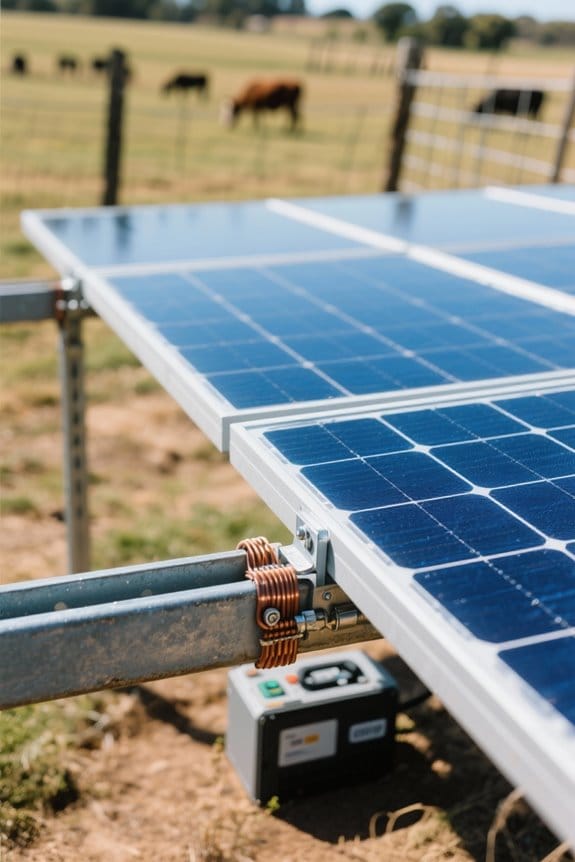
While many remote farms face challenges with electricity access, off-grid solar systems offer significant benefits that can enhance agricultural productivity and financial stability. These systems provide a consistent power supply, reducing reliance on unreliable grid connections. By utilizing renewable energy generated on-site, farmers can save up to 60% in electricity costs compared to conventional sources. Off-grid solar installations generally require battery storage, which guarantees long-term reliability, often lasting a minimum of ten years. Additionally, rural water pumping systems powered by off-grid solar avoid expensive power line installations, enabling efficient energy management. Unlike on-grid systems, off-grid setups afford farmers energy independence, giving them control over their energy costs and protection against fluctuating utility regulations, ultimately supporting financial stability. Solar irrigation pumps, for example, can provide significant water savings of up to 70% compared to traditional systems, further enhancing the benefits of off-grid solar solutions for remote farming.
Comparing Off-Grid vs. On-Grid Solar Solutions
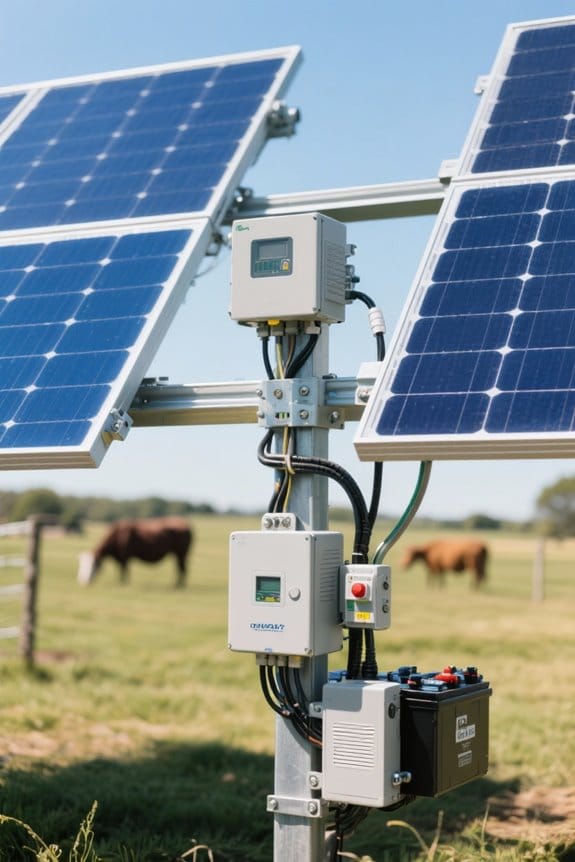
Numerous farmers weigh the advantages and disadvantages of off-grid versus on-grid solar solutions when selecting the best energy source for their operations. On-grid solar systems connect to utility lines, allowing users to benefit from cost savings through net metering. This setup provides reliable energy without battery storage requirements, making the initial investment lower. In contrast, off-grid solar systems provide consistent power and independence from utility companies but necessitate battery storage, leading to higher installation costs. Additionally, off-grid systems are ideal for remote locations lacking conventional electricity, ensuring predictable long-term energy costs. However, their dependency on sunlight means they are less versatile during cloudy conditions than on-grid systems, which can draw from the grid if necessary. Selecting the right solar charge controller is critical to maximizing energy efficiency and ensuring compatibility with your chosen system, given the variations in voltage and battery types.
Key Components of Off-Grid Solar Systems
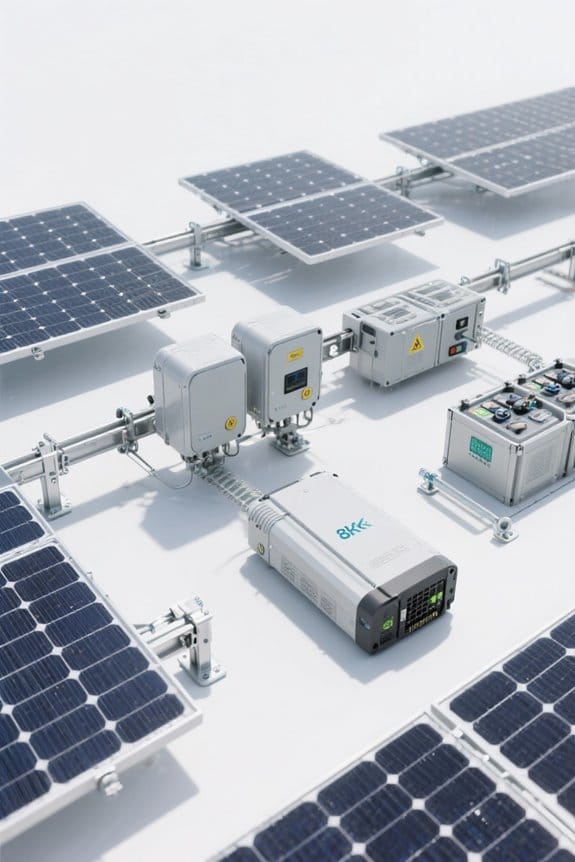
Off-grid solar systems consist of several key components that work together to provide sustainable energy for remote farms. These systems primarily include solar panels, which capture sunlight, and batteries for energy storage to guarantee reliable power availability. Solar modules convert light into electricity, while an inverter transforms this stored energy into usable power. Lithium iron phosphate batteries are favored due to their longevity and efficiency, lasting up to ten years compared to traditional lead-acid batteries that last around three to five years. Additionally, off-grid setups eliminate the need for costly utility line installations, reducing energy costs by about 60% in isolated areas. Regular maintenance of off-grid solar components, such as panels and batteries, is vital for peak performance and efficiency. Incorporating advanced safety features like robust Battery Management Systems (BMS) helps ensure user confidence and prolong the life of the solar setup.
Initial Costs and Financial Considerations
When considering solar energy for remote farms, understanding initial costs and financial implications is essential for making informed decisions. The average installation cost for a farm-scale solar system can range from $60,000 to over $500,000. Farmers can take advantage of the Solar Investment Tax Credit, offering a tax reduction exceeding 30%, which greatly lowers upfront costs. Financing options, such as Property-Assessed Clean Energy (PACE), enable farmers to manage these upfront costs by spreading payments through property tax assessments. Typically, the payback period for solar investments is about 5 to 10 years, influenced by system costs and energy usage. Local and federal incentives may also be available, further helping to reduce the initial financial burden of solar installations on farms. Solar flood lights can be a cost-effective component of these systems, as they provide energy-efficient lighting solutions powered by solar energy sources.
Long-Term Savings Through Solar Investment
Investing in solar energy provides farmers with an opportunity for substantial long-term savings. A 100 kW solar system, costing approximately $238,600 before incentives, can decrease to about $114,147 after applying the 30% Solar Investment Tax Credit (ITC). This reduction presents significant initial savings. Over a 20 to 30-year payback period, farmers can noticeably lower electricity costs. By utilizing solar installations, farmers also enhance cash flow management, stabilizing monthly expenses and offsetting rising energy prices. Grants and state-level incentives, such as those available in California and New York, further cut installation costs. Ultimately, solar energy reduces monthly electricity bills, providing greater financial flexibility for farms and enabling reinvestment into vital areas of their operations. Energy storage systems, such as the EF ECOFLOW DELTA Pro, can further optimize renewable resource integration, supporting continuous operation and maximizing self-consumption.
Reliability of Solar Power in Isolated Locations
How can farmers guarantee a dependable power supply in remote locations? Solar power offers a viable solution for remote farms, providing reliable electricity without the need for costly grid connections. Off-grid solar systems are particularly effective, potentially reducing energy costs by 60% compared to conventional sources. These systems include battery storage, which guarantees a consistent energy supply during nighttime or cloudy conditions. Additionally, portable solar panels can be utilized for flexible agricultural use, powering electric fences and low-wattage pumps wherever needed. Regular maintenance, such as optimizing solar panel placement for maximum energy capture, is essential for sustaining the system’s efficiency. With these strategies in place, farmers can confidently meet their energy supply needs in isolated settings. Solar-powered systems significantly reduce reliance on electricity, making them an environmentally friendly choice for remote farming operations.
Energy Independence and Sustainable Farming
Achieving energy independence in remote farming settings begins with the implementation of off-grid solar systems. These systems provide consistent power, eliminating reliance on utility lines in isolated areas. Portable solar panels make seasonal tasks like irrigation and lighting feasible, effectively bringing electricity to locations without traditional power sources. By utilizing solar energy systems, farmers can notably reduce operational costs, saving up to 30% on energy expenses, aided by federal tax credits and incentives. Off-grid solar systems are approximately 60% cheaper than conventional electricity sources, providing predictable energy costs and eliminating monthly utility bills. Incorporating solar solutions in livestock areas promotes sustainable practices, decreases carbon footprints, and enhances overall agricultural resilience, making it a prudent choice for modern farmers. Solar water pumps with high lift capacities enable efficient irrigation and livestock watering, further supporting sustainable farming operations.
Challenges of Off-Grid Solar Installations
While off-grid solar systems offer numerous benefits for remote farms, several challenges can complicate their implementation. The initial setup of off-grid solar installations can be costly and complex due to geographic limitations. Many remote areas lack proper infrastructure, complicating installation efforts. Reliable energy requires high-capacity battery storage systems, which notably raise initial costs and extend return on investment timelines. Additionally, energy demand fluctuations can challenge the consistent power supply needed to meet varying energy needs throughout the year. Maintenance is another concern, as remote locations make regular upkeep difficult, including cleaning solar panels and ensuring battery health. All these factors necessitate careful planning to optimize solar capacity and functionality for rural agricultural applications. Investing in weather-resistant designs can also enhance the durability and performance of solar systems in harsh outdoor conditions.
Innovations in Solar Technology for Agriculture
The evolving landscape of solar technology offers exciting possibilities for agriculture, particularly for remote farms. Innovations like bifacial solar panels, which capture sunlight on both sides, greatly enhance energy generation. Solar tracking systems further increase efficiency by allowing panels to follow the sun’s path throughout the day. Additionally, solar water pumps powered by photovoltaic technology provide sustainable irrigation solutions, reducing reliance on fossil fuels for water supply. Agrivoltaics combines solar energy and crop production, enabling farmers to grow crops beneath solar panels while generating renewable energy. High-efficiency solar thermal systems effectively heat greenhouses, promoting ideal conditions for crop growth. Many solar battery cables, such as those with pure copper construction and flexible PVC insulation, are vital for ensuring reliable connections and enhancing energy efficiency in these setups. Together, these advancements not only enhance agricultural productivity but also foster a shift to sustainable energy practices within rural communities.
Best Practices for Implementing Solar Solutions
Implementing solar solutions on remote farms requires careful planning and attention to detail to maximize efficiency and benefits. Conducting a thorough site assessment is essential for identifying areas with ideal sunlight exposure, as this maximizes energy production from solar panels. The installation of solar water pumps can directly meet irrigation needs, enhancing sustainability. Utilizing portable solar panels provides flexibility for seasonal tasks, such as livestock protection. Regular maintenance is important; cleaning panels reduces dust accumulation, ensuring consistent energy output. Farmers should also explore financial incentives and grants to help offset installation costs, promoting the adoption of modern solar technology while improving energy use in agricultural practices. These best practices can markedly enhance farm productivity and sustainability.
Frequently Asked Questions
What Is the 33% Rule in Solar Panels?
The 33% rule in solar panels suggests that only one-third of a farm’s land should be used for installations, balancing solar panel efficiency and environmental impact while considering installation costs, technology advancements, and maintenance requirements.
How Much Money Can a 20 Acre Solar Farm Make?
A 20-acre solar farm can generate annual revenue between $200,000 and $300,000, influenced by local regulations, installation expenses, energy incentives, and maintenance costs, while also providing land leasing opportunities and addressing environmental impacts through sustainable practices.
What Is the 20% Rule for Solar Panels?
The 20% rule for solar panels recommends that installations cover no more than 20% of farmland, ensuring ideal solar panel efficiency, supporting energy cost savings and independence, while maintaining sunlight exposure for agricultural productivity and livestock needs.
What Is the Downside of Solar Panel Farms?
The downsides of solar panel farms include challenging installation challenges, high initial costs, ongoing maintenance requirements, and potential wildlife impact, alongside durability concerns, land usage conflicts, aesthetic issues, grid connectivity limitations, and local regulations.


