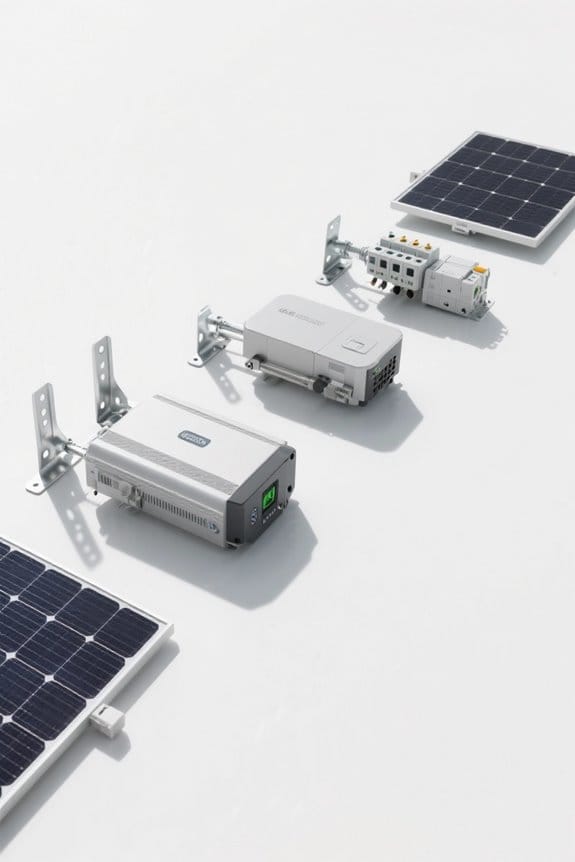
Feed-in tariffs (FiTs) were introduced in the UK to promote renewable energy by providing fixed payments for the electricity generated. Each unit, or kWh, has a Generation Tariff between 40-50p and an Export Tariff of around 3p. Export limits dictate the maximum amount of surplus energy that can be sold back to the grid, which helps maintain grid stability. Knowing these concepts can influence investment choices and energy management strategies. Further exploration reveals additional options in this evolving landscape.
Key Takeaways
- Feed-in Tariffs (FiTs) provided fixed payments for renewable energy generation and export, fostering solar energy adoption in the UK until March 2019.
- Export limits dictate the maximum electricity that can be sold to the grid, ensuring grid stability and preventing overloads during high production.
- Surplus electricity beyond export limits is wasted and unreimbursed, emphasizing the importance of managing generation to fit within these constraints.
- The Smart Export Guarantee (SEG) replaced FiTs in 2020, mandating energy suppliers to pay for exported electricity only, focusing on incentivizing efficient energy use.
- Alternatives to FiTs, like net metering and battery storage, offer strategies to optimize energy production and manage surplus energy more effectively.
What Are Feed-in Tariffs?
Feed-in Tariffs (FiTs) represent an essential financial mechanism designed to encourage the production of renewable energy. Introduced in the UK in April 2010, FiTs provided fixed payments to energy providers for each kWh of electricity generated and exported to the grid. These payments included a Generation Tariff of 40-50p per kWh and an Export Tariff of about 3p per kWh. This system led to significant growth in solar energy, with solar installations skyrocketing from 24,000 in 2011 to over 838,000 by 2015. Although the FiT scheme closed to new applicants in March 2019, it successfully incentivized homeowners, allowing them to earn over £41,000 from a typical 4kWp solar system over a 25-year contract through renewable energy generation. The compatibility across EVs and renewable energy systems plays a vital role in utilizing generated energy efficiently, making it a crucial factor in energy policy considerations.
The Evolution of Feed-in Tariffs

As the demand for renewable energy sources grew, the development of Feed-in Tariffs (FiTs) in the UK played a pivotal role in incentivizing solar energy adoption. Introduced in April 2010, FiTs primarily benefited households with solar panels by guaranteeing payments for the electricity generated and exported to the grid. At their peak, Generation Tariffs offered between 40-50 pence per kWh, while Export Tariffs paid approximately 3 pence per kWh, encouraging a surge in solar households from 24,000 to over 838,000 by 2015. This growth considerably reduced carbon emissions and improved grid capacity. The FiT scheme was closed to new applications in March 2019, moving to the Smart Export Guarantee, which provides variable payments for electricity exported, reflecting market saturation and evolving financial incentives. New solar technologies, such as MPPT Technology, enhance energy capture efficiency, making solar power a more attractive option for homeowners.
Understanding Export Limits
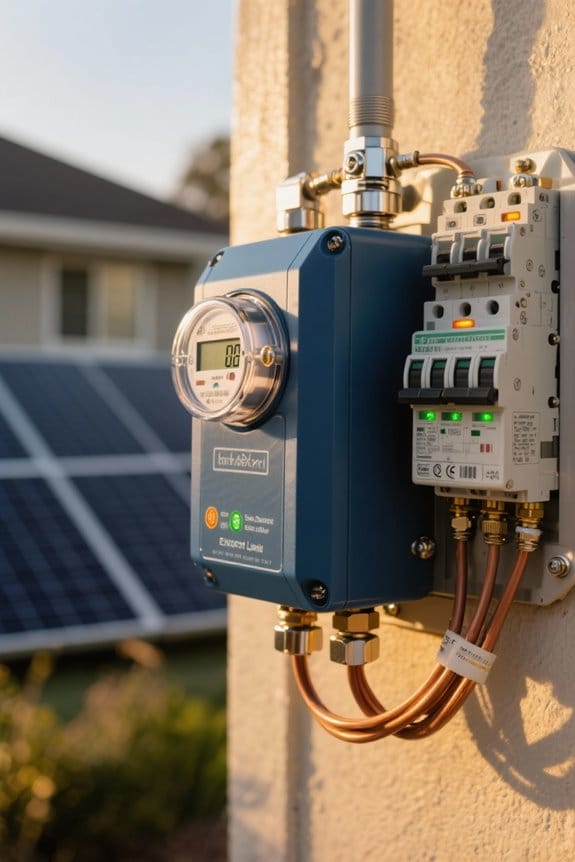
Understanding export limits is essential for homeowners who invest in solar energy systems, as these restrictions define how much electricity can be sold back to the grid. Export limits are typically measured in kilowatts (kW) and aim to support grid stability by preventing overloads during peak production times. For instance, if a household generates 40 kWh but has an export limit of only 10 kWh, the surplus 30 kWh becomes wasted, leading to a lack of compensation for excess energy. This limitation can notably impact the financial benefits homeowners derive from their solar panel systems. Variability in export limits across different regions influences homeowners’ investment decisions and their strategies for optimizing energy generation and overall savings from renewable energy sources. Homeowners can utilize solar panel cleaning solutions to ensure optimal performance and maximize energy generation, thus potentially reducing the impact of export limits on their financial benefits.
Alternatives to Feed-in Tariffs
Several alternatives exist to traditional feed-in tariffs for homeowners looking to maximize their solar energy investments. Net metering allows individuals to receive credits for excess solar energy sent back to the grid, effectively reducing future electricity costs. Dynamic tariffs, a newer option, adjust payment rates based on real-time demand, providing potential savings depending on the time of day. Homeowners can increase self-consumption by utilizing battery storage systems to save surplus solar energy for later use, minimizing reliance on the grid. Additionally, employing energy management systems can optimize the use of power, leading to increased efficiency. These alternatives can offer significant financial rewards while supporting the growth of renewable energy sources in local communities. For instance, lithium-based energy storage systems are preferred for solar installations due to their high efficiency in optimizing solar power usage.
The Transition to Smart Export Guarantee
The introduction of the Smart Export Guarantee (SEG) marks a significant alteration in how homeowners can benefit from exporting excess electricity generated by their solar panels. Replacing the Feed-in Tariff (FiT) on January 1, 2020, SEG obligates energy suppliers to pay households for electricity exported to the grid. Unlike FiT, which compensated for both generation and export, SEG focuses solely on electricity exported. This change encourages households to assess earnings carefully, as certain suppliers may offer better tariff rates. Additionally, existing FiT participants can continue receiving payments until their contracts expire, while exploring the potential for higher SEG rates. This adjustment aims to maintain renewable energy production, providing financial benefits to households that contribute to the energy market amidst ongoing market changes. Investing in high-quality and durable materials for solar panels can further enhance system efficiency and maximize financial returns from SEG by ensuring optimal output.
Future of Feed-in Tariffs and Market Implications
What will the future hold for feed-in tariffs (FiTs) as energy markets evolve? The closure of the FiT scheme for new applicants in the UK has shifted focus to the Smart Export Guarantee (SEG). This change encourages a competitive market for exported renewable electricity, where major energy suppliers must pay varying rates to renewable energy producers. Such variability can lead to potentially higher earnings compared to the fixed FiT rates. Additionally, with improvements in solar technologies, there is a growing emphasis on self-consumption strategies that optimize energy use. Future FiT adaptations may introduce dynamic pricing, reflecting real-time market conditions. This approach could enhance energy adoption and promote sustainable consumption practices while accommodating the needs of an evolving energy landscape. Innovations in solar panel cleaning technology, such as electric models and water-fed systems, are also poised to play a crucial role in maximizing energy efficiency and supporting the growth of renewable energy solutions.
Frequently Asked Questions
How Does the Feed-In Tariff Work?
The feed-in tariff supports solar energy by guaranteeing fixed tariff rates for electricity generation and export. It incentivizes renewable projects, enhances investment returns, and promotes energy sustainability, while safeguarding consumer rights through maintained grid connection and net metering solutions.
What Does 5kw Export Limit Mean?
A 5kW export limit restricts the amount of excess solar energy available for grid integration. This regulation impacts consumer savings potential, installation costs analysis, and market demand trends, influencing energy storage solutions and policy changes effects.
What Is the 20% Rule for Solar Panels?
The 20% rule for solar panels encourages homeowners to use at least 20% of generated energy, maximizing solar panel efficiency, enhancing energy cost savings, and aligning with renewable energy incentives and installation process steps within government policies.
What Is the Difference Between Feed-In Tariff and Export Tariff?
Like a well-tuned engine, Feed-In Tariffs and Export Tariffs differ in their essence: FiTs reward renewable energy producers for total generation and export, while Export Tariffs focus solely on energy credits for exported electricity, influenced by market rates.