
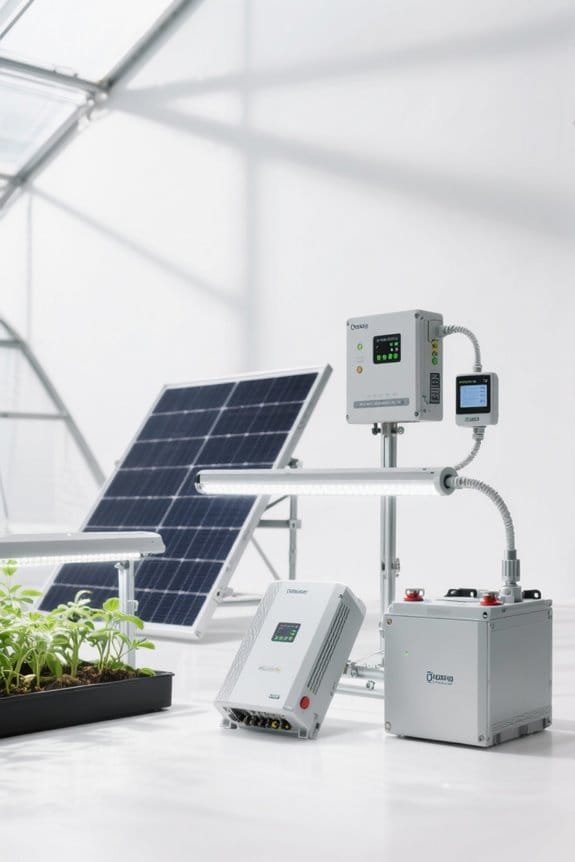

Solar power greatly enhances greenhouses and garden projects by providing renewable energy for lighting, heating, and ventilation. Solar panels installed on roofs convert sunlight into electricity, powering essential systems. For efficient operation, small greenhouses typically need 10-15 watts per square foot. Initial installation costs have decreased, making solar energy increasingly accessible. Utilizing passive solar design methods, like south-facing orientations and thermal mass materials, can optimize growing conditions. Exploring these concepts further can uncover more ways to maximize sustainability in gardening.
Key Takeaways
- Solar-powered greenhouses harness sunlight to create optimal growing conditions and reduce reliance on fossil fuels.
- Integrate solar panels to supply electricity for climate control systems, enhancing crop yields year-round.
- Utilize thermal mass storage to retain heat, stabilizing temperatures despite varying weather conditions.
- Employ solar pumps for irrigation and air circulation, improving energy efficiency and water management.
- Initial investment in solar technology leads to long-term savings through reduced energy costs and potential elimination of electric bills.
What Is a Solar-Powered Greenhouse?
A solar-powered greenhouse is a specialized structure designed to harness solar energy for maintaining ideal growing conditions throughout the year. It captures sunlight by strategically facing south, which maximizes exposure while minimizing heat loss through well-insulated north ends. Solar panels convert sunlight into electricity, powering essential devices like fans and grow lights, thereby enhancing energy efficiency. This use of renewable energy not only reduces reliance on fossil fuels, but also lowers long-term energy costs associated with traditional greenhouses. By ensuring consistent light and temperature levels, solar-powered greenhouses promote favorable growing conditions, which lead to increased plant productivity and better crop yields. Various programs exist to encourage solar panel installations, including tax credits and rebates, which can significantly reduce the upfront costs of converting to a solar-powered greenhouse. Overall, they represent a sustainable and innovative approach to modern agriculture.
How Do Solar-Powered Greenhouses Function?
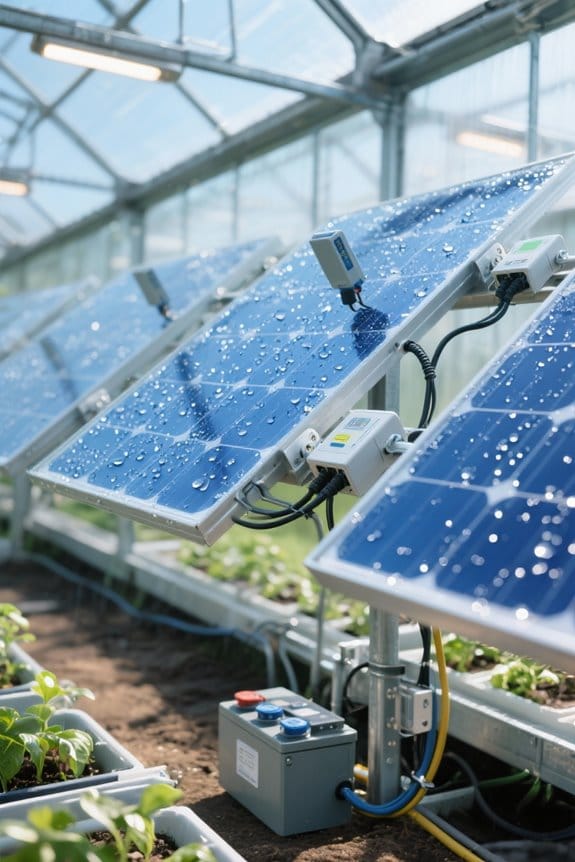
Solar-powered greenhouses operate using a combination of solar energy technology and passive design principles to create ideal conditions for plant growth. These structures are strategically designed to maximize sunlight, often featuring a south-facing orientation and an insulated north end to curb heat loss. Integrated solar panels harness solar energy to generate electricity for lighting, heating, and ventilation systems essential for plant development. By employing passive solar design, materials like concrete or water serve as thermal mass storage, efficiently retaining heat. This allows the greenhouse to maintain favorable temperatures year-round, regardless of external weather changes. In addition, the generated greenhouse energy can power automated systems, reducing energy costs while enhancing operational efficiency throughout the growing season. Solar panels can function effectively in cold weather conditions, often exhibiting enhanced efficiency due to lower temperatures and still generating energy even during overcast days.
The Benefits of Solar Energy in Greenhouse Cultivation
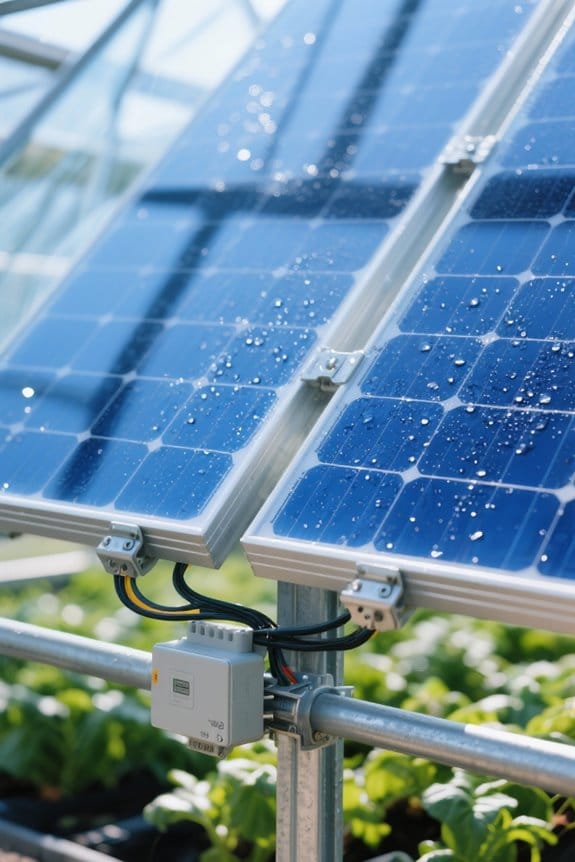
In the domain of greenhouse cultivation, the integration of solar energy presents notable advantages that can transform agricultural practices. Utilizing solar energy as a renewable power source reduces operating costs by powering heating, lighting, and watering systems, promoting energy efficiency throughout greenhouse operations. Studies indicate that solar-powered greenhouses can enhance crop yields by providing reliable light and warmth year-round, ensuring ideal conditions for plant growth. Additionally, this change to solar energy considerably lowers the carbon footprint associated with fossil fuel usage, promoting environmental sustainability. By adopting solar technology, greenhouse operators gain self-sufficient power, reducing reliance on traditional energy sources and tailoring energy generation to meet specific cultivation needs for maximum productivity. Solar panels with higher output capacities, ideally exceeding 10W, can further enhance the efficiency and reliability of solar-powered systems, ensuring consistent energy supply even in less than optimal weather conditions.
Methods of Utilizing Solar Energy in Greenhouses
Effective greenhouse management increasingly leverages diverse methods to harness solar energy, enhancing agricultural efficiency and sustainability. One prominent approach is the installation of solar panels on greenhouse roofs, converting sunlight into solar electricity that powers irrigation and climate control systems. Additionally, solar-powered pumps improve air circulation and soil moisture management, creating healthier plant environments. Thermal storage solutions, including phase change materials, further optimize energy efficiency by storing heat for later use. Integrating a solar battery allows for consistent power supply, even during cloudy days or at night. For innovative greenhouse design, passive solar greenhouses can naturally maintain temperatures without external energy sources, providing an eco-friendly and cost-effective solution that maximizes solar benefits. Solar irrigation pumps, such as the JIYANG Solar Automatic Drip Irrigation Kit, can support irrigation needs effectively while ensuring substantial water savings and reducing manual labor.
Passive Solar Greenhouses Explained
Passive solar greenhouses represent an innovative approach to sustainable agriculture by utilizing natural sunlight to create ideal growing conditions. These structures employ passive solar heating techniques to maximize solar gain through large south-facing windows, while the north side is insulated to minimize heat loss. By incorporating thermal mass materials, such as concrete or water, these greenhouses retain heat during the night, ensuring stability in temperature. This design reduces energy costs substantially, often eliminating the need for mechanical heating. The effectiveness of a passive solar greenhouse also hinges on its geographic location, making careful site selection essential to optimize sunlight exposure. Ultimately, these methods promote sustainable gardening practices by effectively harnessing renewable resources in diverse climates. Solar regulators can enhance battery lifespan by preventing overcharging, thereby supporting the energy efficiency of such systems.
Integrating Solar Panels in Greenhouse Design
Integrating solar panels into greenhouse design offers a practical solution to enhance energy efficiency and sustainability in agriculture. By incorporating solar energy systems, growers can meet their energy needs for equipment like fans and heating systems effectively. Typically, panels on the greenhouse roof capture sunlight while minimizing shade on crops. To determine the appropriate number and size of panels, it is essential to assess total energy needs, considering operational hours and equipment. Though the upfront investment for solar panels can be high, this integration can yield long-term savings by reducing reliance on grid electricity. Additionally, utilizing solar energy contributes to greater energy independence, allowing growers to achieve self-sufficiency in their power supply while supporting sustainable gardening practices. Incorporating Battery Management Systems with solar-powered greenhouses ensures the safety and longevity of the energy storage, protecting against overcharging and overheating.
The Role of Solar Generators in Greenhouse Operations
As greenhouse operations increasingly embrace sustainable practices, solar generators emerge as an essential component for efficient energy management. These systems combine solar panels and battery storage, providing reliable power to greenhouse systems, particularly during low sunlight or nighttime. By supporting functions like heating, lighting, and automated watering systems, solar generators help maintain ideal growing conditions throughout the year. Additionally, they can considerably reduce electricity costs, offering long-term financial savings while lessening dependence on fossil fuels. Portable solar generators offer further flexibility, making them suitable for temporary or off-grid setups. Overall, integrating solar generators into greenhouse operations enhances energy independence and promotes eco-friendly gardening practices, making it a smart choice for modern greenhouse owners. With options like the Jackery HomePower 3600 Plus, which provides a high output of 3600W and a capacity of 3584Wh, greenhouse owners can ensure they have the necessary power to sustain extended usage and meet the demands of larger systems.
Determining Energy Requirements for Your Greenhouse
Calculating energy requirements for a greenhouse is a fundamental step in ensuring ideal growth conditions for various plants. Factors such as greenhouse size, location, and insulation quality directly influence these energy requirements. A small greenhouse typically requires about 10-15 watts per square foot for lighting, along with additional wattage for heating and ventilation systems. To obtain accurate estimates, conducting a detailed energy audit can be beneficial. This involves recording the operational hours of all equipment to evaluate total electric demand. For precise calculations, utilizing solar power calculators online can help factor in local sunshine availability and specific greenhouse needs. By understanding these elements, users can effectively size their solar panels, ensuring efficient energy use for maximum plant growth. Solar panels for greenhouses can benefit from high efficiency of N-Type panels, which offer robust performance even in less than ideal sunlight conditions.
Cost Considerations for Solar-Powered Greenhouses
Investing in solar-powered greenhouses involves careful consideration of both initial expenses and potential long-term savings. The initial investment, while significant, has become more accessible as solar panel costs decreased from $8.50 per watt in 2009 to around $2.81 per watt in 2020. Though installation costs, including batteries and inverters, raise upfront expenses, these components enable independent energy generation. This can eliminate monthly electric bills and reduce overall energy expenses. Additional costs may come from site assessments and durable construction materials. However, financial incentives, such as government tax credits and rebates, can lessen the financial burden, making solar investments for greenhouses more affordable. Ultimately, these systems promise substantial long-term savings for sustainable gardening. Solar compatibility is crucial for effective renewable energy storage, enhancing the efficiency and sustainability of solar-powered greenhouses.
Tips for Designing an Efficient Solar Greenhouse
Designing an efficient solar greenhouse requires careful planning and strategic decisions to maximize energy use and plant growth. To capture maximum sunlight, orient the structure along an east-west axis and use glass on the south-facing side. High-quality insulation materials should be applied to the north end to reduce heat loss, promoting energy efficiency. Incorporate passive solar design elements, such as thermal mass—materials that store heat, like concrete or water—to stabilize temperatures day and night. Additionally, renewable energy systems, including solar panels, can power greenhouse essentials like heating and lighting. Natural ventilation strategies, including roof vents and side openings, enhance temperature and humidity control, facilitating healthier plant growth without excessive energy consumption. Integrating advanced safety features in solar battery systems ensures optimal energy storage and usage for greenhouse operations.
Exploring Eco-Friendly Gardening Practices With Solar Power
As gardeners seek sustainable solutions, integrating solar power into their eco-friendly practices presents numerous advantages for cultivation and conservation. A solar-powered greenhouse offers significant energy savings, reducing costs associated with lighting, heating, and ventilation. By harnessing the sun’s energy, gardeners can achieve energy independence, ensuring peak growth conditions regardless of weather variations. Solar-powered water pumps effectively enhance irrigation efficiency by supplying water using renewable energy sources, such as rainwater. Implementing solar lighting systems in gardens can extend the growing season, with LED lights emitting specific wavelengths that boost plant productivity. Additionally, employing passive solar design techniques maximizes heat retention, ultimately minimizing energy needs and supporting sustainable gardening practices that benefit both the environment and cost efficiency.
Frequently Asked Questions
What Is the 33% Rule in Solar Panels?
The 33% rule suggests utilizing no more than one-third of available roof space for solar panels, optimizing solar efficiency, energy production, and panel lifespan while ensuring adequate sunlight exposure for surrounding vegetation and minimizing installation costs.
Why Do We Say No to Solar Farms?
Solar farms face opposition due to disadvantages such as land use concerns, environmental impact, local community reactions, aesthetic concerns, and economic implications. Regulatory issues add complexity, prompting exploration of alternative energy solutions that minimize these challenges.
How Much Solar Power Do I Need for a Greenhouse?
To determine solar system size for a greenhouse, one must calculate energy usage based on greenhouse energy requirements. Factors include panel efficiency ratings, ideal panel placement, and local climate control, enhancing sustainable gardening practices through solar energy benefits.
What Is the 20% Rule for Solar Panels?
The 20% rule mandates that solar panels should generate at least 20% of a building’s energy needs, optimizing photovoltaic system design and energy output calculations while enhancing solar panel efficiency and accommodating seasonal energy variation and battery storage solutions.


