


Solar cables and connectors are essential for the efficiency of solar power systems. Types include PV wire for outdoor use and USE-2 for ground-mounted installations. Select MC4 connectors for secure, weather-resistant connections, rated at 30 amps and 1,000 volts. Use thicker cables, like 10AWG, to reduce resistance. Regular inspections and maintenance, such as checking connections and cleaning components, guarantee safety and performance. Understanding these elements can enhance your solar system’s reliability and efficiency. More insights follow.
Key Takeaways
- Solar cables, particularly PV wire, are designed for outdoor use, providing weather resistance and optimal conductivity for efficient energy transmission.
- MC4 connectors are the industry standard, ensuring secure and weather-resistant connections with a rating of up to 30 amps and 1,000 volts.
- Thicker cables, such as 10AWG, reduce resistance and minimize power loss, while copper cables offer better conductivity over aluminum.
- Regular inspections and maintenance of cables and connectors help prevent overheating, electrical failures, and ensure safety compliance with UL or TUV standards.
- Choose outdoor-rated cables and compatible connectors to optimize performance and withstand environmental factors for reliable solar energy systems.
Understanding Solar Cables
Understanding solar cables is essential for anyone involved in solar energy systems, as these components play a critical role in guaranteeing the efficiency and longevity of a solar installation. Solar cables, specifically PV wire, are designed for outdoor use, providing excellent weather resistance against sunlight, moisture, and extreme temperatures. This assures reliability in various environmental conditions. The thickness of solar cables directly affects their current-carrying capability; thicker cables reduce resistance, thereby minimizing power loss. For peak performance, copper is preferred over aluminum due to its superior conductivity. Meanwhile, connectors must also be considered, as they ensure secure connections within electrical systems. Selecting the right solar cables not only enhances performance but also expands the lifespan of solar installations. Additionally, proper maintenance of connectors enhances their lifespan and ensures optimal system performance.
Types of Solar Cables
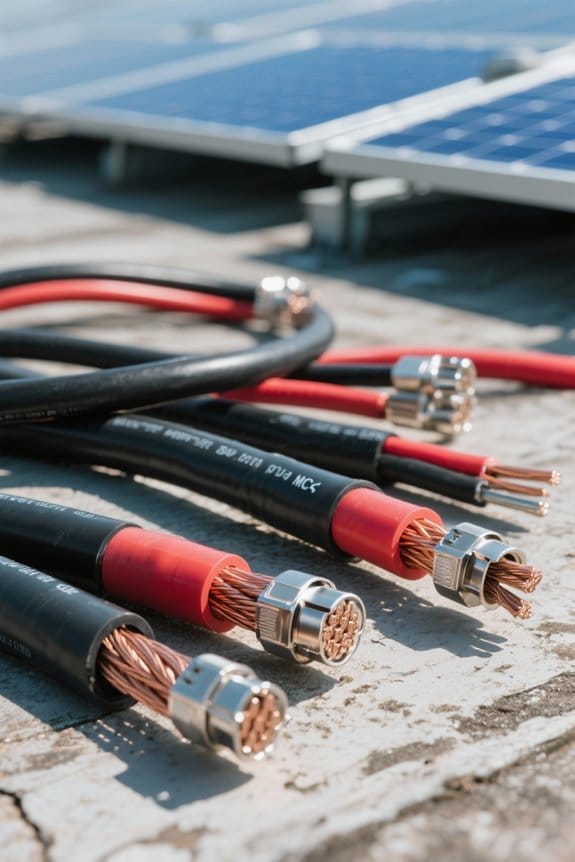
When selecting solar cables, one must consider the specific types available, as each serves distinct purposes within solar energy systems. PV Wire is often used for outdoor connections because it resists sunlight, water, and high temperatures, making it suitable for photovoltaic systems. USE-2 Cable is ideal for ground-mounted installations but lacks insulation, so it is not recommended indoors. THHN Wire, meanwhile, is versatile for indoor wiring; however, it requires conduit outdoors due to its lack of weather resistance. In solar applications, copper cables are favored over aluminum due to their better conductivity and longer lifespan. The thickness, or gauge, of these cables affects their current carrying capacity, influencing energy efficiency in the overall system. When choosing cables, opt for 10AWG cables to ensure efficient current flow and reduced resistance, which enhances the performance of solar energy systems.
Importance of Solar Connectors
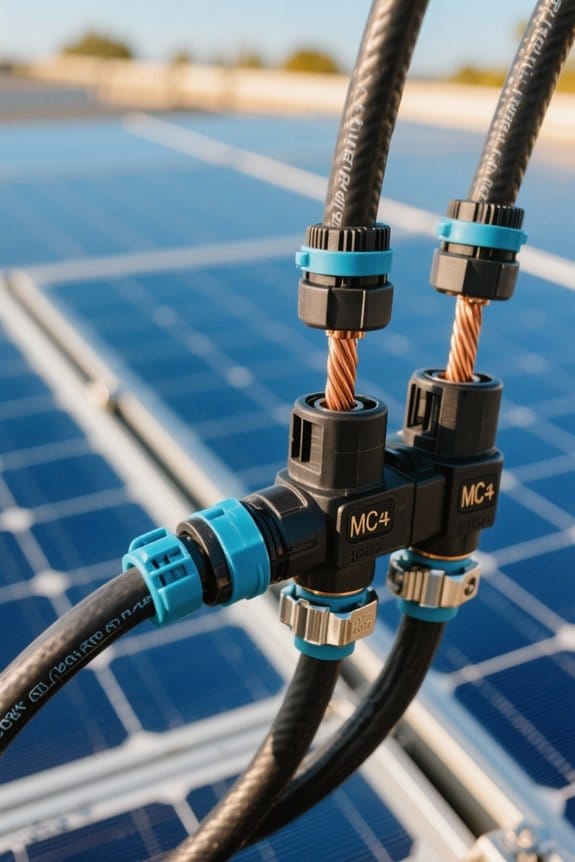
Solar connectors play a noteworthy role in the functionality and efficiency of solar energy systems, following the selection of appropriate solar cables. MC4 connectors are particularly vital, as they create secure connections that are weather-resistant, thereby enhancing system durability. These connectors can handle up to 30 amps and 1,000 volts, ensuring peak efficiency in various environments, with temperature ranges from -40°C to +90°C. Proper use of solar connectors helps prevent electrical failures, while low-quality or incompatible options may lead to performance issues. Compatibility with other solar components is essential, ensuring reliable integration. Regular maintenance and inspection of solar connectors can appreciably prolong the life and performance of renewable energy installations, underscoring their importance in overall system reliability. MC4 connectors, like those in the 50 Pairs Solar Connector Kit, are designed with waterproof ratings such as IP67 or IP68, offering reliable protection in harsh environments.
Overview of Common Connector Types
Various connector types are essential to the efficiency and reliability of solar energy systems. MC4 connectors are the industry standard, providing secure connections with current ratings of up to 30 amps and voltage ratings of 1,000 volts, making them ideal for outdoor environments. Amphenol H4 connectors, recognized for their tool-free disconnection process, also guarantee reliable connections in solar applications. Tyco SolarLok connectors are genderless and NEC-compliant, known for their durability against harsh weather conditions. Radox connectors excel in extreme conditions, offering high mechanical strength and resistance to UV and ozone. Each of these connector types supports various cable sizes, guaranteeing secure connections for diverse solar installations, from residential rooftops to large solar farms. The use of high-quality insulation materials such as XLPE and XLPO in photovoltaic cables ensures UV and moisture resistance, which enhances the longevity and efficiency of solar installations.
MC4 Connectors: Features and Benefits
MC4 connectors serve as an essential component in the world of solar energy, particularly because of their exemplary features and benefits. These connectors are the industry standard for solar panels due to their impressive durability and ability to withstand harsh weather conditions, including UV exposure and moisture. Rated for a maximum current of 30 amps and a maximum voltage of 1,000 volts, MC4 connectors handle energy efficiently and safely. The secure locking mechanism prevents accidental disconnection, ensuring reliable connections in solar installations. Designed to operate in temperatures ranging from -40°C to +90°C, they adapt well to various environments. A specialized disconnecting tool is required for maintenance, helping protect these standard connectors from damage during reconfiguration. Proper connectors optimize energy transfer within solar installations, enhancing overall system productivity.
Installation Techniques for Solar Connectors
When installing connectors for solar energy systems, proper techniques are essential for ensuring functionality and reliability. To begin, when using MC4 connectors, strip the wire to expose approximately 1/4 inch of copper, allowing for a secure connection. Utilize a crimping tool suited specifically for MC4 connectors to attach contacts, ensuring a reliable and watertight seal for outdoor installations. Connectors should be locked together firmly until an audible click is heard, verifying a secure connection resistant to environmental conditions. It is crucial to check the polarity, ensuring positive terminals are paired with positive leads, while negative terminals connect with negative leads. For maintenance or reconfiguration, always use an MC4 disconnect tool to safely disengage the connectors without causing damage. Additionally, battery compatibility is vital to ensure optimal performance and prevent damage in the solar energy system.
Wiring Configurations: Series vs. Parallel
Wiring configurations play a significant role in the efficiency and performance of solar energy systems. In series wiring configurations, solar panels are connected sequentially, raising the overall voltage output while maintaining a constant current. For example, two 18-volt panels in series produce an output of 36 volts, making it vital to match this to the inverter voltage input. In contrast, parallel wiring connects all positive leads together and all negative leads together, keeping voltage constant and summing the current. This setup excels in shading situations, as one shaded panel affects only its current contribution. However, proper wire sizing is important in parallel configurations to prevent voltage drop due to increased current flow, necessitating larger wire gauges for ideal performance. MPPT technology enhances energy capture efficiency by adjusting the electrical operating point of the modules or array.
Compatibility and Performance Factors
Compatibility and performance factors play an essential role in the efficiency of solar power systems. Most modern solar panels utilize MC4 connectors, known for their reliability and weather resistance, ensuring streamlined compatibility with inverters and mounting systems. It is crucial to verify that connectors match existing equipment, as incompatibility may lead to performance issues. Choosing connectors that are UL certified minimizes risks of electrical failure, ensuring better longevity and system performance. In addition, MC4 connectors feature a secure locking mechanism, which maintains stable connections despite environmental changes. The selection of appropriate cable thickness—how thick the wire is—also impacts efficiency, alongside weather resistance characteristics that promote ideal functioning of the solar power system throughout varying conditions. Many solar panel pole mounting systems offer adjustable tilt and orientation benefits, enhancing energy efficiency by optimizing sunlight exposure throughout the day.
Safety Considerations for Solar Installations
Safety is a vital aspect of solar installations, as improper handling can lead to serious hazards. To guarantee safety, it is essential to use only UL or TUV certified cables and connectors, as these meet rigorous safety standards and help prevent electrical failures. Following National Electrical Code (NEC) guidelines regarding voltage and current ratings is also essential. Regular inspections should be conducted every few months to check for damaged components, such as frayed wires or corroded connectors. Properly stripped wires and securely crimped connections prevent loose connections that may cause overheating or fires. Utilizing MC4 connectors, which feature a secure locking mechanism, reduces the risk of accidental disconnections and provides protection against environmental factors, guaranteeing a safer solar installation. Additionally, weather-resistant features in battery boxes ensure reliable performance in harsh outdoor conditions, contributing to the overall safety and efficiency of solar systems.
Maintenance and Troubleshooting Tips
Maintaining solar cables and connectors is essential for guaranteeing maximum performance and safety over time. Regular inspections every few months help identify issues such as cracks, corrosion, or loose connections that may impact system performance. Keeping connections clean is crucial; using a dry cloth can remove dust and dirt buildup. Any damaged connectors must be replaced immediately to assure safety and prevent energy disruptions. Additionally, confirming all connections are tightly secured can help optimize performance, as loose connections increase resistance and may lead to overheating. Labeling cables during installation simplifies future troubleshooting and maintenance, making it easier to identify specific connections and issues within the system. Thorough maintenance promotes efficiency and prolongs the lifespan of solar energy systems. It’s important to choose cables with tinned copper wire for improved corrosion resistance and longevity, which is a vital feature for outdoor solar installations.
Selecting the Right Solar Cables and Connectors
How can one guarantee the longevity and efficiency of a solar energy system? Selecting the right solar cables and connectors is vital. First, verify compatibility with voltage and current ratings to avoid overheating. For modern setups, use MC4 connectors, which are waterproof and compatible with inverters. The thickness of cables is important; thicker cables, indicated by lower American Wire Gauge (AWG) numbers, reduce resistance and minimize power loss over long distances. Cables should be rated for outdoor use, such as PV wire, which withstands sunlight, water, and temperature changes. Always choose connectors and cables with safety certifications like UL or TUV, confirming compliance with industry safety standards for both residential and commercial systems.
Frequently Asked Questions
What Is the 20% Rule for Solar Panels?
The 20% rule for solar panels indicates that efficiency improves when the system’s output remains within 20% of the inverter’s capacity, enhancing electricity generation optimization, renewable energy benefits, and overall solar system design for savings.
What Are the Different Types of Solar Connectors?
Different types of solar connectors include MC4, MC3, Amphenol H4, Tyco SolarLok, and Radox connectors. Each offers advantages like waterproof capability, safety standards, and high-temperature resistance, ensuring reliable solar wire connections and peak performance.
Should I Use 4mm or 6mm Solar Cable?
Selecting 4mm or 6mm solar cable depends on current capacity and installation guidelines. Thicker 6mm cables reduce voltage drop and improve heat resistance, while considering environmental factors, cable insulation, and cost for long-term maintenance needs.
Do Solar Cables Need to Be in Conduit?
When it comes to solar cable installation, conduit types may be necessary, especially for non-weather resistant cables. Proper outdoor cable protection enhances safety considerations, ensuring compliance with electrical code requirements and improving solar energy efficiency in DIY solar setups.
