


To plan a solar setup for camping and overlanding, first assess your power needs by listing devices and calculating daily energy consumption. For example, a 100-watt fridge used for eight hours consumes 800 watt-hours. Choose lithium iron phosphate (LiFePO4) batteries for efficiency and longevity, matching capacity to daily use. Select solar panels based on energy needs; for 900 watts daily, install about 500 watts of battery storage and a 200W panel. Understanding these components will enhance your setup markedly.
Key Takeaways
- List all devices and their wattage to calculate total daily energy consumption for accurate power needs assessment.
- Choose lightweight and durable solar panels, like REDARC 200W or EcoFlow 160W, based on energy demands and portability.
- Select lithium iron phosphate (LiFePO4) batteries for longevity, ensuring capacity matches daily consumption with additional reserve for cloudy days.
- Utilize MPPT charge controllers for efficient energy conversion, improving performance during low sunlight conditions.
- Install a battery monitor for real-time tracking of energy consumption, ensuring efficient power management and timely maintenance.
Assessing Your Power Needs
When planning a solar setup for camping, it is vital to start with a thorough assessment of power needs. This begins by listing all electrical devices intended for use, such as a fridge/freezer, lights, and charging equipment, along with their wattage and estimated daily usage hours. For example, if a fridge uses 100 watts and runs for eight hours daily, it consumes 800 watt-hours. By calculating wattage for each device, one can total daily energy consumption. Additionally, incorporating a larger battery bank allows for accommodating higher energy consumption, particularly for cloudy days. This guarantees there’s enough power for unexpected needs. Utilizing online calculators can facilitate determining the right size for the solar power system based on these assessments. Consider using 12V 100Ah LiFePO4 batteries for their long lifespan and lightweight design, which can enhance portability and efficiency.
Choosing the Right Battery System
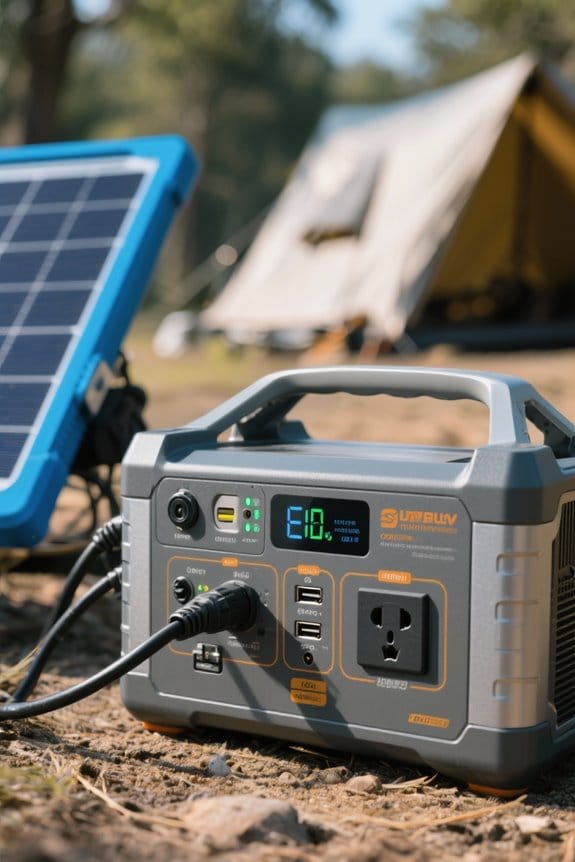
Selecting the right battery system is essential for a successful solar setup during camping trips. Lithium batteries, particularly lithium iron phosphate (LiFePO4), are preferred for their lighter weight and longevity, providing deeper discharge capabilities. To guarantee an adequate supply of energy, battery capacity must align with daily electricity consumption, including anticipatory reserves for cloudy days. An efficient option is the RELiON RB52 or RB100 lithium batteries, which store energy effectively. Implementing a dual-battery system separates the starter battery from the auxiliary battery, minimizing the risk of draining the starter during prolonged use. Additionally, employing a charge controller optimizes charging and protects battery health, enhancing the reliability of solar power systems for off-grid adventures. Many Bluetooth-enabled batteries allow real-time monitoring of voltage, temperature, and charge cycles, enhancing user experience by providing ease of data access and proactive battery management.
Selecting Solar Panels for Your Setup
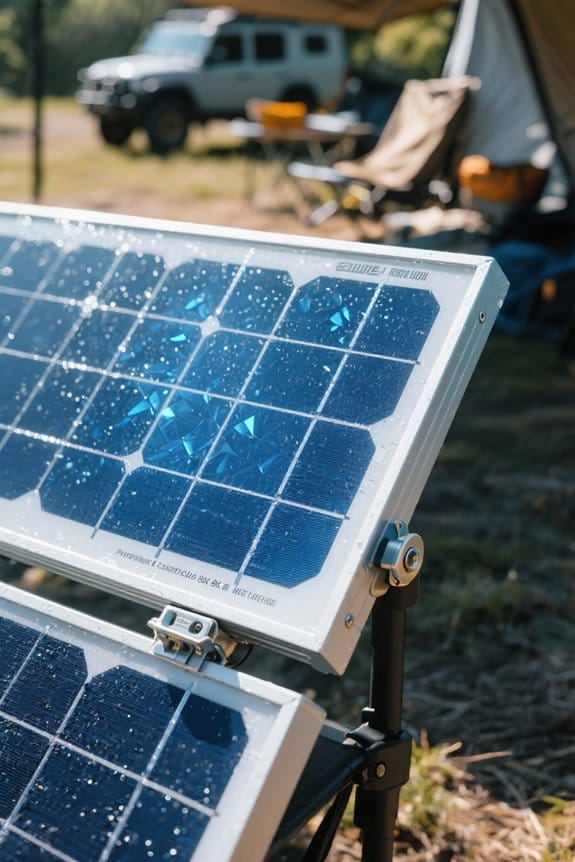
Understanding the battery system sets the stage for an effective solar panel selection. When selecting solar panels for overlanding, campers should consider their energy needs and the portability of options available. Flexible soft panels offer lightweight convenience, while rigid panels provide durability for fixed installations. For instance, if devices require about 900 watts per day, approximately 500 watts of battery storage and a 200W solar panel are advisable for efficient operation. High-efficiency options, such as the REDARC 200W Monocrystalline Solar Panel, cost around $587, whereas portable alternatives like the EcoFlow 160W Solar Panel, priced at $449 and weighing 15.4 pounds, are also viable. Durability features are essential in outdoor conditions, as they ensure reliability during camping adventures. Always prioritize reputable brands to guarantee reliable performance during camping adventures.
Understanding Charge Controllers
A charge controller plays an essential role in any solar setup, acting as the pivotal link between solar panels and batteries. It regulates voltage and current, preventing overcharging and maintaining safe operation, particularly for lithium-ion batteries. Two main types are available: PWM (Pulse Width Modulation) and MPPT (Maximum Power Point Tracking). While PWM is simpler, MPPT offers higher efficiency, especially in larger systems. A good example is the Zamp Solar 20 Amp Charge Controller, which protects various battery types and includes a temperature sensor. Newer models may have advanced features like DC to DC management, enhancing battery management systems within portable power stations. Proper integration of a charge controller is vital during extended outdoor trips for maintaining battery health. Bluetooth Monitoring in models like the Renogy 60A MPPT provides real-time system monitoring, which is invaluable for assessing system performance and ensuring optimal energy harvest during camping and overlanding adventures.
Installing Your Solar System
Installing a solar system for camping involves careful planning and strategic placement of components to maximize efficiency and accessibility. First, identify ideal locations for solar panels, charge controllers, and batteries within the overland vehicle. Secure solar panels to the vehicle using vehicle-specific brackets, enhancing durability and sun exposure. Use waterproof and UV-resistant materials for routing cables to prevent wear and maintain integrity. Choose a charge controller, either an MPPT (Maximum Power Point Tracking) or PWM (Pulse Width Modulation), based on system needs and budget. Confirm the installation permits easy access for regular inspections. Monitoring connections and cleaning solar panels is essential for maintaining energy efficiency, ensuring reliable power throughout any outdoor adventure. Incorporating a solar combiner box can optimize your solar energy system by efficiently connecting multiple panel outputs, enhancing overall setup performance.
Configuring and Connecting Components
When planning a solar setup for camping, selecting and connecting the right components is essential for maximum efficiency. It is recommended to use two 100W solar panels to generate consistent power for important appliances, like fridge-freezers. Incorporating an MPPT (Maximum Power Point Tracking) solar charge controller maximizes energy flow from the panels to the lithium-ion battery, preventing overcharging. Proper connections are critical; using Y-branch parallel adapters and 10AWG extension cables guarantees efficient power distribution. Additionally, deep-cycle batteries, such as lithium or AGM types, are necessary for reliable energy storage. Finally, careful cable routing and waterproof housings protect components from damage and ensure the solar system maintains peak performance during outdoor adventures. For those looking to track their solar setup’s efficiency, using real-time GPS capabilities in automatic trackers can provide accurate positioning and data for optimal solar panel alignment.
Monitoring Power Consumption
Monitoring power consumption is important for ensuring a successful camping trip with solar energy. Installing a battery monitor allows users to track real-time energy consumption and battery levels, while evaluating the efficiency of solar charging. This helps prevent unexpected power shortages during trips. Some battery monitors also integrate with smartphone apps, providing remote access to data and alerts for better energy management. Assessing the wattage of individual devices enables accurate estimation of daily energy needs. Advanced systems like RELiON Lithium Batteries offer insights on usage patterns and overall battery health. Regularly checking performance data helps identify trends, allowing campers to make adjustments to maximize efficiency and prolong battery life for future adventures. To further enhance safety and performance, alarm features for high/low voltage in battery monitors can alert users to critical conditions, ensuring that precautionary measures are taken promptly.
Maintenance and Care for Your Setup
Proper maintenance and care of a solar setup are vital for maximizing efficiency and guaranteeing reliable power during camping trips. Regularly inspecting solar panels for dirt and debris can enhance sunlight absorption efficiency by up to 20%. Utilizing eco-friendly cleaners ensures that maintenance is both effective and environmentally safe. It’s also important to check all connections and cables for wear or corrosion at least once a month, preventing power loss. Monitoring battery levels with a battery monitor offers real-time data, helping avoid over-discharging and extending battery life. Additionally, keeping charge controllers and batteries in well-ventilated areas prevents overheating that can diminish performance. Periodically cleaning battery terminals guarantees that electrical flow remains unobstructed, contributing to the overall efficiency of the solar system, regardless of changing weather conditions.
Advancing Your Solar Power System
Advancing a solar power system for camping requires thoughtful upgrades to enhance efficiency and ease of use. Integrating MPPT (Maximum Power Point Tracking) charge controllers greatly improves energy conversion from solar panels, especially during low sunlight. Lightweight portable solar panels, like the 160W EcoFlow model, weigh only 15.4 pounds, making them perfect for an overland rig. To maximize energy storage, consider high-capacity lithium-ion batteries, such as the OPTIMA, which are about 50 lbs lighter than traditional lead-acid batteries and provide deeper discharges. Implementing a dual-battery system helps maintain the starter battery’s health. Additionally, incorporating battery monitoring systems guarantees real-time tracking of energy use and battery levels, facilitating superior management of power during camping adventures. Solar charge controllers with advanced monitoring capabilities provide real-time data tracking and customizable settings, further enhancing the management of your solar power system.
Frequently Asked Questions
How Much Solar Do I Need for Overlanding?
To determine solar needs for overlanding, conduct energy consumption analysis for devices, assess solar system sizing, and explore portable solar options. Incorporate battery storage solutions while considering climate impact for ideal efficiency and reliability.
What Is the 33% Rule in Solar Panels?
The 33% rule in solar panels advises exceeding energy consumption by 33% for maximum solar panel efficiency. This principle enhances battery maintenance, accommodating various solar panel types and portable solar options for effective camping energy solutions.
What Is the 20% Rule for Solar Panels?
The 20% rule for solar panels emphasizes battery capacity management by preventing discharge below 80%. This practice enhances solar panel efficiency, guarantees ideal sunlight exposure, and is essential for selecting an effective inverter and portable solar solutions.
What Is the 120 Rule for Solar Panels?
The 120 Rule symbolizes balance in solar setups. Ensuring solar panel efficiency, it dictates that total wattage shouldn’t exceed 120% of the charge controller’s capacity, safeguarding solar battery storage and optimizing off-grid power through effective solar panel installation.


