


Shade analysis is essential for optimizing solar energy systems. It evaluates how shadows from buildings or trees impact solar panels. Effective analysis can prevent up to 75% power losses due to shading. Key metrics used include Total Solar Resource Fraction (TSRF), which measures available solar energy. Techniques like drone technology enhance data accuracy. Employing advanced panels, such as half-cut cell models, can further minimize energy loss. Understanding shade analysis leads to better installations and improved energy production for systems. More insights await.
Key Takeaways
- Shade analysis identifies and analyzes shadow patterns to minimize power output losses in solar installations.
- Utilizing tools like drones and LiDAR enhances accuracy in identifying shading impacts on energy production.
- Advanced technologies like micro inverters and power optimizers improve efficiency by managing independent panel performance.
- Regular monitoring and maintenance are essential to prevent shading from debris or vegetation buildup.
- Proper design and orientation of solar panels can significantly enhance overall energy production and property value.
Understanding Shade Analysis and Its Significance
Shade analysis plays an essential role in maximizing solar energy production and enhancing property values. It helps in understanding solar shading, which can prevent up to 75% power output losses in solar installations. Accurate shade analysis involves observing shadow patterns and utilizing technologies like 3D modeling and computer simulations. These techniques guarantee precise solar panel performance, achieving accuracy within ±1-2%. Additionally, such analysis informs urban planning by identifying ideal locations for solar panels, thereby maximizing sunlight exposure. As a result, properties that implement effective shade analysis can observe an average increase in value of 6.9%. Overall, accurate shade analysis not only promotes energy efficiency but also fosters sustainable architectural development, benefiting both homeowners and communities. Incorporating high-efficiency panels with ratings over 20% can further enhance energy output and environmental benefits.
Types of Shade Analysis and Their Applications
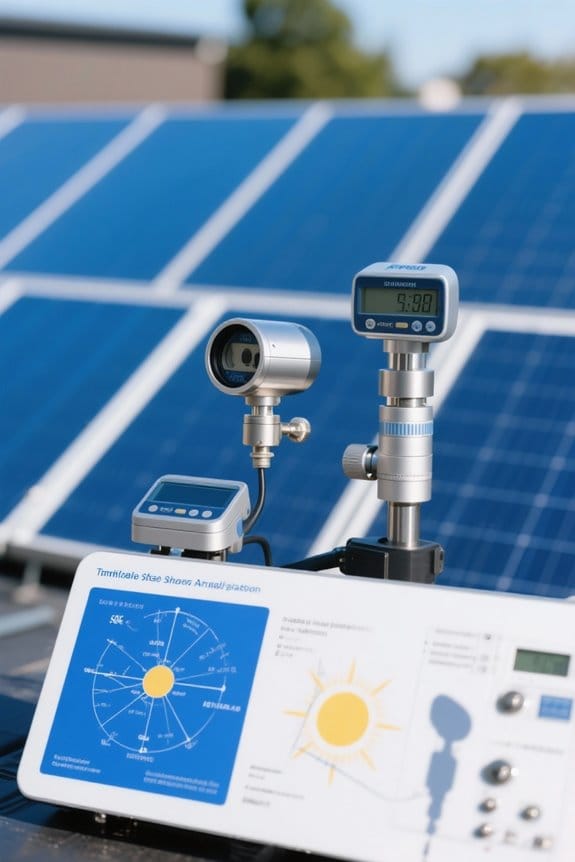
Analyzing the different types of shade analysis is essential for optimizing energy production and enhancing various applications across industries. Solar shading analysis for photovoltaic systems focuses on improving panel placement to maximize sunlight exposure and efficiency. Architectural shading analysis evaluates how building design affects natural daylight and occupant comfort by examining shadows cast by structures. In urban planning, these studies assess the impact of new developments on public spaces, ensuring that sunlight reaches areas for community use. Agrivoltaic shading combines agricultural practices with energy production, using strategic panel placement to benefit crop growth. Additionally, incorporating eco-friendly cleaners ensures that solar panels remain free from dirt accumulation, further maximizing energy efficiency. Advanced tools, such as drone-based analysis and AI simulations, enhance modeling accuracy and account for seasonal variations, ultimately improving energy production estimates for all applications.
How Shade Analysis Works: Key Principles and Processes
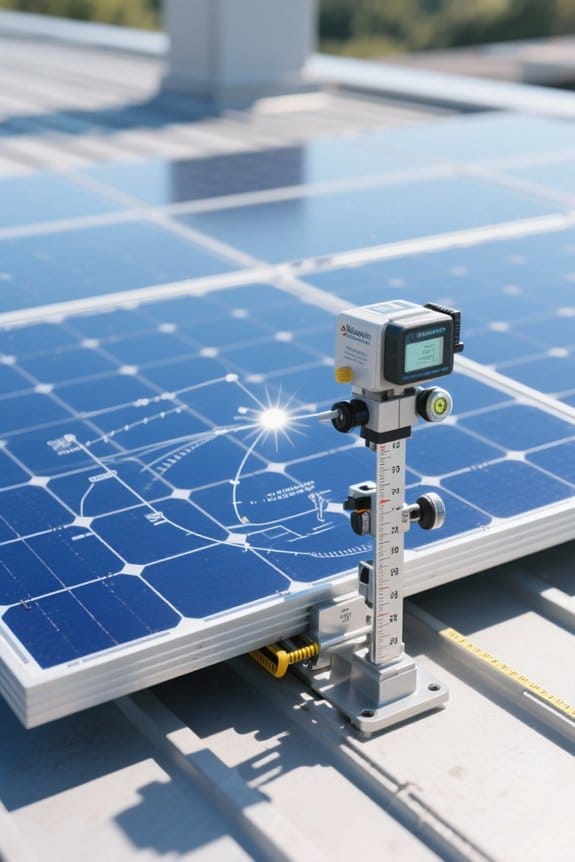
To effectively improve energy production and optimize various applications, understanding the principles behind shade analysis is essential. Shade analysis systematically evaluates solar shading by evaluating shadow patterns that impact solar energy systems. Utilizing sunlight data, shading patterns, and geographic coordinates helps identify how nearby structures or vegetation may obstruct sunlight. Key calculations like the Total Solar Resource Fraction (TSRF) and Tilt Orientation Factor (TOF) apply advanced software for accurate forecasts of solar performance. Employing analysis tools, such as drone-based technology and AI-powered systems, increases efficiency in collecting precise data. The significance of accurate shade analysis is underscored by its ability to minimize losses; partial shading on a single solar cell can reduce output by as much as 75%, emphasizing the need for thorough evaluations. Additionally, Maximum Power Point Tracking (MPPT) technology in micro inverters plays a crucial role in enhancing energy capture, even in low-light conditions.
Methods for Conducting Shade Analysis
Conducting shade analysis involves a variety of methods that range from traditional tools to cutting-edge technology, ensuring accurate assessments of solar shading effects. Common tools include the Solar Pathfinder and SunEye devices, which help visualize shading impacts by measuring solar radiation at specific locations. Advanced features of modern software utilize 3D modeling and simulation tools for precise data collection. Additionally, drone-based analysis and LiDAR technology deliver high-accuracy data capture, enhancing evaluations of shading devices over time. Incorporating seasonal variations is essential; time-lapse simulations reveal how shading effects evolve throughout the year. A well-designed solar system often includes corrosion-resistant materials, which ensures longevity and reliability in various environmental conditions. Overall, this analysis involves vital calculations like the Total Solar Resource Fraction (TSRF), ensuring that solar system designs meet regulatory compliance and maximize energy production.
Essential Tools for Shade Analysis
Essential tools are crucial for conducting effective shade analysis in solar energy projects. Handheld devices like the Solar Pathfinder provide panoramic views of solar shading patterns, while software solutions such as HelioScope optimize sunlight capture through advanced simulations. Computer-based tools utilize algorithms to predict shadow patterns and assess their impact on energy yield, ensuring maximum exposure for solar panels. Drone analysis captures high-accuracy data, costing between $500 and $2,000 per site, considerably enhancing shading assessments. Additionally, software like Aurora Solar uses 3D modeling to visualize light conditions and shading impacts. Tools such as ShadowCalculator and FindMyShadow allow users to predict shadow sizes, offering essential data for analyzing potential effects on solar energy systems. When assessing the potential of solar systems, it’s important to consider solar panel power stations as they provide sustainable energy solutions that enhance outdoor experiences.
Advanced Technologies Enhancing Shade Analysis
Advanced technologies promise to substantially transform shade analysis in solar energy projects by offering tools that enhance accuracy and efficiency. Drones equipped with LiDAR technology and aerial imagery can create detailed, high-accuracy 3D maps for shade analysis. This allows for better modeling of shadow impacts on solar production. Additionally, automated object recognition and AI-powered shade prediction systems are expected to achieve mainstream use by 2028. These systems improve accuracy by predicting vegetation growth. Modeling tools enable essential calculations, such as the Total Solar Resource Fraction (TSRF) and Tilt Orientation Factor (TOF), to evaluate solar insolation effectively. Together, these advancements revolutionize shade analysis, yielding improved energy performance assessments and more informed project decisions in solar energy. Additionally, products like solar spotlights often include IP65 ratings which ensure weather resistance and durability for outdoor use.
Impact of Shading on Solar Energy Production
Understanding the impact of shading on solar energy production is essential for maximizing the efficiency of solar installations. Shading can reduce energy output by 15% to 33%, profoundly affecting the overall solar system’s performance. When solar panels are linked in series, shading on a single cell can lower the entire module’s output, leading to notable energy losses. This situation is exacerbated by string inverters, which must adjust the total production to the level of the least efficient panel. Additionally, partial shading can cause heat gain and hot spots, rapidly degrading solar panels and shortening their lifespan. The inactive cells created by shading also strain functioning cells, reducing system reliability and ultimately affecting solar panel efficiency in the long run. The use of hybrid solar inverters with MPPT technology can help mitigate some of these issues by optimizing energy efficiency and managing energy flow more effectively.
Strategies to Minimize Shading Effects
How can solar installers effectively minimize the impacts of shading on system performance? Conducting a solar shade analysis is essential to identify when shading occurs and its effects on energy production. Choosing half-cut cell panels or shingled solar panels can enhance shading performance since they reduce energy loss from shaded areas. Additionally, connecting panels in parallel, rather than in series, maintains energy output from non-shaded panels, thereby maximizing energy. Designing non-rectangular arrays, like trapezoids, helps circumvent shading caused by nearby structures or vegetation. Finally, implementing micro inverters or power optimizers allows each panel to operate independently, improving overall efficiency. These strategies contribute to better solar gain and support effective energy storage systems, ensuring peak performance even under varying shading conditions. Inverters with MPPT technology adjust output based on sunlight conditions, further enhancing energy efficiency by optimizing the power drawn from each panel.
Industry-Specific Applications of Shade Analysis
Shade analysis plays a crucial role across various industries, as it helps assess the impact of shading on efficiency and performance in diverse applications. In solar system design, proper shade analysis is essential, as partial shading can reduce energy output by up to 75%. Urban planners use this analysis to evaluate how new buildings cast shadows, ensuring community spaces maintain adequate sunlight. Additionally, architectural design benefits from shade analysis by enhancing natural light within buildings, improving energy efficiency and occupant comfort. In agrivoltaics, this analysis helps find a balance between solar installations and crop growth, ensuring plants receive ideal light. Advanced tools like computer simulations and financial modeling enhance decision-making, providing accurate predictions of sunlight impact on various projects. Advanced Maximum Power Point Tracking enhances energy capture efficiency, providing up to 99% tracking efficiency, supporting extended battery life.
Future Trends in Shade Analysis Technologies
What advancements are on the horizon for shade analysis technologies? The integration of AI-powered systems is set to enhance shade analysis by 2028, improving accuracy through automated object recognition and machine learning, which predicts vegetation growth’s potential effects on solar systems. Additionally, drone-based analysis and LiDAR will provide high-precision data capture, allowing detailed 3D mapping at costs between $500 and $2,000 per site. Future technologies will utilize solar geometry principles for real-time simulations, optimizing the placement of solar panels. Regulatory compliance will demand adherence to approved methods and thorough documentation. Consequently, evolving shade analysis technologies will greatly enhance energy production estimates, making metrics like Total Solar Resource Fraction (TSRF) essential for effective solar installations. Specialized cleaning kits maximize solar panels’ energy efficiency, promoting optimal energy production and longevity.
Best Practices for Optimizing Solar Installations
To achieve ideal performance from solar installations, careful attention to various factors is essential. Conducting thorough shade analysis is imperative for evaluating potential shading impacts, as improper placement can reduce energy output by up to 75%. Optimizing solar panel orientation is critical; panels should face south in the US and be angled according to latitude for maximum sunlight exposure. Regular monitoring and maintenance are necessary to prevent shading from debris or vegetation. Utilizing advanced technologies, such as drone-based analysis and AI-powered shading prediction systems, enhances precision in modeling solar panel placement. Effective system design features, like micro inverters or power optimizers, help mitigate shading losses by allowing for individual panel performance monitoring, and thereby improving overall energy production.
Frequently Asked Questions
How to Do Shadow Analysis for Solar?
Like a detective unraveling a mystery, one conducts shadow analysis by utilizing solar software for shadow mapping, evaluating shading factors, performing site and rooftop assessments, gauging vegetation impact, and considering seasonal shadows for ideal solar alignment.
What Is the 20% Rule for Solar Panels?
The 20% rule indicates that shading impacts can reduce solar panel efficiency considerably. By ensuring ideal tilt, proper panel orientation, and adhering to installation best practices and local regulations, energy production can be maximized during sunlight hours.
What Device Is Best Used for a Shading Analysis?
Advanced shading software options, like HelioScope and Aurora Solar, excel in solar access analysis and solar panel placement. Shading analysis tools integrate shading simulation models and shading calculators, enhancing site assessment techniques through detailed sun path diagrams.
What Is a Good Shading Coefficient?
“Don’t put all your eggs in one basket.” A good shading coefficient, typically between 0.2 and 0.3, balances shading impact and performance optimization, enhancing system efficiency through careful site assessment and strategic panel placement considering sunlight exposure and seasonal variations.


