
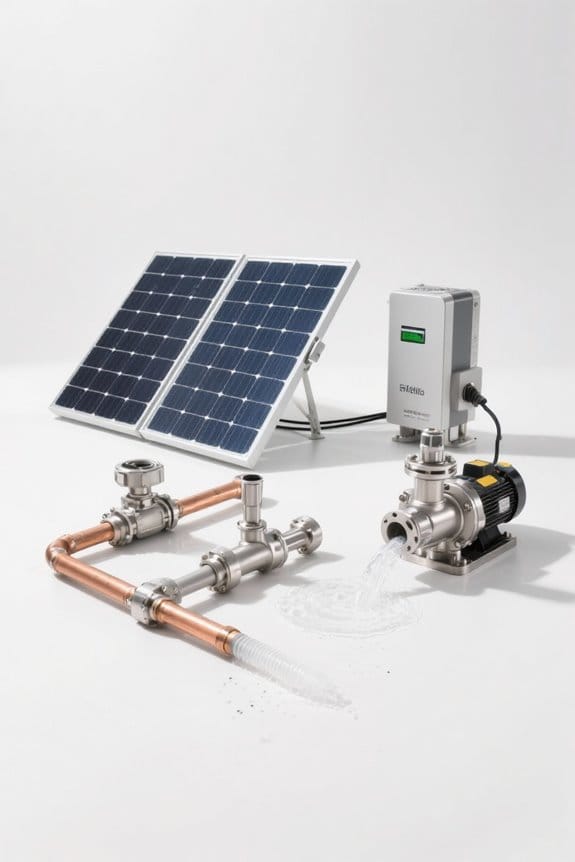

Solar pumps operate by converting sunlight into electricity using photovoltaic panels. These systems draw water from wells or ponds for irrigation. Submersible pumps function effectively at depths up to 820 feet, while surface pumps typically work for shallow sources up to 25 feet. Key components include solar panels, a pump controller, and the pump itself. Proper installation and maintenance are essential for efficiency. Learn about the various types, benefits, and challenges of solar pumps to optimize their use in water extraction.
Key Takeaways
- Solar pumps utilize photovoltaic panels to convert sunlight into DC electricity, powering water extraction from wells, ponds, and for irrigation.
- Submersible pumps are used for deep water extraction, while surface pumps serve shallow sources, ensuring versatility in different applications.
- The pump controller regulates power flow from solar panels to the pump, optimizing operation and efficiency based on sunlight availability.
- Regular maintenance, including cleaning solar panels and inspecting components, is vital for sustained performance and efficiency in water extraction.
- Solar pumps significantly reduce reliance on fossil fuels, enhancing irrigation capabilities and promoting environmentally friendly agricultural practices.
Understanding the Basics of Solar Pumps
Solar pumps are innovative devices that utilize sunlight to generate electricity, making them an effective solution for water extraction in various settings. They rely on photovoltaic panels, which convert solar energy into DC electricity, to power the pumps. There are two main types: submersible pumps, designed for extracting water from deep sources, and surface pumps, ideal for shallower water bodies. Efficiency varies based on the number and size of the photovoltaic panels, as well as the available solar irradiance, meaning sunlight exposure can directly affect performance. These systems are especially useful in remote areas where access to traditional electricity may be limited, providing a sustainable method for irrigation systems, livestock watering, and domestic water supply, while promoting renewable energy practices. Additionally, battery support allows for on-demand pumping without sunlight, enhancing the flexibility of these systems in varying weather conditions.
Key Components of Solar Water Pump Systems

A well-functioning solar water pump system hinges on several key components working in harmony to efficiently extract and deliver water. Solar panels convert sunlight into direct current (DC) electricity, which powers the water pump motor. The pump controller regulates this power flow, ensuring ideal operation. The water pump itself draws water from sources such as wells or ponds, delivering it for domestic use or irrigation. To store extracted water for times of low sunlight, a storage tank is often included. Reliable electrical connections, formed through properly installed cabling and connectors, maintain the system’s efficacy. Regular maintenance, including inspecting solar panel alignment and checking for blockages in the pump, is crucial for long-term performance and efficiency of solar water pump systems. Additionally, precision drip irrigation methods can further enhance water-saving potential by minimizing wastage and ensuring consistent moisture delivery.
How Solar Energy Powers Water Pumps

Utilizing solar energy for water pumping systems offers a sustainable method for water extraction and delivery. Solar-powered water pumps convert sunlight into electricity through photovoltaic panels, which generate direct current (DC) suitable for immediate use or storage. The system comprises solar modules, a pump controller, and the water pump itself. This setup facilitates water sourcing from wells, ponds, or irrigation systems. The efficiency of these pumps, whether submersible or surface types, varies with solar irradiance, meaning sunlight intensity influences performance. By harnessing electricity from solar panels, these pumps operate independently of fossil fuels and electric grids, providing eco-friendly, cost-effective options for consistent water supply, especially in off-grid solar systems, enhancing agricultural productivity and resource management. Submersible solar pumps, like the ECO-WORTHY 24V model, offer a practical solution for deep well applications with a flow rate of 1.6 gallons per minute and a maximum lift height of 230 feet.
Types of Solar Pumps for Different Applications
Various types of solar pumps cater to different water extraction and delivery needs, each designed for specific applications. Submersible pumps are effective for deep water extraction, operating efficiently at depths up to 820 feet. In contrast, surface pumps serve shallow water sources, typically under 20 to 25 feet. For high flow rates in irrigation applications, centrifugal solar pumps are commonly used, while positive displacement pumps maintain consistent flow despite changes in pressure. Diaphragm solar pumps are ideal for low-flow, high-pressure tasks, such as chemical dosing. Selecting the proper solar water pump requires careful analysis of water source characteristics, desired flow rates, and specific use cases to guarantee peak performance and efficiency in varied applications. For optimal results, it’s crucial to assess the power source’s efficiency to ensure that the solar irrigation system meets your unique requirements.
Installation Steps for Solar Pumps
When installing a solar pump, attention to detail is vital to guarantee ideal performance and longevity. Begin by selecting a location for the solar panels that maximizes sunlight exposure, ideally angling them based on your latitude. Connect the solar panels in series or parallel to meet the pump’s voltage requirements. Next, install the pump controller between the solar panels and the pump motor to manage energy flow and protect against electrical fluctuations. If battery storage is included, set up a charge controller to prevent overcharging. Piping installation is essential as well; make sure it is free of sharp bends to improve water flow efficiency. Finally, test the system to confirm proper operation before regular use. Solar water pumps provide efficient solutions for irrigation and livestock, making them eco-friendly alternatives.
Essential Wiring and Connections
To guarantee a solar pump operates efficiently, understanding essential wiring and connections is crucial. DC solar pumps connect directly to solar panels, while AC pumps necessitate an inverter to convert DC electricity to AC. The gauge of wiring must match the pump’s power rating and distance from the solar source to handle electrical current adequately. Waterproof connectors help protect these connections from moisture, enhancing system longevity. Additionally, a Charge Controller can be employed to regulate voltage between solar panels and batteries, minimizing overcharging risks. Polarity is critical; improper connections can lead to electrical issues. Before full operation, all connections should be secure and thoroughly tested to verify functional reliability in delivering water through the pumps. Solar pumps are environmentally friendly as they utilize renewable energy and reduce reliance on fossil fuels.
Optimizing Solar Pump Performance
After verifying that all wiring and connections are secure, the next step involves optimizing the performance of solar pumps for maximum efficiency. To optimize, install solar panels at the correct tilt angle based on geographical latitude; this can increase energy absorption by boosting efficiency. Regularly inspecting and cleaning the panels prevents dirt accumulation, which may reduce energy output by up to 20%. Additionally, using properly sized piping with minimal bends enhances flow efficiency, reducing friction losses within the water delivery system. Implementing a water level float switch guarantees consistent water levels; this supports operational efficiency. Finally, adjusting the pump’s operating schedule to align with peak sunlight hours can greatly improve overall performance and energy utilization, resulting in a more productive system. Incorporating Maximum Power Point Tracking technology can significantly boost the efficiency of water pumping by optimizing energy utilization from solar panels.
Benefits of Using Solar Pumps for Irrigation
Solar pumps offer numerous advantages for irrigation, greatly impacting agricultural practices and sustainability. These pumps provide a reliable water source, especially crucial in regions with inconsistent rainfall. By harnessing clean energy, solar pumps reduce reliance on costly fossil fuels, resulting in operational cost savings that can reach up to Rs. 68.86 lakh over 25 years. Their versatile design allows them to draw water from wells, ponds, or borewells, enhancing improved irrigation capabilities across various agricultural settings. Additionally, solar pumps contribute to environmental sustainability by eliminating greenhouse gas emissions associated with traditional diesel pumps. Increased access to these systems can considerably enhance food security, as better irrigation quality leads to higher crop yields and improved produce quality. Solar pumps, such as POPOSOAP Solar Fountain Pump, are not only efficient but also eco-friendly, as they utilize solar panels to operate without relying on electricity or fuel.
Addressing Common Challenges With Solar Water Pumps
Addressing challenges with solar water pumps requires understanding both their operational limitations and installation requirements. Solar pumps can effectively draw water from depths up to 820 feet with submersible models, but surface pumps are limited to shallow sources. Proper sizing of pipes and optimizing solar panel placement are vital for maximizing water flow and energy production. Regular maintenance, including cleaning solar panels and inspecting pump components, prevents blockages and guarantees the system’s longevity. Additionally, performance is influenced by local solar irradiance levels, the amount of sunlight available. Evaluating this before installation is essential to confirm that energy production meets irrigation needs and enables efficient water pumping for various applications, including supplying water to livestock and multiple families. Regular inspection of battery terminals is crucial to ensure solar water pumps operate efficiently over time.
Frequently Asked Questions
How Does a Solar Well Pump Work?
“Actions speak louder than words.” A solar well pump harnesses sunlight for energy output, offering cost benefits and efficiency. Proper installation and maintenance are pivotal for peak performance, addressing compatibility issues to guarantee reliable water supply and minimal environmental impact.
Do Solar Pond Pumps Really Work?
Solar pond pumps do work effectively, demonstrating good solar pond efficiency. Users report significant energy savings and positive performance metrics. Maintenance tips, installation costs, and brand comparisons influence pump longevity and overall environmental impact. User reviews reflect system compatibility.
How Do Solar Pond Pumps Work?
Solar pond pumps harness solar energy to facilitate efficient water circulation, offering ecological benefits and cost efficiency. Key performance factors include installation process, maintenance tips, and system components, ensuring sustainable irrigation solutions with minimal environmental impact.
What Are the Disadvantages of a Solar Water Pump?
Disadvantages of solar water pumps include high initial costs, maintenance requirements, and energy efficiency concerns. They are weather dependent with limited sunlight, may struggle with installation complexity, and have limited water capacity compared to conventional pump types.
