


To build a small backup solar kit for emergencies, start with essential components: at least one 400W solar panel, a charge controller to manage energy flow, and a battery for storage. An inverter rated between 3000W to 5000W will convert stored solar energy for household appliances. Assess power needs by listing essential devices and their wattage. Regular maintenance and proper positioning of solar panels can enhance efficiency. Further exploration reveals more insights into optimizing your solar backup system.
Key Takeaways
- Assess your power needs by listing essential appliances and calculating their total wattage requirements to ensure adequate system capacity.
- Select high-quality solar panels with at least 400W capacity each and pair them with a compatible charge controller and battery.
- Use an inverter rated between 3000W to 5000W to convert DC power from batteries into AC power for household devices.
- Ensure safety by including fuses, checking connections regularly, and monitoring battery levels to prolong lifespan and efficiency.
- Engage with local DIY solar communities for resources, shared experiences, and cost-saving strategies in building your solar backup kit.
Understanding the Basics of a Solar Power System
A solar power system harnesses sunlight and converts it into usable electricity, making it an increasingly popular choice for energy needs. The primary component of this system is solar panels, which generate direct current (DC) electricity. This electricity is then converted into alternating current (AC), suitable for home use, by an inverter. An important aspect of the solar power system is energy storage, typically managed via batteries. These batteries allow energy generated during sunny days to be used later. To guarantee efficient operation, a charge controller regulates the power flow, preventing overcharging. For emergencies, a small backup system can power essential appliances, highlighting the versatility of solar energy in daily and emergency scenarios alike. Solar battery kits like Jackery Solar Generator 300 offer portability and versatility, making them suitable for various applications.
Importance of Solar Energy for Emergency Preparedness
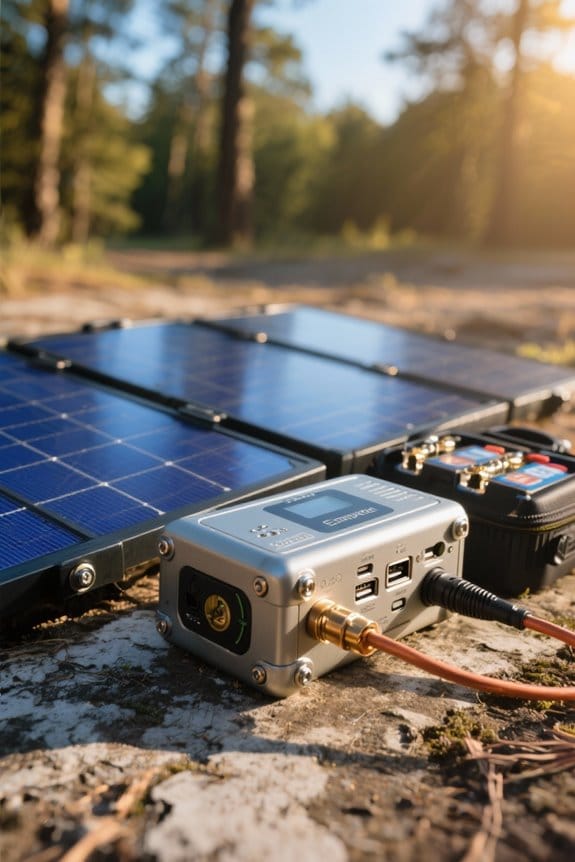
Emergency preparedness is greatly enhanced by the use of solar energy, which serves as a dependable power source during outages. A small backup solar kit can provide crucial electricity for essential functions, such as refrigeration and communication. During emergencies, backup solar power enables households to power critical devices, including cell phone chargers, LED lights, and radios. This reliance on solar energy reduces dependency on gasoline and fossil fuels, overcoming concerns about fuel shortages. DIY solar systems can be a cost-effective solution for energy independence, offering a sustainable backup option with minimal environmental impact. By integrating solar energy into emergency plans, individuals can markedly improve their resilience against outages, ensuring safety and comfort during challenging situations. A Level 1/2 Portable EV Charger includes features such as a 25FT cable for flexibility and enhanced range at 240V, which makes it a versatile option for maintaining connectivity during power outages.
Key Components of a Small Solar Backup Kit
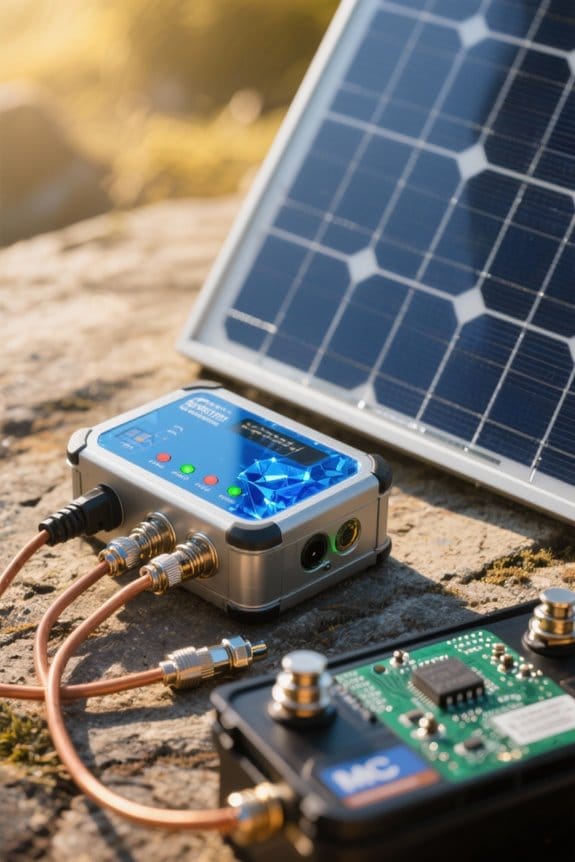
Understanding the key components of a small solar backup kit is essential for those looking to enhance their energy independence and preparedness. A well-equipped kit typically includes solar panels, with a capacity of at least 400W each, to efficiently harness solar energy. The charge controller is vital as it regulates the voltage and current from these panels to the battery storage, preventing overcharging and extending battery life. Reliable battery storage options, such as lithium-ion or AGM batteries, provide essential energy reserves during power outages. Finally, incorporating an inverter sized between 3000W to 5000W allows for the conversion of DC electricity to AC, enabling the use of appliances like refrigerators and freezers in emergencies. Utilizing high-quality controllers enhances overall system efficiency, ensuring optimal performance during critical times.
Assessing Your Power Needs for Essential Devices
How can one effectively assess their power needs for essential devices during a power outage? Begin by listing vital appliances, such as a chest freezer (1.2A) and a full-size fridge (6.5A). Understanding their power consumption helps clarify wattage requirements, noting that a fridge can spike up to 600W. Calculate the total wattage for all devices that could run simultaneously. This total will inform the necessary capacity of your backup solar system. Evaluate daily energy needs; a fridge might consume around 4.3 kWh over several days. Additionally, consider isolating circuits in the main panel for prioritized devices, ensuring power distribution meets emergency demands. Ultimately, aim for a solar system able to produce 3000 to 5000W AC. When planning your solar kit, considering robust Battery Management Systems is essential for safety and efficient energy storage.
Selecting the Right Solar Panel and Battery
Selecting the appropriate solar panel and battery is essential for creating a reliable backup solar kit. When selecting the right solar panels, consider high-efficiency options like monocrystalline panels, which achieve 15-22% efficiency and perform well in low light. A common size for these panels in a solar backup kit ranges from 100W to 400W, capable of supplying energy to critical devices during emergencies. For the battery, lithium-ion batteries are recommended due to their longevity, lasting 10-15 years with an efficiency of 90-95%. Confirm the battery storage capacity meets energy needs by calculating total watt-hours for appliances. Finally, maintain consistent voltage compatibility, typically 12V or 24V, across both the solar panels and battery to guarantee peak performance. Consider bifacial solar panels, which capture sunlight on both sides, increasing efficiency by up to 30%, to optimize energy conversion in your backup solar kit.
Choosing a Charge Controller and Inverter
A charge controller is a critical component of a small backup solar kit, as it regulates the voltage and current from the solar panels to the battery. Selecting an MPPT (Maximum Power Point Tracking) charge controller is advisable, as it enhances efficiency, potentially improving solar power collection by up to 30%. MPPT charge controllers, such as those with tracking efficiencies over 99%, are known for their high efficiency and compatibility with various battery types. Inverters transform the direct current (DC) stored in the batteries into alternating current (AC) required for most household appliances. It is essential to choose a pure sine wave inverter for powering sensitive devices, as it prevents damage. To size the inverter correctly, consider peak loads; for instance, a full-size fridge may require up to 600W at startup, necessitating an inverter with at least a 1000W continuous rating.
Step-by-Step Guide to Assembling Your Solar Kit
To begin assembling a small backup solar kit, individuals should first evaluate their energy requirements. They need to calculate the total wattage of devices for emergency power, such as a full-size fridge (approximately 600W) and a chest freezer (around 108W). Next, essential components should be gathered, which include at least four solar panels (400W each for a total of 1.6kW), a charge controller, battery storage, and an inverter to convert DC power into usable AC power. The assembly process begins by connecting the charge controller to the battery, ensuring correct voltage settings. Then, connect the solar panels to the charge controller and install the inverter, making sure it supports the intended wattage. Finally, verify the setup functions effectively. When selecting a charge controller, it’s important to consider MPPT technology for its efficiency in maximizing power extraction in varying conditions.
Ensuring Safe Connections and Testing Your System
Guaranteeing secure electrical connections within a small backup solar kit is vital for both safety and functionality. Proper insulation prevents electrical short circuits that may occur during power outages. All connections should be tight, and the use of appropriate gauge wiring is necessary to match system voltage and current ratings. This prevents overheating, which can reduce efficiency. Testing your system is important; measure the voltage output from the solar panels and check the battery status before connecting any appliances. It is advisable to include a fuse or circuit breaker to protect the system from overloads. Regular monitoring of connections for wear, corrosion, or damage helps maintain efficiency and guarantees safe connections throughout the solar kit’s use. Additionally, ensuring compliance with safety standards like the National Electrical Code (NEC) can enhance overall system reliability and prevent potential hazards.
Tips for Optimizing Solar Kit Performance
Optimizing the performance of a small backup solar kit can greatly enhance energy production and longevity. First, using high-efficiency solar panels rated at 400W or higher guarantees maximum energy capture, especially in limited sunlight. Properly positioning panels at a 30-45 degree angle toward the sun increases production during peak sunlight hours. Regular cleaning of panels is vital, as dirt can reduce efficiency by up to 20%. Additionally, monitoring battery levels is important; maintaining healthy batteries by avoiding full discharges and charging during peak sunlight optimizes longevity. Implementing a charge controller helps prevent overcharging and deep discharging, thereby safeguarding battery capacity and extending the overall lifespan of solar systems. This systematic approach allows for reliable backup energy during emergencies. Regular testing of your solar kit with solar panel testers can identify performance issues and ensure that your system operates at optimal efficiency.
Financial Considerations for Your Solar Power Project
How can one effectively manage the financial aspects of a small backup solar kit project? First, selecting solar components wisely is vital; solar panels can sometimes be found for $50 to $100 each, especially when purchased second-hand. This practice can lead to significant cost savings. Shipping fees add up, so sourcing locally is advisable. High-quality batteries are fundamental for energy storage, yet they can be a major expense, often costing as much as grid electricity per kWh. An all-in-one system, which includes both a charge controller and inverter, can simplify installation and reduce costs compared to buying parts separately. Finally, careful energy management will guarantee the setup operates efficiently during emergencies, preventing overspending on unnecessary features. When considering installation options, solar ground screws provide a stable foundation for solar panels without the need for concrete, which can further streamline and cut down on project costs.
Community Resources and Support for DIY Solar Projects
Building a small backup solar kit can be a rewarding endeavor, and leveraging community resources can greatly enhance the project experience. Engaging with local DIY solar communities provides support through shared experiences, helpful documentation, and schematics. Online forums and social media groups dedicated to DIY solar projects are excellent for knowledge sharing, where enthusiasts exchange troubleshooting advice and tips. Many communities host meetups or workshops that teach hands-on techniques for building and maintaining solar systems. These events offer access to experienced members who can provide guidance. Additionally, local solar co-ops often provide bulk purchasing options for solar components, lowering overall costs while encouraging collective learning and support for DIY solar projects.
Real-Life Experiences With Solar Backup Systems
What can be learned from the experiences of individuals who have implemented solar backup systems? Many users report that small solar backup systems effectively power essential appliances, such as refrigerators and lights, during emergencies. In winter months, community members highlight the benefits of portable solar generators, which offer solutions for power challenges. Testing energy consumption allows several individuals to understand their needs better, demonstrating that even small systems can decrease reliance on traditional fuel sources considerably. Participants often note the satisfaction of customizing their setups, providing not only immediate power but also contributing to a greater sense of energy independence. This hands-on approach reveals that understanding specific energy requirements is vital for reliable performance during outages.
Frequently Asked Questions
What Is the 20% Rule for Solar Panels?
The 20% rule for solar panels mandates sizing output 20% above calculated needs, enhancing solar panel efficiency and ensuring energy independence. This practice yields renewable energy benefits, promotes solar power savings, and provides valuable installation tips for reliable performance.
How Long Will a 1000 Watt Solar Generator Run a Refrigerator?
In the dance of power, a 1000 watt solar generator may sustain a refrigerator’s energy for 5 to 8 hours, contingent upon refrigerator power consumption, solar generator efficiency, and generator runtime analysis amidst emergency power needs.
How Many Solar Panels Do I Need for Emergency Power?
To meet emergency power needs, calculate solar panel requirements based on appliance wattage, verify battery storage options are adequate, choose inverter selection tips wisely, and address potential equipment compatibility issues for maximum functionality during outages.
Why Are People Getting Rid of Their Solar Panels?
People are removing solar panels due to high maintenance costs, dissatisfaction with cost versus benefits, environmental impact concerns, grid reliability issues, and energy storage challenges, favoring alternative energy sources or traditional roofing solutions instead.


