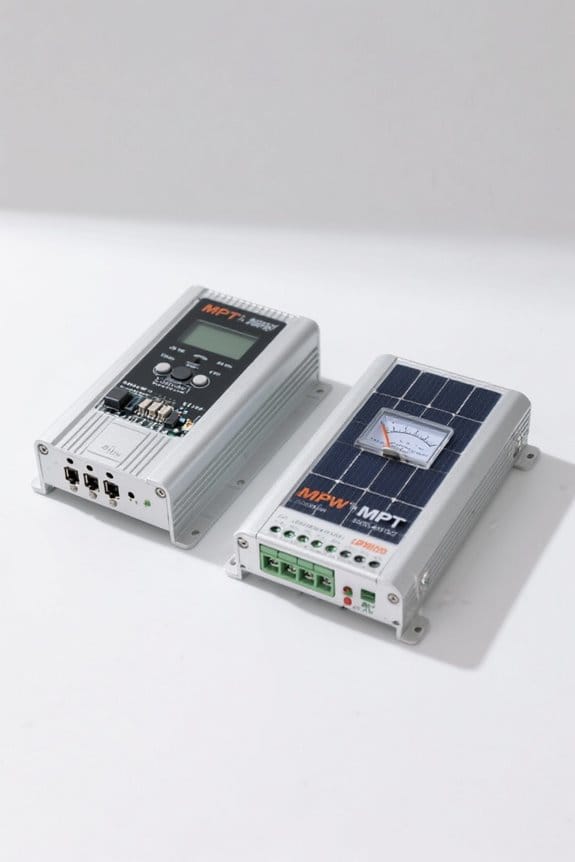
Understanding inverter specifications can seem challenging, but it becomes easier with clear definitions. Start by knowing the maximum input and output voltage; for instance, input typically ranges from 100V to 500V. Next, distinguish between continuous wattage, which indicates the power an inverter can supply consistently, and peak wattage for short bursts. Pay attention to waveform types, especially pure sine wave for compatibility. Evaluating efficiency ratings above 90% is essential for minimizing energy loss. More insights await on exploring these specifications effectively.
Key Takeaways
- Understand the difference between continuous and peak wattage to match the inverter’s capacity with your device’s power needs accurately.
- Ensure the input voltage matches your PV array voltage, and stay within the specified minimum and maximum limits to avoid damage.
- Familiarize yourself with waveform types; pure sine wave inverters generally offer better compatibility and efficiency than square or modified sine waves.
- Pay attention to efficiency ratings above 90% and Total Harmonic Distortion (THD) below 5% to protect sensitive electronics and enhance performance.
- Be aware of the safety features included, such as short circuit protection, to ensure reliable operation and longevity of the inverter.
What Are Inverter Specifications?
Inverter specifications serve as an essential reference for understanding an inverter’s operational capabilities and limitations. These specifications include critical parameters, such as the maximum input voltage, which may vary between 12V, 24V, or 48V. When converting direct current (DC) to alternating current (AC), the output voltage typically measures either 120V or 230V. Wattage ratings are also significant; they indicate both continuous and peak output, guiding users in choosing an inverter that meets their power needs. Efficiency ratings are important as well, with values above 90% showing effective energy conversion. Additionally, Total Harmonic Distortion (THD) reflects the quality of the output waveform, ensuring compatibility with sensitive devices, making these specifications essential in evaluating inverter performance. Utilizing advanced tracking efficiencies over 99% in conjunction with inverters can further enhance the performance of solar power systems by optimizing energy conversion.
Key Components of Inverter Specifications and Their Meanings
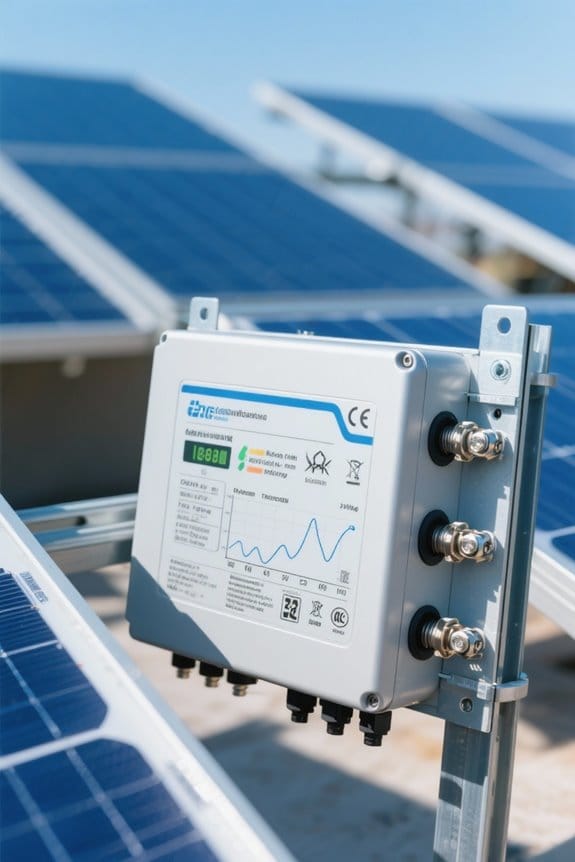
Understanding the key components of inverter specifications is essential for optimizing performance and ensuring compatibility with various power needs. The input voltage should match the voltage of the photovoltaic (PV) array, commonly ranging from 100V to 500V. The efficiency rating indicates how well an inverter converts direct current (DC) to alternating current (AC), with high-quality models achieving over 95%. Total harmonic distortion (THD) evaluates the quality of the output waveform; lower THD values indicate cleaner power, which is especially important for sensitive electronics. Additionally, built-in safety features such as over-voltage and short circuit protection help safeguard the inverter against potential damage, ensuring safety and efficiency under varying load conditions essential for reliable operation. Some models, like the SUMRY Hybrid Solar Inverter 4000W, offer advanced features such as peak output and pure sine wave technology, which are important considerations for stable and efficient energy conversion.
Understanding Input Voltage and Output Voltage
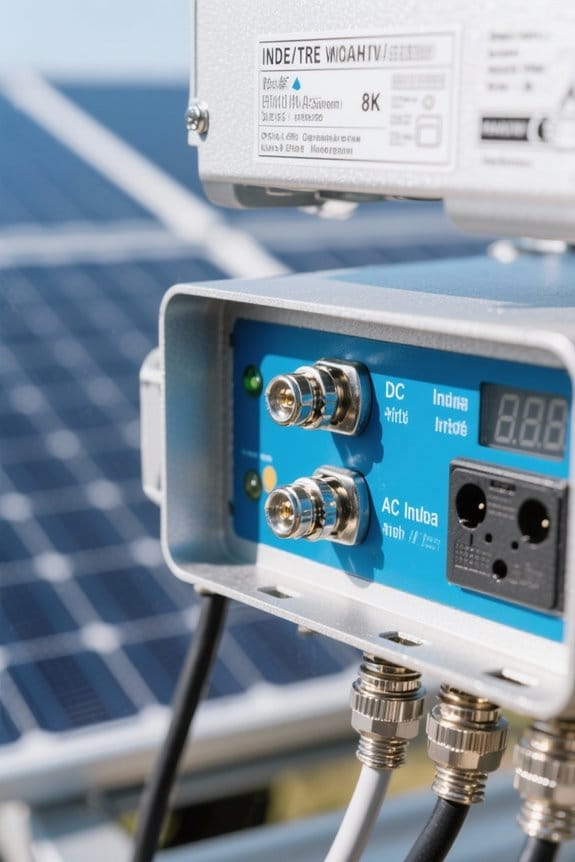
A thorough grasp of input and output voltage is essential for effectively utilizing inverters in various applications. The inverter’s input voltage, which is the required DC voltage, typically ranges from 12V to 48V. This range depends on the specific design and configuration of the solar system. Users must pay attention to the minimum input voltage, indicating the least amount needed for the inverter to start, as well as the maximum input voltage to avoid damage. Inverters convert this DC voltage into output voltage, which usually is either 120V or 230V AC, adhering to regional electrical standards. Understanding these specifications helps guarantee that the inverter operates efficiently, transforming captured power into usable electricity for homes or businesses. The importance of smart features in solar charge controllers enhances real-time data monitoring and energy management, ensuring optimal performance and system longevity.
Wattage: Continuous and Peak Power Explained
Wattage plays an essential role in selecting the right inverter for any power requirement. Continuous wattage is the maximum power output an inverter can maintain over extended periods, vital for running appliances like lights or laptops. In contrast, peak wattage represents the short-term power output needed to start appliances with high demand, such as refrigerators or air conditioners. For example, an inverter rated for 2000 watts continuous may handle peak loads up to 4000 watts momentarily. Consequently, proper inverter selection requires knowing the continuous wattage necessary for all devices used simultaneously. Understanding the difference between continuous and peak wattage helps users avoid equipment damage during startup and guarantees the inverter meets their power output needs effectively. Selecting an inverter with a high efficiency rating can significantly reduce energy waste, contributing to both cost savings and energy independence.
Waveform Types: Which One Is Right for You?
How can one determine the most suitable inverter waveform for their needs? Inverter waveform types include square wave, modified sine wave, and pure sine wave. Square wave inverters produce a basic electrical waveform that is inefficient and can damage sensitive electronics. Modified sine wave inverters serve as a middle ground, compatible with a broader range of devices, but lack the efficiency of pure sine wave options. Pure sine wave inverters offer the highest compatibility and are especially effective for delicate equipment, often achieving efficiency ratings exceeding 90%. It is essential to evaluate Total Harmonic Distortion (THD), as lower values indicate better power quality. Choosing the right waveform can greatly affect the performance and longevity of electrical appliances. Pure sine wave inverters are ideal for critical electronic devices like refrigerators and laptops due to their high efficiency and grid-equivalent power quality.
Efficiency Ratings: How to Evaluate Performance
When selecting an inverter, understanding its efficiency rating serves as a significant factor for ideal performance and energy savings. Efficiency ratings, typically exceeding 95%, reflect how effectively a solar inverter converts DC power from solar panels to usable AC power. Higher efficiency percentages indicate less energy loss during this conversion, which is fundamental for maximizing overall system performance. In optimal conditions, average conversion efficiency can reach 90% or more. An inverter’s rating becomes essential, as higher efficiency guarantees that more of the maximum power generated by solar panels is delivered to the load or grid. It is also important to take into account efficiency ratings under specific test conditions, like Standard Test Conditions (STC), to accurately assess performance across various scenarios. Solar chargers with MPPT technology can also enhance the overall efficiency of solar power systems by maximizing energy extraction from sunlight.
Specialized Features to Look For in Inverters
What specialized features should be prioritized when selecting an inverter? A good inverter should include Maximum Power Point Tracker (MPPT) functionality. This feature adjusts the solar panel’s electrical operating point, optimizing energy extraction and enhancing efficiency. Check the inverter datasheet for an efficiency rating typically exceeding 95%, indicating effective conversion of DC to AC power with minimal loss. Additionally, total harmonic distortion (THD) should be below 5% to guarantee high-quality AC output, protecting sensitive appliances. Surge capacity is also crucial, allowing the inverter to manage brief high power demands, essential for starting motors. Finally, built-in safety features like over-voltage and short-circuit protection enhance reliability. Evaluating these aspects helps guarantee a reliable and efficient inverter system. Hybrid solar inverters often operate independently during power outages, relying on battery storage capacity to ensure a continuous power supply.
Step-by-Step Guide to Interpreting Inverter Specifications
Interpreting inverter specifications requires a careful examination of several key performance metrics, which play a significant role in ensuring compatibility with a solar system. First, review the input and output voltage to match your solar panel requirements. Analyze wattage ratings, distinguishing between continuous and peak power, to gauge how much energy the solar inverter can consistently and temporarily supply. Efficiency percentages indicate how effectively the inverter converts DC to AC power. Total Harmonic Distortion (THD) should be low for better output quality, protecting sensitive devices. Also, check the operational temperature range for reliability. Finally, examine safety features like short circuit protection, which guards against potential damage, ensuring the inverter’s longevity, and enhancing safety during operation. It is important to consider surge capacity when selecting an inverter, as it determines the inverter’s ability to handle peak power demands beyond its continuous power rating.
Common Misunderstandings About Inverter Specifications
How can users better understand inverter specifications to avoid common pitfalls? Many users mistakenly confuse continuous wattage with surge wattage; continuous wattage reflects the steady power an inverter provides, while surge wattage indicates higher power needed at device startup. A clear understanding of input versus output voltage is also essential, as exceeding voltage specifications can damage both the inverter and connected devices. Additionally, efficiency ratings are important; inverters operating above 90% minimize power losses during DC to AC conversion. Ignoring Total Harmonic Distortion (THD) can be detrimental; an ideal THD is below 5% to protect sensitive electronics. Finally, recognizing the operating temperature range specified is crucial, as exceeding it may lead to performance loss or inverter failure. Solar-powered devices, such as solar step lights, offer an eco-friendly lighting option that reduces electricity costs and carbon footprint.
Frequently Asked Questions
How to Read Inverter Specifications?
To read inverter specifications, one must compare inverter types, evaluate efficiency ratings, and consider safety features. Evaluating brand comparisons is also essential for selecting the most reliable and effective inverter for specific power needs.
How to Read Data From a Solar Inverter?
To read data from a solar inverter, monitor efficiency metrics, review installation tips, identify common problems, and follow maintenance guidelines. This approach guarantees peak performance and longevity of the solar energy system.
How to Check Inverter Quality?
To check inverter quality, assess reputable inverter brands, analyze performance metrics including efficiency ratings above 90%, and review warranty periods, noting that longer warranties often indicate greater manufacturer confidence in product durability and reliability.
What Do the Numbers on My Inverter Mean?
The numbers on an inverter reflect inverter types, power ratings, efficiency metrics, and output waveforms. These specifications determine the inverter’s compatibility with solar systems, ability to handle loads, and overall performance in energy conversion.