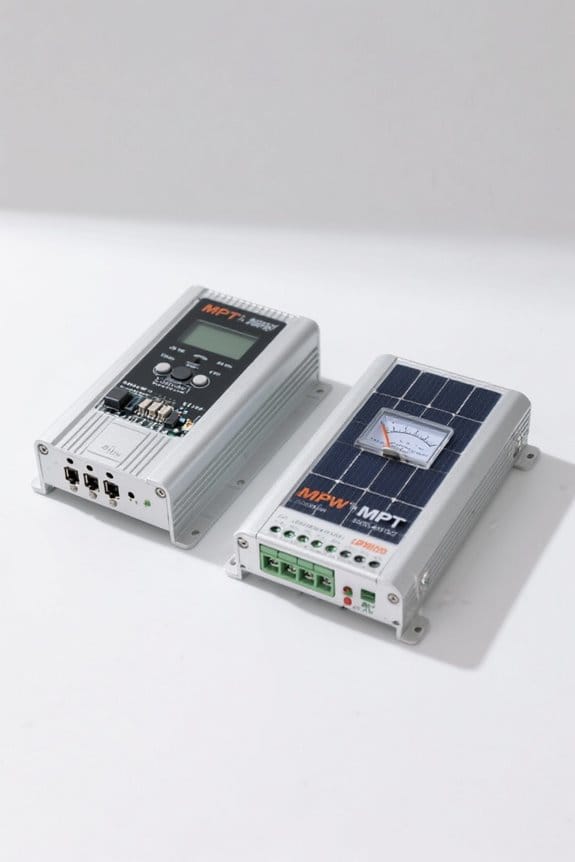
Hybrid inverters integrate solar energy generation with battery storage, converting direct current (DC) from solar panels into alternating current (AC) for household use. They manage energy by storing excess solar power in batteries for later use, enhancing energy independence and providing backup during outages. These inverters also feature maximum power point tracking (MPPT) technology, optimizing efficiency. Additionally, they allow seamless integration with generators, ensuring reliable power delivery. Explore further to understand their benefits and future advancements.
Key Takeaways
- Hybrid inverters convert DC electricity from solar panels to AC for household use while managing battery storage for excess energy.
- They feature bidirectional power flow, allowing batteries to be charged from solar energy or the grid, enhancing energy autonomy.
- Maximum power point tracking (MPPT) technology optimizes energy generation, improving efficiency and increasing overall solar yield.
- Hybrid inverters provide seamless backup power during outages by utilizing stored battery energy, ensuring continuous power supply.
- They include monitoring tools for real-time tracking of solar output and battery levels, facilitating effective energy management.
What Is a Hybrid Inverter?
A hybrid inverter is a multifaceted device that seamlessly integrates the roles of a traditional solar inverter and a battery inverter. This technology efficiently manages solar energy by converting direct current (DC) electricity generated from solar panels into alternating current (AC) electricity for household use. Additionally, it enables battery storage, allowing excess energy to be saved for later use. Featuring bidirectional power flow, a hybrid inverter can charge batteries from solar power or grid electricity and supply stored energy during low solar production or power outages. Many models include maximum power point tracking (MPPT), increasing efficiency by 15-30%. A well-designed hybrid inverter system provides backup power, enhances energy independence, and promotes cost savings over time by reducing reliance on grid power. Solar DC circuit breakers are essential for reliable protection against overloads and short circuits in hybrid inverter systems, ensuring safe and efficient operation.
Key Functions of Hybrid Inverters

Hybrid inverters play an essential role in optimizing solar energy usage and enhancing energy independence. They convert direct current (DC) generated by solar panels into alternating current (AC), which can be used by household appliances. These devices feature maximum power point tracking (MPPT) technology, improving energy extraction by up to 30%. Hybrid inverters enable bidirectional power flow; they can send excess energy back to the grid or store it in battery storage systems for future use. Advanced monitoring tools allow for efficient energy management, keeping track of solar output and battery charge levels. During a grid outage, these inverters can provide backup power by utilizing stored battery energy, ensuring that critical loads continue functioning. Additionally, Bluetooth monitoring allows users to have real-time insights into the performance of their solar systems, ensuring optimal efficiency and maintenance.
Comparison With Traditional Solar Inverters

When comparing hybrid inverters to traditional solar inverters, distinct differences emerge that influence energy management for homeowners. Hybrid inverters combine functionalities of solar and battery management, while traditional solar inverters solely convert DC to AC energy. Unlike traditional systems that return excess solar energy to the grid, hybrid inverters store this surplus in batteries, enhancing energy efficiency and providing backup power during outages. Traditional string inverters are limited to grid-tied systems, shutting down during power failures. In contrast, hybrid inverters can operate off-grid, promoting energy independence. Although installation costs for hybrid inverters may be higher, their ability to manage diverse battery storage types and improve overall power management can lead to long-term savings through reduced reliance on the grid. Built-in Battery Management System features, found in many modern solar storage batteries, further enhance the safety and efficiency of hybrid inverters.
How Hybrid Inverters Work
Understanding the operational mechanics of hybrid inverters reveals how they enhance energy management for households. Hybrid inverters work by converting direct current (DC) from solar panels into alternating current (AC) for household use while simultaneously facilitating energy storage systems. They charge batteries for later use with excess solar production or grid power, optimizing efficiency through maximum power point tracking (MPPT) technology. In battery charging mode, these inverters direct surplus energy, enhancing solar self-consumption and promoting cost savings during low-cost periods. During outages, hybrid inverters provide grid backup by prioritizing essential loads and ensuring an uninterrupted power supply using stored energy from batteries. Modern hybrid inverters often include advanced algorithms that maximize sunlight conversion, ensuring optimal power output and system efficiency. Overall, they manage electricity flow between solar panels, batteries, home usage, and the utility grid seamlessly.
Benefits of Hybrid Inverters
As energy costs continue to rise, homeowners often seek solutions that provide both savings and reliability. Hybrid inverters enhance energy independence by storing excess solar energy, which reduces reliance on the grid. During power outages, homes benefit from backup power supplied by batteries integrated with these inverters. By utilizing MPPT technology, hybrid inverters can improve energy efficiency, increasing solar yield by 15-30%. Homeowners may save 30-50% on their electricity bills through peak shaving techniques. Additionally, these systems allow for the seamless management of solar energy generation and battery storage. Many hybrid inverters include monitoring tools, enabling users to track energy production and consumption in real-time, contributing to more effective energy management practices.
Potential Drawbacks of Hybrid Inverters
While hybrid inverters offer numerous advantages for energy independence and savings, they also present potential drawbacks that homeowners should consider. The initial installation costs for hybrid inverters are typically higher than those of traditional solar inverters due to their advanced features. Retrofitting existing systems may complicate upgrades, requiring significant reconfiguration. Moreover, hybrid systems often involve greater maintenance needs, leading to potential troubleshooting challenges. Homeowners might face increased equipment expenses, which can deter investment, even with the promise of long-term savings. Additionally, the economic benefits, such as reduced reliance on the grid and efficient battery use, might not be realized immediately. This delay can elongate the payback period, impacting overall financial decisions related to hybrid inverter systems. Ensuring proper installation considerations can help mitigate issues related to compatibility and space limitations, which are crucial for optimal performance.
Economic Considerations for Homeowners
The economic considerations for homeowners investing in hybrid inverters and solar batteries are critical to understanding potential returns and overall viability. Initially, hybrid inverters may cost around $3,000, presenting a higher upfront investment compared to traditional options. However, they enable significant long-term savings by reducing electricity bills by 30-50% through storing excess solar energy for peak demand periods. With tax credits available for battery storage systems, homeowners can decrease initial costs, making energy independence more achievable. Additionally, net metering allows homeowners to sell excess energy back to the grid, generating revenue. Typically, the payback period for these systems is around 6-7 years, compared to over 8 years for grid-tied options, supporting the financial benefits of renewable energy investment. Moreover, lithium iron phosphate batteries are favored for their long lifespan and safety, contributing to the overall reliability and value of hybrid inverter systems.
Off-Grid Capabilities of Hybrid Inverters
Hybrid inverters offer a remarkable solution for homeowners seeking off-grid capabilities, especially during extended power outages or in remote areas. They enable off-grid functionality by integrating battery storage, allowing homes to maintain power supplies even without solar generation. Hybrid inverters manage power flows efficiently, using solar energy to charge batteries and switching to battery power during outages for continuous energy availability. The device can operate in island mode, providing backup power independently from the grid. By balancing solar generation, battery storage, and energy consumption effectively, these inverters help reduce dependence on traditional utility services. Additionally, when paired with generators, hybrid inverters facilitate seamless shifts in power supply, enhancing reliability for off-grid living situations. Many hybrid inverters offer comprehensive safety features, ensuring secure and efficient operation while managing power distribution between solar and battery sources.
Future of Hybrid Inverter Technology
Emerging technologies in hybrid inverters promise to further enhance energy management for residential and commercial users. Future advancements may include artificial intelligence to optimize battery usage and extend system life. The integration of vehicle-to-grid technology will allow electric vehicles to act as additional energy storage units, enriching home energy systems. In addition, developments in lithium-ion and solid-state batteries will improve battery capacity, enabling longer storage durations and faster charging. Innovations in smart grid technology will facilitate communication between hybrid inverters and the utility grid, promoting dynamic energy management. As renewable energy sources like solar, wind, and hydro are adopted, hybrid inverters will effectively integrate these diverse energy systems, bolstering resilience against outages and ensuring efficient energy use. The pure sine wave benefits of hybrid inverters ensure stable power output, which is crucial for operating sensitive electronics and enhancing overall system reliability.
Frequently Asked Questions
Can Hybrid Inverters Work With Existing Solar Systems?
Hybrid inverters can enhance existing solar systems through compatibility and integration, offering retrofitting solutions. However, installation challenges, cost considerations, and efficiency factors affect overall system performance, prompting users to weigh upgrading options based on experiences.
What Battery Types Are Compatible With Hybrid Inverters?
Lithium ion batteries, lead acid batteries, gel batteries, AGM batteries, flow batteries, and nickel cadmium batteries are typically compatible with hybrid inverters. Lithium iron phosphate is particularly favored for energy storage solutions and solar integration, ensuring ideal battery compatibility.
How Do Hybrid Inverters Handle Energy During Outages?
During outages, hybrid inverters guarantee grid independence through automatic switching. They prioritize essential loads using energy storage from batteries, allowing for managed battery discharge and renewable integration, providing backup power based on system configuration requirements.
Are Hybrid Inverters Suitable for Small Homes?
Hybrid inverters are increasingly suitable for small homes, with studies showing up to 30% energy efficiency improvement. Their benefits include reduced installation costs, enhanced performance metrics, and significant environmental impact, promoting energy independence through advanced residential solar technology.
How Do I Maintain My Hybrid Inverter?
Maintaining a hybrid inverter involves regular inverter maintenance tips, battery lifespan monitoring, and frequent cleaning. Importance lies in software updates, performance troubleshooting, wiring checks, cooling system upkeep, component inspections, and understanding warranty coverage and installation environment considerations.