
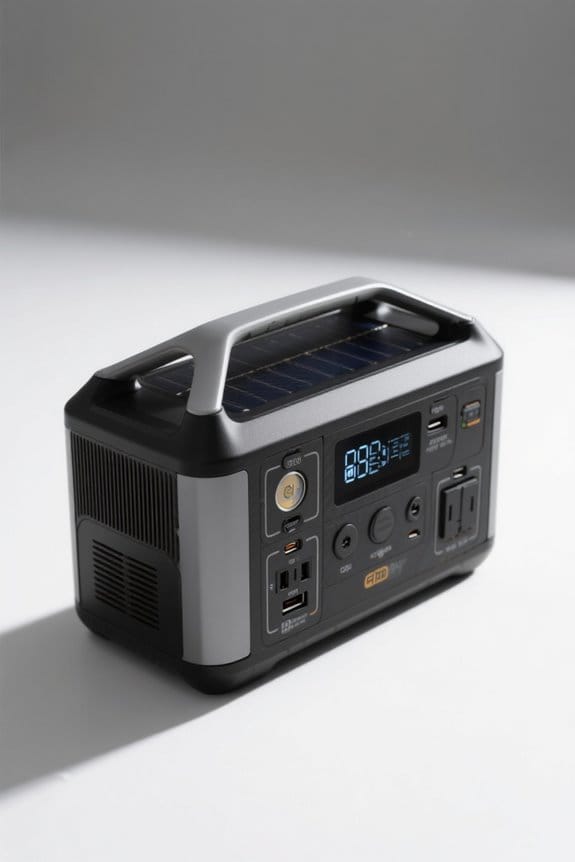

To size a portable power station for weekend trips, first list devices and their wattage. Multiply wattage by hours of use for watt-hours. For example, a smartphone uses 15-20Wh, while a portable fridge consumes 300-500Wh daily. Add 20% to your total for unexpected needs. Minimalist campers may need under 500Wh, while families may require 500-1200Wh. Consider essential ports, recharging options, and safety features. Continue to discover strategies for optimizing your weekend power station.
Key Takeaways
- List all intended devices and their wattage, calculating total watt-hours based on usage duration for energy budgeting.
- Choose a power station with at least 1000Wh for multiple devices, accommodating family weekend trips and portable fridges.
- Ensure the power station has essential output ports like AC, USB, and 12V options for diverse device compatibility.
- Utilize solar charging and car charging options to maintain energy levels during trips, focusing on peak sun hours for efficiency.
- Prioritize safety features and portability, ensuring the station meets safety standards and is easy to transport and store.
Calculating Your Weekend Power Needs
Calculating weekend power needs is essential for effectively selecting the right portable power station. Begin by creating a detailed list of devices intended for use, noting their wattage—usually found on labels or in manuals. To estimate total energy consumption, multiply each device’s wattage by the hours planned for use, yielding watt-hours (Wh). After calculating individual watt-hours, sum these figures for a total energy budget, adding 20% for unexpected needs. For instance, charging a smartphone requires about 15-20Wh, while a portable fridge could need 300-500Wh daily. Understanding these energy needs helps determine the power station’s capacity, typically requiring at least 1000Wh to effectively support multiple devices, especially high-draw appliances such as fridges and laptop chargers. For those planning more extensive use or requiring emergency situations backup, a device like the OUKITEL P5000 Pro with higher capacity may be ideal.
Matching Power Station Capacity to Your Trip Style
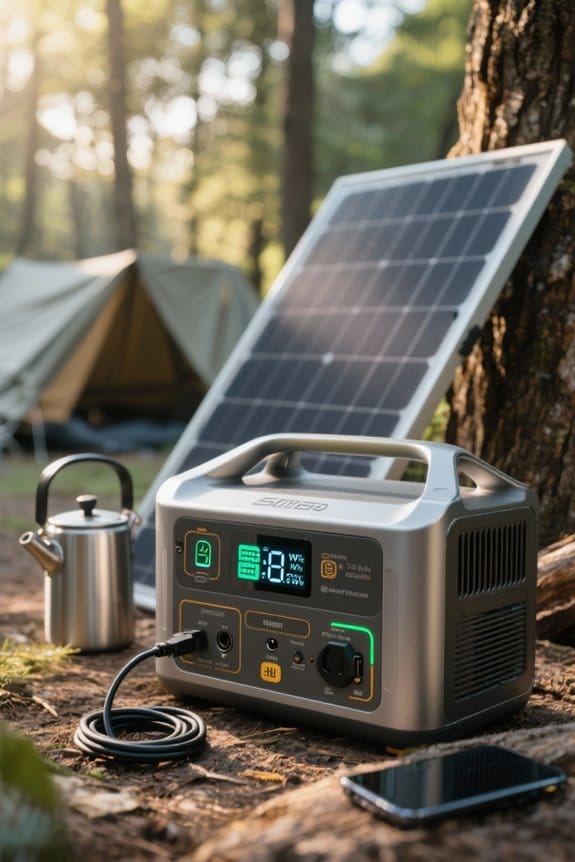
Choosing the right capacity for a portable power station can considerably enhance the camping experience, particularly when considering different trip styles. Minimalist campers, who require less energy, typically need power stations under 500Wh to support basic devices like smartphones and small LED lights. In contrast, family weekenders often benefit from units between 500Wh and 1200Wh, which can effectively run items such as portable fridges and laptops throughout their trips. For glamping enthusiasts seeking home-like comforts, power stations exceeding 1200Wh are vital, allowing the use of higher-draw appliances like coffee machines. A 1000Wh station, for instance, is ideal for families on short trips needing a fridge, while larger capacities guarantee thorough support for diverse camping requirements. Additionally, solar generators like the Jackery Solar Generator 1000 V2 offer quick charging times and versatility, making them suitable for various camping needs.
Essential Output Ports for Your Gear
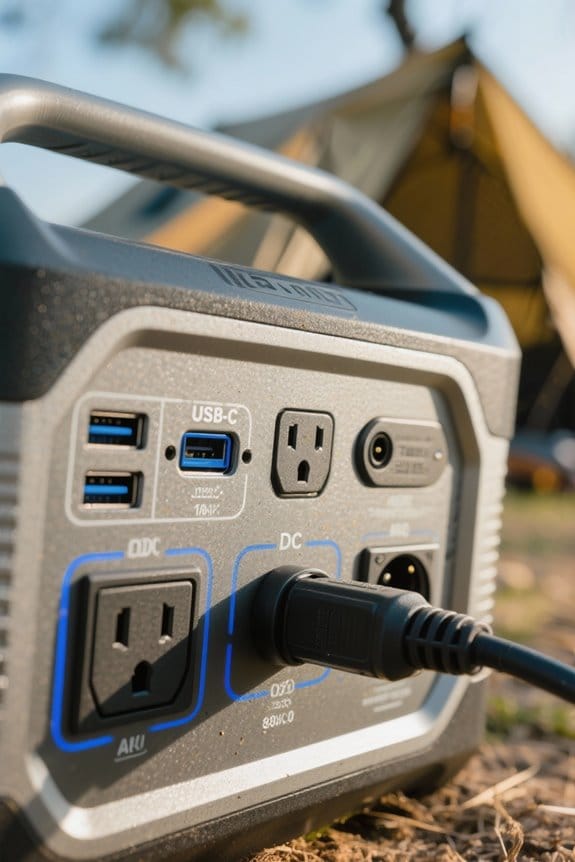
A well-equipped portable power station should feature a variety of output ports to accommodate different devices and guarantee efficient charging during outdoor adventures. Essential AC outlets are important for charging devices such as laptops and camera chargers, which use standard plugs. USB ports are equally significant; including USB-A for older devices and USB-C for rapid charging of modern smartphones and tablets offers versatile charging options. Additionally, a 12V cigarette lighter port enables connection to portable fridges and camping gear. It is essential to evaluate the placement of these output ports to support multiple devices simultaneously without overloading the unit’s capacity. Reliable solar charging capabilities further enhance convenience during weekend trips, ensuring that all devices meet their power consumption needs. To ensure optimal charge levels, it is important to regularly check battery health and maintain the power station according to the manufacturer’s guidelines.
Recharging Options: Solar and Car Charging
Effective recharging options are essential for maximizing the performance and usability of a portable power station. Solar charging provides energy independence, especially on weekend trips, as many portable power stations are compatible with solar panels. This method is most effective during peak sun hours, allowing users to gather sufficient energy for nighttime use. Additionally, car charging via a 12V outlet is convenient while driving to a campsite, ensuring your power station is ready upon arrival. For best results, select a solar-ready power station, which enhances compatibility with various solar setups. It’s important to check your station’s power output limits when using multiple recharging options simultaneously, preventing overload and ensuring maximum power potential for outdoor adventures. Consider the multiple output ports offered by many power stations to accommodate different devices, making your power station more versatile during trips.
Pro Tips to Maximise Your Battery Life
How can users guarantee they get the most out of their portable power station’s battery life? First, pre-charge the device to full capacity before a trip, ensuring maximum energy is available. Users should assess their power needs and utilize low-power modes on devices to reduce energy consumption and extend runtime. Solar charging during peak sun hours is another effective strategy to maintain energy levels for nighttime use. Additionally, keep the portable power station in a shaded, cool location to prevent efficiency loss from heat, which negatively affects battery capacity. To conserve energy, turn off the inverter when not in use, as it draws power even when idle. Many portable power stations feature battery management systems that ensure reliability and safety during use. Together, these tips help maximize battery life effectively.
Understanding Surge Wattage
Surge wattage is a critical concept when selecting a portable power station, as it represents the additional energy required to start electrical appliances, which can greatly exceed their normal operating power. For example, refrigerators often have a surge wattage that is two to three times their running wattage. Many portable power stations indicate their surge rating, allowing users to understand their capacity for handling these brief power spikes. It is vital to ascertain the continuous wattage rating of the power station surpasses the total devices wattage needed for startup demands. A good practice is to include an additional 20-30% in wattage calculations. This approach helps accommodate the extra power needs during startup, guaranteeing a reliable supply for tools and appliances during weekend trips. Ensuring that your portable power station adheres to safety certifications like UL listing can further enhance the reliability and safety of your energy solutions.
Intermittent Device Usage Considerations
When planning to use multiple devices intermittently during a weekend trip, careful consideration of their power consumption is crucial. To accurately estimate power needs, calculate watt hours (Wh) for each device used. For instance, a laptop consuming 80W for four hours results in 320Wh, while a refrigerator running at 400W for an entire day totals 960Wh. Additionally, charging smartphones—four at 5W for four hours—adds 100Wh, and lamps used for six hours at 30W contribute 180Wh. By totaling these figures, one can determine overall daily consumption. If the accumulated total exceeds the portable power station‘s output capacity, a larger capacity unit will be necessary to guarantee safe power draw and uninterrupted device usage throughout the weekend trip. It’s also important to consider solar compatibility when choosing a portable power station to ensure it can be recharged efficiently using renewable energy sources during the trip.
Choosing the Best Portable Power Station for Your Needs
Selecting the right portable power station can greatly enhance the experience of weekend trips, making it essential to understand specific power needs. To choose the best portable power, assess total wattage output by listing all devices and adding 20% for surge draw. For minimalist trips, a small power station under 500Wh suffices, while families or those needing higher wattage may require 500Wh to 1200Wh. Capacity is important; evaluate the output ports, ensuring multiple AC, USB-A, USB-C, and 12V options are available. Consider a solar-ready power station for sustainable energy during longer outings. Safety features, such as battery management systems, enhance reliability in challenging conditions. Finally, weigh portability, as larger capacities often mean increased weight, which is critical for comfortable weekend camping adventures.
Frequently Asked Questions
How Do I Know What Size Portable Power Station I Need?
To determine needed size, one must illuminate power requirements through energy consumption calculations and battery capacity, ensuring compatibility with peak wattage demands. Consider weight, port availability, and usage scenarios for ideal charging options during adventures.
How Long Will a Portable Power Station Run a Refrigerator?
A portable power station can run a refrigerator for varying durations, influenced by power consumption, battery capacity, and inverter type. Evaluating cooling cycles, food safety, voltage compatibility, and charging options guarantees ideal performance and energy efficiency.
What Can a 100W Portable Power Station Run?
A 100W portable power station can run outdoor gadgets like smartphones, LED lights, and some small camping appliances, making it ideal for weekend getaways. Its solar compatibility and energy efficiency are essential for reliable power and battery safety.
What Is the Best Size Power Bank for Travel?
The best size for a travel power bank typically ranges from 500Wh to 1000Wh, balancing charging capacity, weight considerations, and portability factors while ensuring compatibility with devices and maintaining reliability based on user reviews and brand reputation.


