
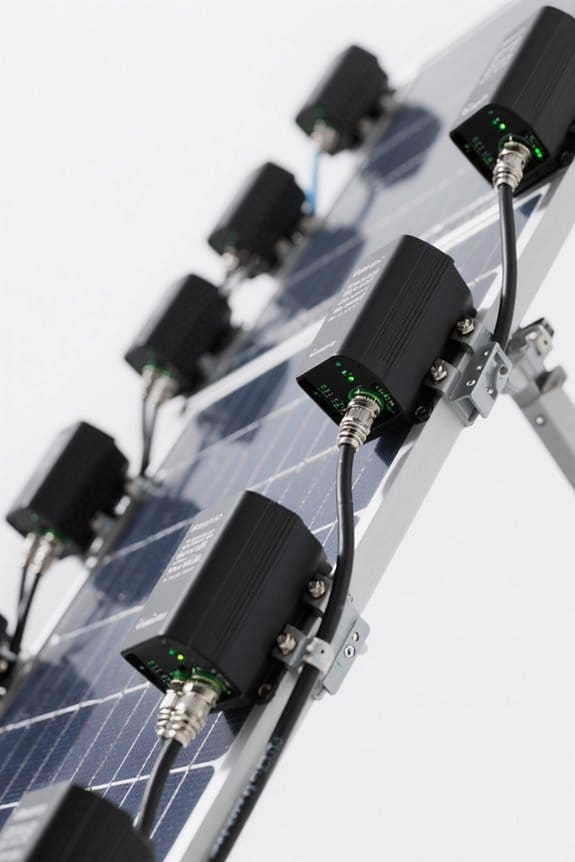

Solar optimizers enhance individual solar panels’ performance by utilizing Maximum Power Point Tracking (MPPT) technology. This technology allows each panel to function at its peak efficiency, recovering 30% to 40% of energy lost from shading or orientation issues. With real-time monitoring, optimizers prevent weaker panels from reducing the overall system’s output, increasing energy generation by up to 25%. This setup improves efficiency and offers better returns on investment. Further details reveal more about installation considerations and benefits.
Key Takeaways
- Solar optimizers enhance each panel’s performance using MPPT technology, optimizing voltage and current for maximum energy output.
- They recover 30% to 40% of energy lost due to shading or varying panel orientations.
- Real-time monitoring tracks individual panel outputs, ensuring the weakest panel does not hinder overall system performance.
- Optimizers can increase overall energy production by up to 25% during shaded conditions or low light.
- They provide module-level data, improving energy management and optimizing the return on investment for solar systems.
How Solar Optimizers Enhance Individual Panel Performance
How do solar optimizers enhance the performance of individual solar panels? Solar optimizers utilize maximum power point tracking (MPPT) technology, allowing each panel to operate at its peak efficiency. This is particularly important for shaded panels, as optimizers can recover 30% to 40% of energy lost due to shading effects. By implementing module-level monitoring, they provide real-time data regarding each panel’s output, helping to identify and address performance losses promptly. This independent operation prevents the weakest panel from dragging down the overall system’s performance, markedly enhancing energy harvest. Research indicates that solar installations using optimizers can generate up to 25% more energy output than those without, showcasing their crucial role in maximizing renewable energy production. Additionally, advanced algorithms enhance the conversion of sunlight to electricity, ensuring that each solar panel consistently operates at maximum efficiency.
The Role of Maximum Power Point Tracking (MPPT)

Efficiency in solar energy production largely hinges on the implementation of Maximum Power Point Tracking (MPPT) technology. MPPT is a method used by solar optimizers to continuously adjust the voltage and current of individual panels, ensuring they operate at their most effective power output. This innovation can enhance energy harvest by as much as 25% compared to traditional systems, particularly in scenarios with shading or varying panel orientations. By dynamically responding to changes in sunlight and temperature, MPPT optimizers enable independent performance adjustments for each panel. This reduces the impact of underperforming panels on the overall system. Ultimately, MPPT technology is crucial for maximizing energy production in solar power systems, even during low light conditions, thereby improving overall efficiency. Additionally, advanced safety features in MPPT controllers protect against battery over-voltage, overheating, and reverse connections, enhancing reliability and user peace of mind.
Benefits of Improved Energy Production Under Various Conditions

Solar optimizers considerably enhance energy production under varying conditions by addressing performance discrepancies among individual panels. In scenarios involving shading, these devices can boost energy output by up to 25%, ensuring each panel operates at its maximum power point. This is achieved through maximum power point tracking (MPPT), which independently adjusts voltage and current for each panel. By allowing real-time monitoring of individual panel performance, optimizers prevent weaker panels from negatively impacting the entire system. For installations where panels face different angles or are partially shaded, solar optimizers enhance overall system efficiency, recovering 30%-40% of power lost due to these obstacles. Ultimately, this maximizes solar energy utilization and improves the return on investment for solar energy systems. Additionally, solar panel optimizers have advanced monitoring capabilities, offering module-level tracking and streamlined installation processes for DIY users, which further enhances their usability and operational reliability.
Comparing Solar Optimizers and Microinverters
A detailed comparison of solar optimizers and microinverters reveals distinct advantages and operational differences between the two technologies. Solar optimizers enhance energy production by optimizing each panel’s output, especially in shading conditions, while relying on a central inverter for DC to AC conversion. This can increase efficiency by up to 25%. In contrast, microinverters perform this conversion at the panel level, allowing independent operation, which can also improve overall system efficiency. However, microinverters come with higher installation costs and maintenance needs. Solar optimizers generally have lower upfront costs and fewer installation complexities. Both systems combat performance degradation from underperforming panels, yet the choice depends on priorities like cost, maintenance convenience, and the specific shading scenarios of the installation site. Advanced lithium battery examples illustrate the benefits of using lithium technology for solar applications, such as longer lifespan and efficient power storage.
Considerations for Installing Solar Optimizers
When evaluating the installation of solar optimizers, homeowners should consider various factors that influence their effectiveness and compatibility. Optimizers greatly enhance the performance of each panel, especially in partially shaded situations, reducing energy loss. Homeowners must verify the compatibility of their solar panels with specific optimizers, as certain models, like those from SolarEdge, require designated inverters. Additionally, installing solar panels with optimizers can be expensive, increasing costs by approximately $300 for a 6 kW system. It is also vital to examine warranty lengths; optimizers often have 25-year warranties while inverters may range from 8 to 12 years. Module-level monitoring capabilities provide real-time access to data, improving energy savings and overall system management. High efficiency ratings (over 90%) in inverters are crucial to minimize power loss and optimize energy conversion.
Frequently Asked Questions
Does Each Solar Panel Need an Optimizer?
Not every solar panel requires an optimizer, but their integration can enhance individual panel efficiency, mitigate shadows effects, boost energy yield, and improve system longevity, all while considering installation costs and maintenance requirements alongside financial incentives.
What Is the 33% Rule in Solar Panels?
In the domain of solar energy, the 33% rule dictates that shading can diminish overall energy generation by up to one-third, underscoring the necessity for system optimization and advanced technology to enhance panel performance, thereby improving solar efficiency.
Why Is My Electric Bill so High When I Have Solar Panels?
High electric costs despite solar panels can stem from inefficiencies, energy consumption habits, shading effects, utility rate changes, seasonal variations, and maintenance issues. Inverter performance and local regulations may further impact overall energy generation and usage patterns.
What Do Power Optimizers Maximize?
Power optimizers maximize power production and energy efficiency while enhancing system reliability. They facilitate performance monitoring, mitigate shading effects, guarantee voltage regulation, and improve return on investment, all while maintaining compatibility with existing panels and offering warranty benefits.


