
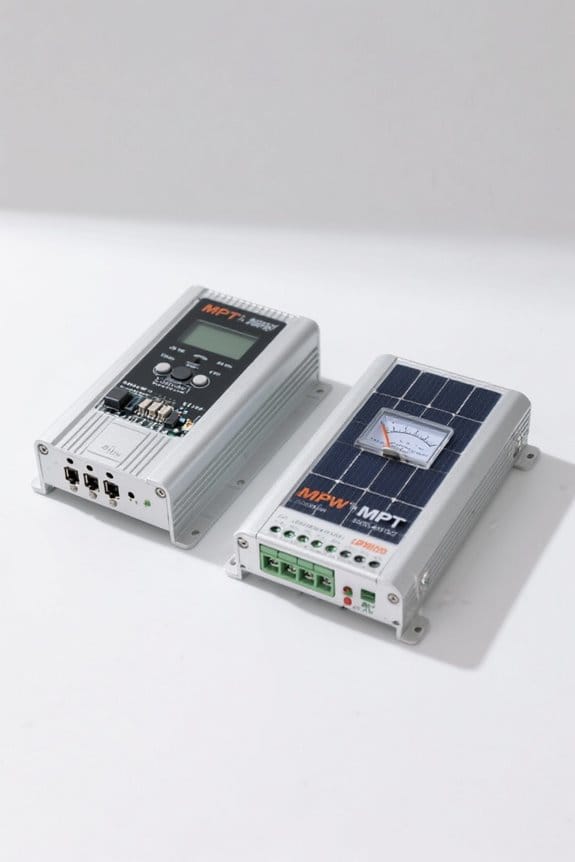

MPPT (Maximum Power Point Tracking) controllers are ideal for larger solar systems, as they improve energy efficiency by 20-30% compared to PWM (Pulse Width Modulation) controllers. PWM controllers are cost-effective for small setups under 170W but may waste energy if solar panel voltage exceeds battery voltage. While MPPT systems can harvest up to 30% more power, they come with a higher upfront cost. Understanding these differences can help determine the best solution for specific needs and conditions.
Key Takeaways
- MPPT controllers are ideal for larger systems and environments with variable or low light, providing better energy extraction.
- PWM controllers are cost-effective for small systems under 170W, offering simplicity and lower initial investments.
- For setups with solar panel voltage exceeding battery voltage, MPPT is the preferred choice to maximize performance.
- Investing in MPPT can yield long-term savings through enhanced efficiency and improved battery health compared to PWM.
- Prioritizing future energy needs when selecting controllers can prevent inefficiencies and ensure system growth potential.
Understanding PWM and MPPT Technologies
In the domain of solar energy management, understanding PWM (Pulse Width Modulation) and MPPT (Maximum Power Point Tracking) technologies is essential for optimizing system performance. PWM charge controllers effectively match the voltage of solar panels to battery voltage, making them a cost-effective choice for small systems with limited energy demands. In contrast, MPPT charge controllers continuously adjust voltage and current, maximizing power harvested from solar panels, resulting in efficiency gains of up to 30%. They are particularly advantageous for larger solar systems with multiple panels or batteries, especially in varying light conditions. MPPT technologies excel in colder environments, yielding 20-25% more energy harvested than PWM. Consequently, the choice between these technologies depends on system size and application requirements. Tracking efficiencies over 99% are a key feature of modern MPPT charge controllers, enhancing the overall performance of solar power systems.
Efficiency Comparison in Various Conditions
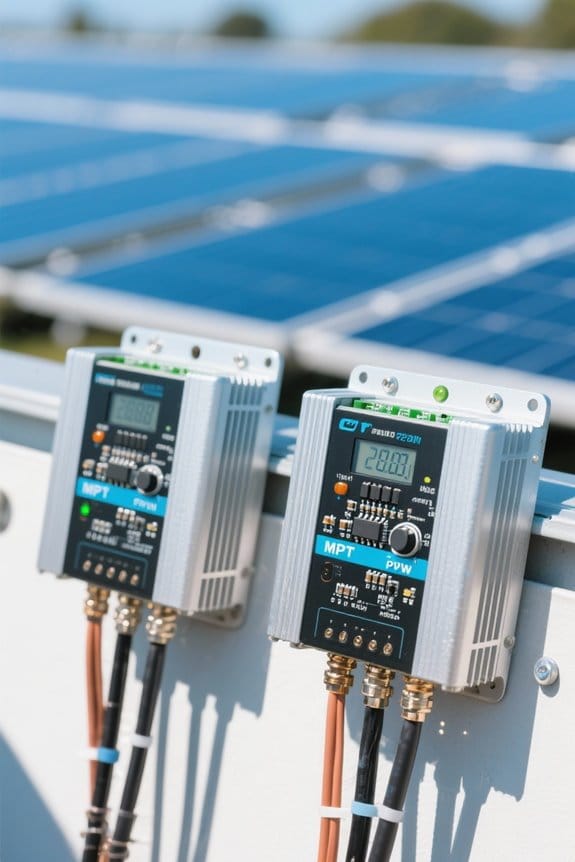
How does the efficiency of MPPT and PWM controllers compare under different environmental conditions? MPPT (Maximum Power Point Tracking) controllers can be 20-30% more efficient than PWM (Pulse Width Modulation) controllers, especially in low light or cold weather when solar panels experience varying power outputs. In scenarios with partial shading, MPPT controllers excel by continuously locating the maximum power point, thereby optimizing energy extraction. Conversely, PWM controllers charge batteries at a fixed voltage that matches the battery, often wasting energy from higher voltage solar panels. Under ideal conditions, MPPT systems can harvest up to 30% more power, maximizing the energy yield. Furthermore, MPPT thrives in cooler temperatures, maintaining higher voltage outputs, while PWM systems remain rigid and less adaptable. Additionally, advanced MPPT technologies boast efficiency rates of up to 99%, ensuring peak battery performance and health.
Cost Analysis and Financial Considerations
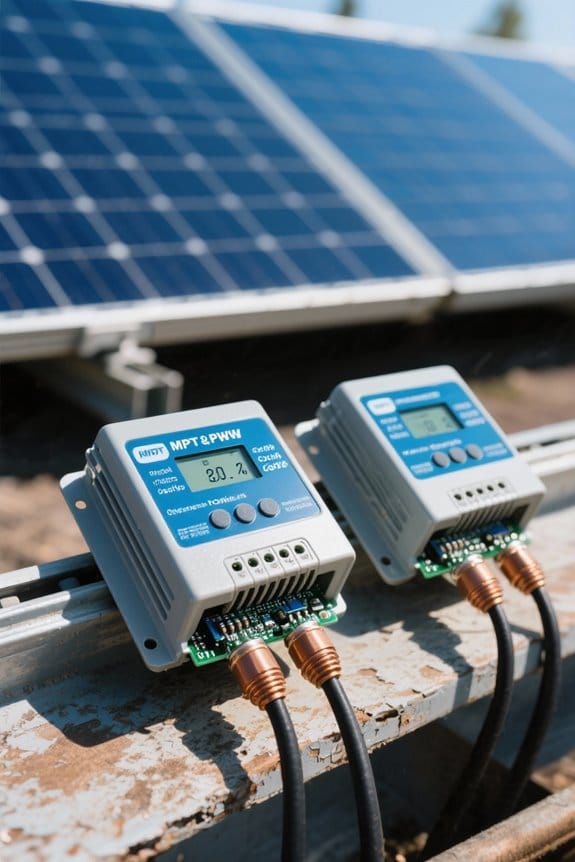
When considering the cost analysis of solar controllers, an important distinction exists between MPPT (Maximum Power Point Tracking) and PWM (Pulse Width Modulation) technologies. MPPT controllers generally have a higher upfront cost, ranging from 20% to 50% more than PWM controllers, but they can produce up to 30% more usable energy over time, leading to significant long-term savings. In smaller setups, like those powering LED lighting, PWM controllers are often more cost-effective due to their lower initial investment. However, in larger systems, the efficiency gains from MPPT technology can result in quicker payback periods, positioning it as a worthwhile financial investment. Ultimately, evaluating the total cost of a solar setup includes examining long-term energy savings alongside upfront costs. Additionally, MPPT controllers, such as the Renogy 60A MPPT, are designed to handle extreme conditions, making them suitable for larger DIY solar setups.
Selecting the Right Controller for Your System
Selecting the right controller for a solar power system can significantly influence overall performance and efficiency. For smaller systems under 170W, PWM controllers are cost-effective and simple. However, for larger setups requiring the best energy extraction, MPPT controllers can improve efficiency by 20-30%. If the voltage of solar panels exceeds the battery voltage, an MPPT controller is preferred. This technology continuously adjusts to varying conditions, making it ideal for low-light or partially shaded environments. Although MPPT controllers come with a higher upfront cost, they maximize energy yield and enhance battery health, leading to long-term savings. It’s important to consider environmental conditions when choosing between PWM and MPPT controllers, as MPPT is particularly beneficial in varied climates. Ultimately, evaluating energy needs and environmental conditions is essential when choosing between charge controllers for a reliable solar power system.
Common Mistakes When Choosing Controllers
Choosing the right controller for a solar power system involves careful consideration of various factors, but several common mistakes can hinder ideal performance. Many users mistakenly prioritize the lowest price, often choosing inefficient PWM controllers over suitable MPPT options. This decision can lead to suboptimal charging efficiency and affect battery life. Additionally, failing to grasp system requirements can result in inadequate voltage matching between solar panels and batteries, wasting valuable energy. Users may also neglect battery chemistry, which influences charging efficiency and overall battery health. Moreover, overlooking future energy needs and potential system expansion may confine users to smaller PWM systems, limiting growth. Understanding these factors will enhance solar performance and reliability in the long run. To prevent these issues, it’s important to consider MPPT technology for larger systems as it offers higher tracking efficiency and optimizes energy collection, ensuring better solar system performance.
Frequently Asked Questions
When to Use PWM Vs MPPT?
PWM is preferred for small systems with minimal energy demands and lower costs, while MPPT excels in larger setups, maximizing efficiency and charging speed, particularly in variable conditions, despite higher installation complexity and cost.
Can I Use Both PWM and MPPT Together?
It amusingly seems counterintuitive, yet using both PWM and MPPT can enhance solar efficiency. Effective system integration requires careful voltage regulation and battery compatibility, ultimately optimizing energy management despite increased installation costs—a true performance analysis of renewable energy systems.
What Are the Disadvantages of a PWM Solar Charge Controller?
PWM solar charge controllers suffer from low efficiency, limited charge rates, and temperature sensitivity, restricting output voltage. Their compatibility with solar panels is limited, increasing system complexity and potentially raising costs compared to alternatives suited for maximum power points.
What Is the Disadvantage of MPPT?
The disadvantages of MPPT controllers include high costs, efficiency fluctuations, installation complexities, and maintenance demands. Temperature sensitivity and battery compatibility issues may arise, while smaller systems risk energy loss and underutilization, impacting overall environmental benefits.


