


String inverters and microinverters serve different purposes in solar energy systems. String inverters, which connect multiple solar panels in series, are typically more cost-effective, ranging from $0.50 to $0.80 per watt. However, their performance can decline if any panel is shaded. In contrast, microinverters attach to individual panels, optimizing performance and minimizing failure rates. They cost more, about $1.20 to $1.50 per watt, but offer better energy capture in shaded conditions. Learning more about their differences can help in choosing the right option.
Key Takeaways
- String inverters connect multiple solar panels in series, while microinverters are installed on each individual panel for optimized performance.
- Microinverters perform better in shaded or complex roof conditions, unlike string inverters, whose output relies on the weakest panel.
- Microinverters typically have a higher initial cost and installation complexity compared to the more cost-effective string inverters.
- Each solar panel operates independently with microinverters, allowing for detailed performance monitoring and troubleshooting.
- Microinverters support easy future expansion of solar systems, while string inverters may require replacement for additional panels.
What Are Solar Inverters?
Solar inverters play an essential role in the functionality of solar energy systems. They convert the direct current (DC) power produced by solar panels into alternating current (AC) energy, which can be utilized in homes or integrated into the electrical grid. There are two main types of solar inverters: string inverters and microinverters. String inverters connect multiple solar panels in a series, making them cost-effective and simple to install, particularly for unshaded roof setups. In contrast, microinverters are installed on each panel, enhancing performance and optimizing energy production, especially in shaded or complex roof configurations. Understanding these differences can help homeowners choose the most effective installation based on their specific energy needs and roof conditions. Many modern inverters feature real-time monitoring systems that allow homeowners to track voltage and current, ensuring optimal efficiency and proactive management of solar output.
Overview of String Inverters
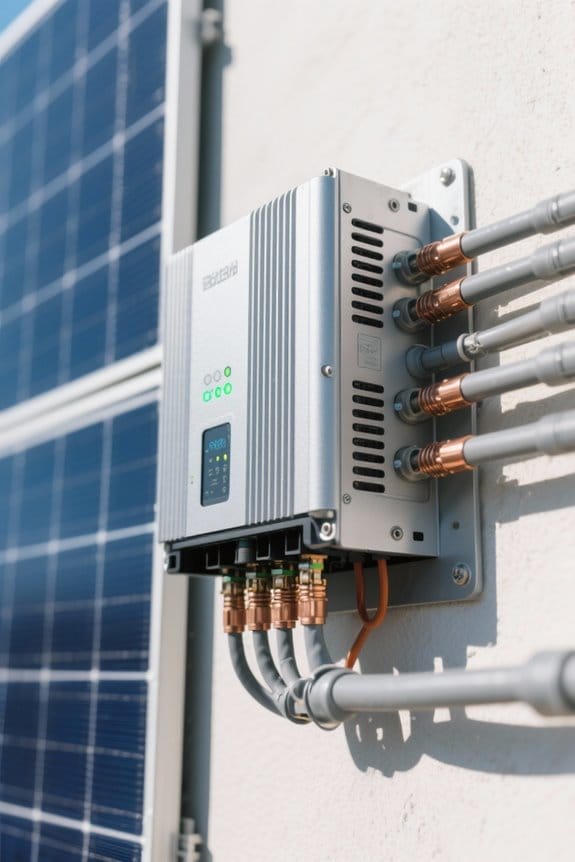
While many homeowners seek efficient solar energy solutions, string inverters often emerge as a popular choice for those with straightforward roof installations. These large units convert DC electricity from multiple solar panels through a centralized conversion system. Their effectiveness is particularly high in unshaded configurations; however, if one panel becomes shaded or malfunctions, system performance can decline considerably due to the weaker panel limiting overall output. String inverters typically have a lifespan of 10 to 15 years and usually come with a lower installation cost compared to microinverters, making them less expensive upfront. Additionally, they can be paired with power optimizers to enhance efficiency and monitor individual panel performance, addressing some challenges posed by shaded roof configurations. String inverters can achieve energy conversion efficiency similar to high-efficiency models, making them a viable option for maximizing solar energy use.
Overview of Microinverters

Microinverters serve as a modern solution for solar energy conversion, strategically installed on the back of individual solar panels. These devices convert DC electricity, which panels generate, into AC electricity for home use. Microinverters optimize the performance of each panel independently; consequently, shading on one panel does not hinder the output of others. They typically come with a longer warranty of about 25 years, aligning with the lifespan of solar panels. Using microinverters simplifies future solar installations, enabling easy expansion by adding new panels without replacing the entire inverter system. A well-known brand, Enphase, offers advanced monitoring capabilities, allowing users to track the performance of each panel via apps, ensuring effective optimization and maintenance of their solar energy systems. To ensure reliable performance analysis, it is crucial to use solar battery testers with high accuracy ratings.
Key Differences in Performance
Understanding the differences in performance between microinverters and string inverters can greatly influence the effectiveness of a solar energy system. Microinverters allow each solar panel to operate independently, enhancing overall system performance, particularly in situations with shading. Conversely, string inverters connect panels in series; shading on one panel reduces the entire string’s output. This makes microinverters more efficient, especially in areas with inconsistent sunlight. The reliability of microinverters is significantly higher, as they have a failure rate of about 0.0551%, while string inverters have a failure rate of 0.89%. Additionally, microinverters enable panel-level monitoring, providing detailed insights into energy production, while string inverters typically present only aggregated system performance data. Consequently, microinverters may offer superior performance overall. It is essential to evaluate power output requirements and system compatibility when deciding between microinverters and string inverters, as these factors can significantly impact the system’s effectiveness and efficiency.
Cost Comparison of Inverter Types
Cost plays a significant role when deciding between microinverters and string inverters for solar energy systems. Microinverters generally have a higher initial cost, averaging between $1.20 to $1.50 per watt, compared to string inverters, which range from $0.50 to $0.80 per watt. This makes string inverters a more budget-friendly option for upfront purchases. Additionally, installation costs for microinverters tend to be higher due to the complexity of installing multiple units versus a single string inverter. While microinverters offer longer lifespans of 20-25 years, the total cost of ownership should include potential replacement costs for string inverters. When considering long-term savings, it’s important to evaluate durability and construction materials to ensure the longevity and effectiveness of the chosen inverter type. Consequently, a thorough cost comparison is essential for evaluating long-term savings between these inverter types.
Installation and Maintenance Considerations
When considering solar energy systems, installation and maintenance aspects greatly influence the choice between microinverters and string inverters. Microinverters, which operate on a unit basis under each solar panel, require more complex installation and wiring, leading to longer setup times. This complexity also results in higher labor costs for installation and potential future maintenance. String inverters, however, simplify the installation with one central unit, making it easier and more cost-effective to manage. Maintenance is less complicated for string inverters, as they only need monitoring for a single unit. Additionally, while microinverters may last 20 to 25 years alongside the solar panels, string inverters typically last only 10 to 15 years, translating to more frequent replacement needs. It is essential to consider the longevity ensured by quality materials and warranties when selecting inverters, as this can significantly impact the long-term value and reliability of your solar energy system.
Lifespan and Warranty Insights
The lifespan and warranty of solar inverters play an essential role in determining their long-term value and reliability. Microinverters typically have a warranty of around 25 years, aligning with the 25 to 30-year lifespan of solar panels. This suggests that they may incur lower long-term replacement costs due to their durability. Conversely, string inverters usually feature a shorter warranty of 10 to 15 years, which can lead to earlier replacements during the lifetime of the solar panels. Additionally, string inverters may experience a higher rate of failures due to their centralized design, further necessitating replacement. Reliable and easy installation of solar panel fuses contributes to the overall efficiency and safety of solar energy systems. Understanding these differences is vital for informed decision-making when considering solar installation options. Choosing wisely can profoundly affect performance and costs over time.
Choosing the Right Inverter for Your Needs
Selecting the right inverter is pivotal for maximizing the benefits of a solar power system. Homeowners should consider their roof layout, as string inverters are cost-effective for simple roofs, while microinverters excel on complex or shaded roofs due to panel-level performance. If shading occurs, microinverters mitigate energy losses by allowing each solar panel to operate independently. Future expansion is also important; microinverters facilitate easy addition of new solar panels without replacing the entire system, unlike string inverters, which might require a new inverter. Additionally, microinverters offer detailed performance monitoring for individual panels, making it easier to identify problems compared to the centralized monitoring of string inverters. Overall, evaluating these factors is essential for achieving ideal system efficiency and financial benefits. Microinverters often integrate a Battery Management System to enhance safety and efficiency, offering added value in solar power setups.
Frequently Asked Questions
What Is the Difference Between String and Micro Inverters?
String inverters connect solar panels in series, impacting energy efficiency during shading, while microinverters enhance system scalability and performance monitoring. Cost comparison highlights warranty differences, installation complexity, and maintenance requirements along lifespan expectancy, influencing compatibility issues.
What Is the Disadvantage of a Micro Inverter?
Like a double-edged sword, micro inverters possess efficiency benefits but face challenges. Installation complexity and cost implications, higher maintenance requirements, potential performance variability under shading, and compatibility concerns complicate their advantages regarding warranty and lifespan.
What Is the Difference Between Inverter and String Inverter?
Inverter types differ in efficiency comparison, installation complexity, maintenance requirements, and power output. String inverters offer lower costs but reduced scalability, while microinverters provide better voltage management, compatibility, and warranty differences for varied systems.
What Are the Disadvantages of a String Inverter?
The disadvantages of string inverters include efficiency loss due to partial shading, installation complexity, maintenance issues, compatibility concerns, cost factors, shorter lifespan, performance degradation, limited warranty terms, and monitoring limitations for individual panel performance.


