


Safety rules for working around live DC solar circuits include using essential personal protective equipment (PPE), like arc-rated clothing and insulated gloves. Before beginning any work, verify the system is fully de-energized using reliable voltmeters. Always use insulated tools rated for the task and follow NEC® standards, which provide guidelines for handling live wires safely. Implement lockout/tagout (LOTO) procedures to prevent accidental re-energization and prepare for emergencies with a thorough response plan. For further guidance, explore additional safety measures.
Key Takeaways
- Always wear appropriate PPE, including arc-rated clothing and insulated gloves, to protect against electrical hazards when working on live circuits.
- Confirm circuit de-energization with a voltmeter before starting work; ensure proper lockout/tagout (LOTO) procedures are in place.
- Use insulated tools rated for the specific voltage to prevent electric shocks while handling energized solar equipment.
- Regularly inspect DC circuit conductors for signs of wear or damage to minimize risks during operation.
- Follow NEC guidelines for proper labeling, disconnecting means, and overcurrent protection to ensure safe working environments around live circuits.
Importance of Personal Protective Equipment (PPE)
When working with DC solar circuits, the importance of Personal Protective Equipment (PPE) cannot be overstated, as it plays an essential role in protecting workers from electrical hazards. PPE, including arc-rated clothing, is critical for guarding against shock hazards and arc flashes that may occur during installations. Technicians are advised to wear gloves rated for electrical work, such as hybrid electric safety gloves, which help prevent electric shocks when handling live circuits. Additionally, safety glasses or goggles protect against flying debris during electrical testing. Familiarity with the 2018 NFPA Standard 70E is essential, as it outlines necessary PPE categories. Regular training in proper PPE usage enhances overall electrical safety, allowing technicians to inspect and maintain their protective gear effectively. Incorporating Bluetooth-enabled batteries in solar circuits can facilitate real-time monitoring of voltage and temperature, enhancing safety by allowing technicians to assess conditions remotely without direct contact with live circuits.
Understanding Electrical Hazards in Solar Systems
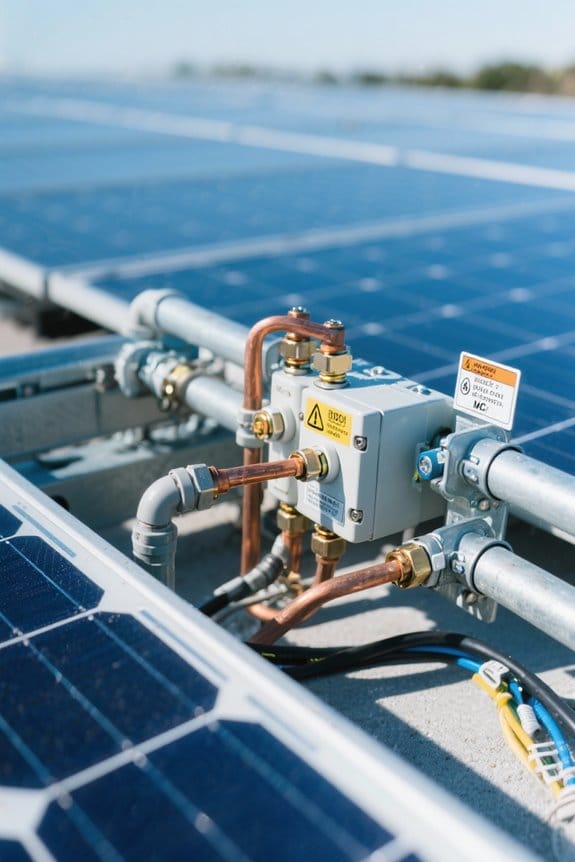
Understanding the electrical hazards present in solar systems is essential for anyone involved in their installation and maintenance. In DC circuits, electrical hazards are significant; even currents as low as 75 mA can be lethal if they pass through the heart. Proper grounding and protective measures are critical, as electrical shocks may occur due to short circuits, corroded cables, or loose wiring. In addition, arc faults can produce high power discharges between conductors, increasing fire risks, particularly in energized combiner boxes. Following safety protocols is imperative, as a safe touch voltage is typically below 39V. Moreover, using Personal Protective Equipment (PPE), such as arc-rated clothing and insulated gloves, is necessary to safeguard against potential electrical hazards in solar PV systems. MPPT charge controllers optimize solar power systems, ensuring maximum energy efficiency and enhancing safety through intelligent management features.
De-energizing Systems Before Work

Before any maintenance or installation work can begin on a solar circuit, it is essential to guarantee the system is completely de-energized. This process involves thorough steps to meet safety standards. First, utilize isolation switches and disconnect points to effectively separate the system from the power source. Following this, conduct a visual inspection of circuit conductors, checking for signs of wear, corrosion, or damage. After disconnecting, confirm that the circuit is de-energized by using a reliable voltmeter, ensuring it registers no voltage. To further secure the system, implement effective lockout/tagout (LOTO) procedures. This prevents accidental re-energization during maintenance. Remember, even currents as low as 75 mA can be lethal, therefore ensuring de-energization is paramount for safety. Additionally, using solar battery testers with high accuracy ratings of 0.8% ensures reliable verification of the circuit’s de-energization status.
Safe Use of Insulated Tools
Working on solar circuits, especially in the context of DC electricity, demands strict safety practices. The use of insulated tools is vital for preventing electric shock while working with energized solar circuits. These tools must have insulation that is rated for the specific voltage levels, such as those compliant with IEC 60900 standards for 1000V AC or 1500V DC applications. Before using insulated tools, workers should inspect them for signs of wear or damage, as compromised insulation can increase the risk of electrical hazards. It is essential to utilize tools with insulated handles, ensuring an extra layer of protection. Additionally, proper storage of these tools when not in use is necessary to maintain their effectiveness and prevent deterioration. Solar panels should withstand extreme weather conditions, and regular cleaning is essential for optimal energy absorption.
Importance of Good Visibility
How essential is good visibility when working with live DC solar circuits? Good visibility plays a critical role in ensuring safety during these tasks. DC circuits are often harder to detect than AC circuits, making it crucial to recognize potential electrical hazards, such as exposed wires or damaged insulation. Proper lighting conditions are necessary to identify these risks effectively. Additionally, using reflective surfaces or personal protective equipment (PPE) with high visibility can enhance awareness while working around live circuits. Adequate visibility aids in recognizing wiring layouts, reducing the chances of errors during maintenance or installation tasks. Poor visibility increases the likelihood of missteps, which can lead to severe electrical hazards in environments that contain debris, moisture, or uneven surfaces. Having safety certifications for equipment, such as UL and Energy Star, ensures operational safety and compliance with industry standards during installations or repairs.
Familiarizing Yourself With System Layout
A thorough understanding of the system layout is vital for safely working with DC solar circuits. Familiarization with this layout includes recognizing the locations of PV source circuits, combiner boxes, DC disconnects, and inverter input circuits within the solar installation. Identifying color-coded wiring is essential, as these colors distinguish DC connections from AC ones, guiding users to understand positive, negative, and grounded conductors. Additionally, awareness of the potential voltage in reachable circuits is necessary, since DC circuits may possess high voltage outputs that can be hazardous. Adhering to the National Electrical Code (NEC) Article 690 guarantees compliance with wiring requirements and safety measures, promoting a safer work environment. Utilizing an extensive layout map enhances team awareness of risks and safe working paths. When selecting junction boxes, ensure they have a high waterproof rating like IP65 or higher for outdoor installations to prevent water ingress and maintain safety.
Following NEC® Safety Standards
Following the National Electrical Code (NEC®) safety standards is essential for anyone involved in the installation or maintenance of photovoltaic (PV) systems. NEC® Article 690 provides specific guidelines aimed at reducing risks associated with live DC circuits. Technicians must guarantee proper identification and labeling of DC conductors to avoid accidental contact during repairs. Adequate disconnecting means must be provided for safe access to live circuits, allowing technicians to isolate systems before maintenance. Additionally, overcurrent protection, which prevents excessive current flow, must be in place using circuit breakers or fuses, as outlined in NEC® standards. Moreover, adherence to grounding and bonding requirements minimizes shock hazards, guaranteeing the safe operation of equipment and personnel around live DC solar circuits. Using weather-resistant features in charge controllers with appropriate IP ratings ensures protection against moisture, which is crucial for outdoor installations.
Handling Live Wires Safely
Working with live DC solar circuits requires meticulous attention to safety protocols to minimize risks associated with electrical shock or burns. When handling live wires safely, workers must use insulated tools and wear appropriate Personal Protective Equipment (PPE), such as dielectric gloves rated for electrical work and arc-rated clothing. It is crucial to handle only one wire at a time and avoid stripping all cables simultaneously to reduce accidental contact with live conductors. Properly mating MC4 connectors is essential to prevent short circuits. Additionally, a voltage meter rated for the expected DC voltage should be used to check for live connections both before and during work. Blocking sunlight with barriers can further enhance safety by reducing voltage output from photovoltaic systems. Weather resistance ratings are essential for assessing the durability of different products, ensuring that solar equipment can withstand varied seasonal weather conditions.
Implementing Rapid Shutdown Systems
Implementing rapid shutdown systems is essential for enhancing safety during emergencies involving solar photovoltaic (PV) arrays. These systems are designed to immediately de-energize PV arrays, markedly reducing the risk of electrical shock for emergency responders. According to the National Electrical Code (NEC) Article 690.12, all circuit conductors outside the building must be limited to 30 volts within 10 seconds of activation. A clearly identified rapid shutdown device should be accessible to first responders, allowing for swift action. Compliance with rapid shutdown requirements is critical for both grid-tied and stand-alone systems, as these safety measures minimize exposure to live DC circuits. Consequently, proper installation plays a significant role in improving safety and preventing accidents during maintenance and emergencies. Compliance with NEC 690.12 is crucial as it mandates that rapid shutdown devices must be installed on rooftop solar systems to ensure safety for emergency responders.
Preparing for Emergency Situations
Emergency preparedness is essential in the context of DC solar circuits, as it guarantees the safety of workers and responders in potentially hazardous situations. A well-written emergency response plan is critical, outlining actions for electrical shocks or incidents involving live DC circuits. Regular drills help team members practice rescue techniques, making certain they know how to react effectively. An on-site first aid kit should be equipped with supplies for electrical injuries, such as burn ointments and CPR masks. Workers need to familiarize themselves with exit routes and safety zones to guarantee a swift evacuation if necessary. Additionally, maintaining a reliable communication system allows for immediate reporting of emergencies, consequently minimizing response time and promoting safety in critical conditions. Ensuring that your solar setup includes essential components like charge controllers and durable panels can significantly enhance safety and efficiency in emergency situations.
Frequently Asked Questions
What Are the Safety Precautions While Working With Solar Systems?
When working with solar systems, individuals must utilize personal protective equipment, follow electrical hazard precautions, employ voltage detection tools, use insulated hand tools, adhere to safe work practices, and maintain training requirements and emergency response plans.
What Precautions Should You Take When Working on Live Electrical Circuits?
Approximately 30% of electrical accidents involve live circuits. Adhering to live circuit safety protocols, employing personal protective equipment, utilizing insulated tools, and undergoing emergency response training are essential for electrical shock prevention and effective safe work practices.
What Is the 33% Rule in Solar Panels?
The 33% rule in solar panels dictates that inverters should not exceed 33% of a photovoltaic system’s total DC rating, optimizing solar energy efficiency, enhancing energy conversion rates, and extending the solar module lifespan in renewable energy applications.
Is It Safe to Work Around Solar Panels?
It is not entirely safe to work around solar panels due to potential electrical shock risks. Adhering to maintenance guidelines, using personal protective equipment, and fulfilling training requirements greatly enhance safety under varying working conditions.


